Home Blog Page 823

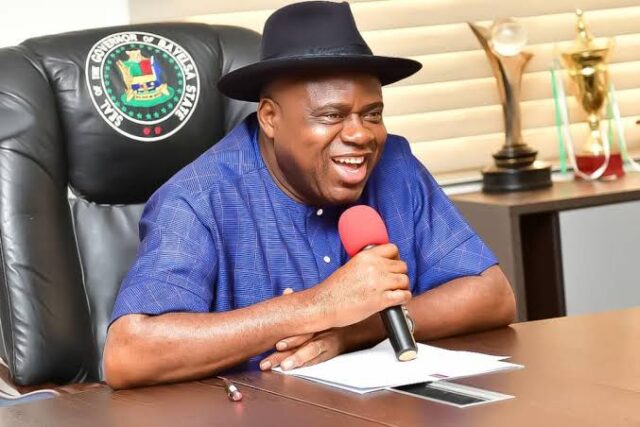
Bayelsa Governor, Diri Transfers Power To Deputy

Bayelsa State Governor, Douye Diri, will commence his annual leave on Monday, November 25.

In a statement released on Sunday by his Chief Press Secretary, Daniel Alabrah, it was announced that during the governor’s absence, Deputy Governor Senator Lawrence Ewhrudjakpo will assume responsibility for all state affairs.

Google search engine

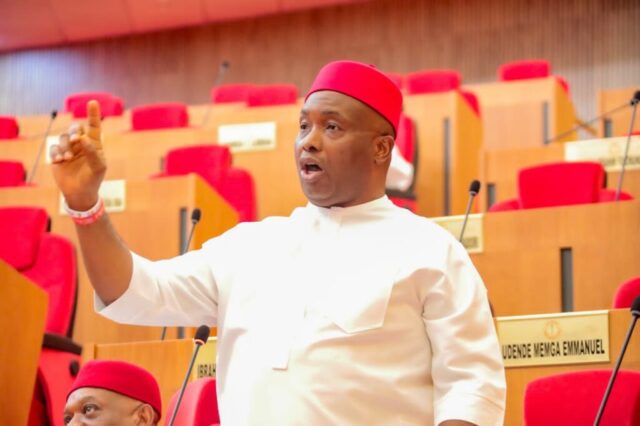
Governor Mbah To Present 2025 Budget To Enugu Assembly Tuesday

Enugu State Governor, Peter Ndubuisi Mbah, is set to present the 2025 budget proposal to the Enugu State House of Assembly for consideration and approval on Thursday, November 26, 2024.

This announcement was made by the Speaker of the Enugu State House of Assembly, Hon. Uche Ugwu, during a plenary session held on Tuesday.

Ugwu informed the House that the governor had formally communicated his intention to present the budget via a letter submitted by the Secretary to the State Government (SSG), Prof. Chidiebere Onyia.

“The governor’s request to address the Honourable House on Tuesday, November 26, 2024, has been accepted,” Ugwu stated.

In other legislative matters, the House also introduced the Local Government 3rd Amendment Bill (House Bill No. 19), which was read for the first time.

Additionally, the Enugu State House of Assembly welcomed the members of the Enugu State Children’s Parliament, who were present to observe the session and inform the Assembly about the upcoming 2024 World Children’s Day celebration, scheduled for Wednesday, November 20, 2024.

The children’s parliament delegation was also accompanied on a visit to the Enugu UNICEF office.

Google search engine

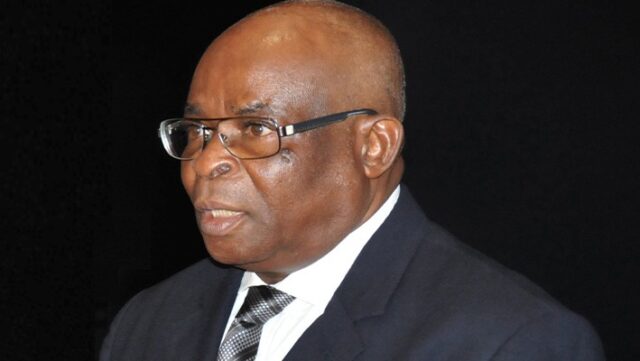
Buhari’s Removal of Onnoghen As CJN a ‘Dent On Nigeria’s Democratic Record’ – Clark Writes Kekere-Ekun

Elder statesman, Edwin Clark, has once again voiced his strong condemnation of the 2019 removal of Justice Walter Onnoghen as Chief Justice of Nigeria (CJN) by former President Muhammadu Buhari, calling it a significant dent on Nigeria’s democratic integrity.

In a letter addressed to the current CJN, Justice Kudirat Kekere-Ekun, Clark expressed admiration for her efforts to reform the judiciary, while revisiting the contentious events surrounding Onnoghen’s ousting.

In the letter, which was made public on Sunday in Abuja, Clark referred to Onnoghen’s removal as a “gross injustice” and a “blot” on the country’s democratic record.

He applauded Justice Kekere-Ekun’s resolve in seeking judicial reforms, stressing that without a fair and incorruptible judiciary, Nigeria faces the risk of becoming a failed state.

Clark expressed his hopes that ongoing efforts to revamp the judiciary would help restore public trust.

Recalling the circumstances surrounding Onnoghen’s removal, Clark described the event as an orchestrated attack on the judiciary by President Buhari and his then-Attorney General, Abubakar Malami.

He characterized the suspension of Onnoghen and the subsequent appointment of Justice Ibrahim Tanko Mohammed as Acting CJN as “callous” and “barbaric.”

Clark alleged that Onnoghen’s ousting was politically motivated, aimed at securing a judiciary that would support Buhari’s re-election bid in 2019.

He pointed out that the National Judicial Council (NJC) was not consulted, which he saw as a violation of due process, and claimed that tribunals established under Justice Tanko Mohammed were manipulated to favor Buhari’s second-term ambitions.

Clark also sharply criticized the culture of impunity fostered by Buhari’s administration, drawing comparisons to authoritarian regimes.

The elder statesman called for greater accountability in the current administration under President Bola Tinubu, insisting that no one, regardless of their position, should be above the law.

“No sacred cows,” he declared, emphasizing the need for a judicial system free from political interference.

Clark also expressed frustration at the failure of former leaders to face scrutiny, particularly in the area of corruption.

He pointed out the irony of the situation, recalling how Justice Onnoghen had been part of the Supreme Court panel that ruled in favor of Buhari in the 2011 presidential election dispute.

According to Clark, Onnoghen’s independence and principled stance had become a threat to Buhari’s re-election, making his removal appear as a calculated political move.

In his concluding remarks, Clark called for systemic reform within the judiciary and urged the Tinubu administration to address past wrongs in order to strengthen Nigeria’s democracy and the rule of law.

He suggested that the actions of Buhari in the Onnoghen case should be legally challenged, setting a precedent for accountability and justice in the country.

Google search engine

Uruguay: Voters Head To Polls Amid Tight Presidential Race

Uruguayans went to the polls on Sunday in a highly anticipated presidential election, with the leftist alliance led by former president José “Pepe” Mujica aiming to regain the country’s leadership after a five-year stint under right-wing rule, marked by concerns over crime and taxes.

Yamandú Orsi, a former history teacher representing the leftist Frente Amplio (Broad Front), faces off against Álvaro Delgado, a 55-year-old former veterinarian from the National Party.

Delgado is a member of the outgoing President Luis Lacalle Pou’s center-right Republican Coalition.

Orsi, 57, is considered a protégé of 89-year-old Mujica, the iconic former guerrilla leader who earned global recognition as “the world’s poorest president” during his presidency from 2010 to 2015, largely due to his humble lifestyle.

Orsi secured 43.9% of the vote in the first-round election held on October 27, falling short of the 50% needed to win outright, but surpassing Delgado, who garnered 26.7%.

The two candidates emerged at the top of a competitive field of 11 contenders vying to succeed Lacalle Pou, who, despite having a high approval rating, is constitutionally barred from seeking a second consecutive term.

The outcome of this election will determine the country’s next direction after a period of center-right leadership.

Google search engine

Access Bank Denies Allegations of Missing Funds, Unethical Practices

Access Bank has refuted claims circulating on social media regarding missing funds and unethical conduct within the bank. In a statement released, the bank categorically denied the allegations, describing them as false and baseless.

The statement reads, “Our attention has been drawn to a video circulating online, where claims of missing funds and unethical behavior were made against Access Bank Plc. We want to make it clear that the safety and security of our customers’ funds are of utmost importance to us, and we uphold the highest ethical standards in all our operations.”

Access Bank stressed that there is no truth to the claim that N500 million or any other sum is missing from any customer’s account, reaffirming that thorough investigations by both the bank and independent industry stakeholders have confirmed the absence of any such discrepancies.

The bank further emphasized its commitment to transparency and customer privacy, urging the public not to give credence to sensational and unverified reports aimed at creating confusion.

“We continue to engage with our customers and remain dedicated to serving their best interests,” the statement concluded.

Google search engine

Your Funds Are Safe – NDIC Assures Heritage Bank Customers After Bank’s Closure

The Managing Director/CEO of the Nigeria Deposit Insurance Corporation (NDIC), Bello Hassan, has assured customers of the recently failed Heritage Bank that their deposits are secure.

Hassan, represented by Mustapha Ibrahim, the Executive Director (Operations) at the NDIC, made the statement during the 2024 NDIC Editors Forum in Lagos on Saturday.

He emphasized the corporation’s crucial role in protecting depositors, especially following the closure of Heritage Bank, which was ordered by the Central Bank of Nigeria (CBN) on June 3, 2024.

Hassan outlined the NDIC’s responsibility as the appointed liquidator of Heritage Bank, following the revocation of the bank’s license.

He explained that the NDIC’s role includes overseeing the bank’s orderly resolution, managing the payment of insured deposits to depositors, and settling claims.

He highlighted that the NDIC began reimbursing depositors within just four days of the bank’s closure, a feat achieved by using Bank Verification Numbers (BVNs) to quickly locate depositors’ accounts at other banks.

This method allowed many depositors to receive their funds without the need to visit NDIC offices or fill out forms.

Furthermore, Hassan noted that the recent increase in the deposit insurance coverage from N500,000 to N5 million significantly mitigated the impact of the bank’s failure on most affected customers.

He emphasized that this change aligned with the International Association of Deposit Insurers’ Core Principle 15, which stresses the importance of timely payouts to depositors in the event of a bank failure.

The NDIC has already reimbursed the insured deposits (up to N5 million per depositor), and the next step, according to Hassan, is to ensure that depositors with balances exceeding the insured amount are also compensated.

He assured that payments would be made from the proceeds of Heritage Bank’s asset liquidation and debt recovery efforts.

Additionally, Hassan noted that the creditors of Heritage Bank would receive payments once all depositors have been reimbursed.

The CBN revoked Heritage Bank’s license in June 2024, and the NDIC was appointed as the liquidator to manage the bank’s dissolution.

The NDIC is working diligently to settle the claims of uninsured depositors as part of the liquidation process.

In his remarks, Bashir Nuhu, the Director of Communication and Public Affairs at the NDIC, said the 2024 Editors Forum, themed “Strengthening Nigeria’s Financial Safety-Net: The Role of Deposit Insurance,” served as an important platform for educating participants on the vital role the NDIC plays in safeguarding the financial system.

Google search engine

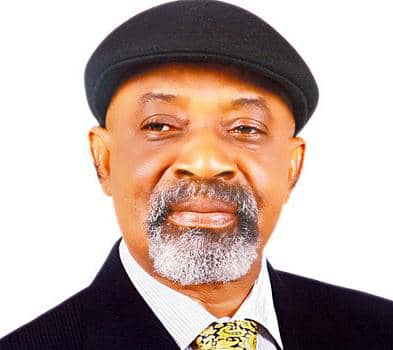
Local Government Chairmen More Corrupt Than Governors – Ngige

Senator Chris Ngige, the former Minister of Labour and Employment under the Muhammadu Buhari administration, has accused some local government chairmen of being more corrupt than governors.

He claimed that certain council leaders are focused on acquiring luxury estates in Abuja, Lagos, and even overseas, rather than investing in critical public services such as healthcare and education in their communities.

Ngige pointed out that many local governments have failed to pay teachers and healthcare workers for months, despite the pressing need for infrastructure like schools and hospitals.

Speaking at the 29th annual general meeting (AGM) and scientific conference of the Association of Urological Surgeons, Nigeria (NAUS) in Enugu, Ngige lamented the neglect of over 15,000 primary healthcare centres, which were originally built as constituency projects.

He called on State Economic Planning Boards to act quickly and refurbish these centres, emphasizing the importance of local government in Nigeria’s healthcare system, which was foundational to the primary healthcare initiative pioneered by former Health Minister Prof. Olikoye Ransome-Kuti.

Ngige also took aim at the Supreme Court’s ruling on local government financial autonomy, urging the court to revisit its decision.

According to Ngige, the judgment undermines the 1999 Constitution, as amended, and he argued that it wrongly alters Section 7, which places local governments under the control of state governments.

He recalled a similar Supreme Court ruling in 2006 that rejected federal interference in local government funds, which had been challenged by the attorneys general of Lagos, Abia, and Delta states against President Olusegun Obasanjo’s 2005 Local Government Account Monitoring Committee Act.

The former minister voiced his opposition to direct payments from the federal government to local governments without necessary deductions for essential items such as salaries, pensions, and traditional rulers’ allowances.

Ngige described the Supreme Court’s decision as not only unconstitutional but also harmful, suggesting that it “throws away the baby with the dirty bathwater.”

Ngige also criticized the failure of the local government system, blaming the passivity of State Houses of Assembly and the failure of governors to uphold constitutional provisions related to local government.

He highlighted that many states had not established democratically elected councils or economic planning boards, both of which are mandated under Section 7 of the Constitution.

Ngige argued that local governments would function better if governors adhered to the law and if the Houses of Assembly held them accountable.

Drawing from his time as governor of Anambra State, Ngige recalled how, between 1999 and 2002, local government chairmen across Nigeria were guilty of withholding salaries, pensions, and allowances, thus further exacerbating the dysfunction within the local government system.

Ngige emphasized the need for greater adherence to the rule of law and accountability at the state level in order for Nigeria’s local government system to function effectively and serve the people’s needs.

Google search engine

Ngige Urges Supreme Court To Revisit Judgment On Local Govt Financial Autonomy

Senator Chris Ngige, former Governor of Anambra State, has called on the Supreme Court to revisit its ruling on local government financial autonomy, arguing that the decision undermines the 1999 Constitution of the Federal Republic of Nigeria (as amended).

Ngige, who served as the Minister for Labour and Employment from 2015 to 2023, emphasized that the judgment effectively invalidates Section 7 of the Constitution, which places local government areas under state control.

He reminded the court of a 2006 ruling in which the Supreme Court had previously cautioned the Federal Government against interfering with state control over local government funds.

Speaking as the guest lecturer at the 29th Annual General Meeting (AGM) and Scientific Conference of the Association of Urological Surgeons, Nigeria (NAUS) in Enugu, Ngige reflected on his experiences as a governor and expressed his disagreement with the direct payment of federal allocations to local governments, without first deducting salaries, pensions, and other statutory obligations for local government workers and traditional rulers.

He recalled that during his tenure as governor from 1999 to 2002, many local government chairmen across Nigeria owed months of salary arrears, and instead of investing in community development, they sought personal luxuries.

Ngige pointed out that some local government leaders were even more corrupt than the state governors themselves, often misappropriating funds that should have gone to improve public services like healthcare and education.

Ngige criticized the Supreme Court’s ruling as contrary to the Constitution, stating that the Constitution clearly defines the boundaries of governmental powers in Nigeria.

He highlighted that Nigeria operates with only two federating bodies: the 36 states and the Federal Capital Territory (FCT), with the Federal Government at the top.

Local governments, he explained, are subordinate to the states, with state assemblies tasked with making laws regarding local government structures and finances.

The former minister also dismissed the idea that Nigeria has three tiers of government, pointing out that there are multiple levels of government in the country, including traditional and emirate councils in various regions, as well as town and village governments.

Ngige attributed the failure of local governments in Nigeria to the inaction of state assemblies and governors, who have often diverted local government funds for personal gain, rather than using them for public welfare.

He expressed disappointment that state assemblies have failed to hold governors accountable when they overstep their constitutional powers, thus enabling the continued failure of the local government system.

He further emphasized that the local government system could only thrive if governors adhered to the law, and state assemblies became more active in ensuring that local governments are properly funded and structured.

Ngige advocated for the establishment of economic planning boards at the local government level, which would ensure that funds are properly allocated for essential services like healthcare, education, and infrastructure.

Reflecting on his time as governor, Ngige shared how he successfully tackled salary arrears and improved the primary healthcare system in Anambra State by creating an economic planning board that included local government chairmen.

This allowed for better coordination and allocation of resources, ensuring that local governments were better equipped to meet their financial obligations and improve public services.

Ngige also expressed concern over the abandonment of thousands of primary healthcare centers built as constituency projects across the country.

He called on state governments and economic planning boards to prioritize these abandoned facilities and revamp them to improve access to primary healthcare.

The former minister further blamed state health commissioners for the failure of the primary healthcare system, despite the National Health Act of 2014, which he had helped champion in the Senate.

He lamented that states and local governments have failed to fulfill their financial obligations in healthcare, contributing to the continued deterioration of public health services.

Ngige urged medical professionals to take a more active role in governance, especially at the local government level, where they could have the most direct impact on improving the health and wellbeing of the population.

Google search engine

Senate Denies Abandoning Late Senator Ifeanyi Ubah

The Nigerian Senate has refuted reports claiming that it abandoned the late Senator Ifeanyi Ubah, who represented Anambra South Senatorial District in the 9th and 10th Senate.

Ubah, a member of the All Progressives Congress (APC), passed away on July 26, 2024.

In a statement issued on Sunday by Senator Yemi Adaramodu, the Chairman of the Senate Committee on Media and Public Affairs, the Senate dismissed as false recent claims that it neglected its late colleague’s burial arrangements.

The statement clarified that the Senate had honored Ubah properly and according to protocol.

“The Nigerian Senate has described as untrue the recent news circulating about the Senate’s failure to participate in the burial of our late colleague, Ifeanyi Ubah,” it read.

The Senate emphasized that a historic tribute session was dedicated to Ubah, marking the first time in the National Assembly’s history that a full legislative day was set aside to honor a departed member.

Ubah’s seat was draped with the national flag, a gesture of respect for his contributions to the Senate and to his constituency.

Further addressing the allegations, the statement outlined the Senate’s actions following Ubah’s death.

Upon hearing the news, the Senate immediately extended condolences to Ubah’s family and the people of Anambra State.

Senate President Godswill Akpabio led a delegation of principal officers and members to the Lagos home of the late senator to personally express their sympathies to his widow and children.

Almost 100 Senators attended a valedictory session in Ubah’s honor, during which tributes were paid to his legacy as a philanthropist, businessman, and politician.

Additionally, a significant number of Senators were present in Nnewi for the funeral, representing the Senate at the burial.

The Senate statement called the media’s portrayal of its actions as an “abandonment” as misguided, stating that the expectation that Senators should have flooded Nnewi in a public display of mourning was unreasonable.

“It is absurd that anyone would suggest that the Senate failed to honor Senator Ifeanyi Ubah,” the statement concluded.

Google search engine

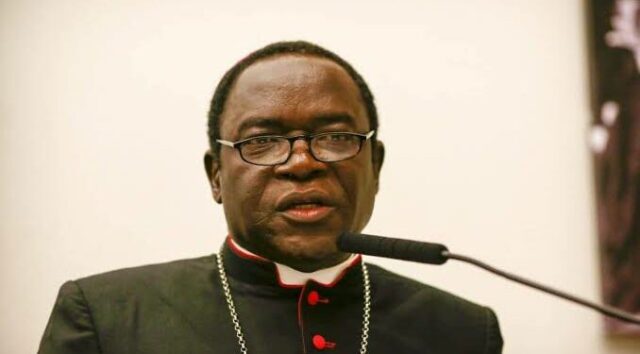
Tinubu, Buhari, Products Of Accidental Leadership Cycle – Kukah

The Catholic Archbishop of Sokoto Diocese, Bishop Matthew Kukah, has labeled President Bola Tinubu, former President Muhammadu Buhari, and other past Nigerian leaders as products of an “accidental leadership cycle,” stating that many of them assumed power without adequate preparation.

Delivering a keynote address on Sunday during the commissioning of the new Start-Rite School building and the 4th Amaka Ndoma-Egba Memorial Lecture in Abuja, Kukah reflected on the country’s leadership history, noting a recurring pattern of unpreparedness among Nigeria’s leaders.

Kukah remarked, “If we look at Nigeria’s leadership journey, you will find that almost every leader who came to power did so by accident.”

He cited examples, including President Tinubu, who, despite claiming to be well-prepared for leadership, is facing significant challenges.

He noted that Tinubu inherited a disengaged administration from Buhari, who had already retreated from active governance.

Bishop Kukah further pointed out the lack of foresight among previous leaders, mentioning that former President Goodluck Jonathan unexpectedly became president after the sudden death of Umaru Musa Yar’Adua.

Jonathan himself succeeded Obasanjo, who had been released from prison and was thrust into leadership.

The list of Nigerian leaders, according to Kukah, shows a trend of individuals rising to power due to unforeseen circumstances, rather than through careful planning or preparation.

The archbishop stressed that while Nigeria has embraced democratic principles such as “one man, one vote,” the country’s democratic system has yet to yield effective and competent leadership.

He argued that modern governance requires a deep understanding of the evolving global landscape and the complexities of leadership.

During the event, the Chairman of the National Drug Law Enforcement Agency (NDLEA), Brig. Gen. Buba Marwa, also spoke about the importance of early leadership development, acknowledging that many of Nigeria’s challenges stem from poor leadership and accountability.

Marwa shared a shocking revelation about a drug cartel involving visually impaired individuals.

He explained that the NDLEA had uncovered a network where blind individuals were trafficking drugs. In one instance, a blind man was arrested while transporting cannabis, and subsequent investigations led to the discovery of other visually impaired individuals involved in the illegal trade.

The NDLEA chairman also honored Senator Ndoma-Egba, the founder of Start-Rite School, for organizing the lecture in memory of his late wife, Amaka Ndoma-Egba.

He praised Amaka Ndoma-Egba’s vision in establishing the school, which was founded in 2008 with only seven students and has since grown to serve over 800 students across various educational levels.

The event underscored the need for a renewed focus on leadership development and education as crucial components in addressing Nigeria’s governance issues and societal challenges.

Google search engine

MOST COMMENTED

- Advertisement -
Google search engine