Home Blog Page 91

Court Orders British Govt To Pay £420m To Families Of 1949 Iva Valley Massacre Victims In Landmark Judgment
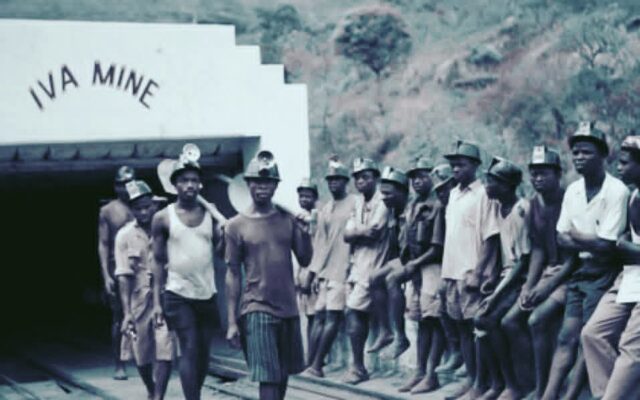
Justice A.O. Onovo of the Enugu High Court has ordered the British Government to pay £20 million each to the families of 21 coal miners killed in the 1949 Iva Valley massacre in Enugu State, totaling £420 million.

The massacre occurred on November 18, 1949, at the Iva Valley coal mines, then part of the Eastern Region under British colonial rule.

The miners had been protesting harsh working conditions, racial wage disparities, and unpaid back wages.

When their demands were ignored, they staged a peaceful “go-slow” protest, occupying the mine to prevent management from locking them out.

The protest ended tragically when the British superintendent of police opened fire, killing 21 miners and injuring 51 others.

The victims included Sunday Anyasodo, Ani Oha, Andrew J. Obiekwe Okonkwo, Augustine Chiwefalu, Onoh Ugwu, Ngwu Offor, Ndunguba Eze, Okafor Agu, Livinus Ukachunwa, Jonathan Agu Ozani, Moses Ikegbu Okoloha, Chukwu Ugwu, Thomas Chukwu, Simon Nwachukwu, Agu Alo, Ogbonnia Ani Chima, Nnaji Nwachukwu, William Nwaku, James Onoh Ekeowa, Felix Nnaji, and Ani Nwaekwo.

The suit, filed as Case No: E/909/2024, was brought by human rights activist Mazi Greg N. Onoh, seeking acknowledgment of liability, a formal apology, and full compensation.

Respondents included the British Government, the Secretary of State for Foreign, Commonwealth and Development Affairs, the Federal Government of Nigeria, and the Attorney-General of the Federation.

Some respondents were unrepresented in court.

Justice Onovo ruled that the massacre constituted an unlawful, extrajudicial violation of the miners’ right to life.

He ordered the British Government to pay the total compensation of £420 million, plus post-judgment interest of 10% per annum until fully paid.

Pre-judgment interest and exemplary damages were denied.

The court also mandated that the British Government issue unreserved written apologies to the victims’ families, to be published in Nigeria’s Daily Sun, Daily Independent, The Punch, and three major UK national newspapers, with proof of publication filed in court within 60 days.

The monetary award must be settled within 90 days of the judgment.

Justice Onovo held that the Federal Government of Nigeria and the Attorney-General had a constitutional duty to pursue redress, and their previous inaction amounted to dereliction of duty.

He also dismissed objections based on sovereign immunity, affirming that historical injustices remain justiciable under Nigerian law.

The applicant’s counsel, Prof. Yemi Akinseye-George, SAN, and P.N. Agazie, described the ruling as historic, emphasizing that it sends a strong signal that governments worldwide cannot ignore human rights abuses, torture, or the unlawful taking of lives.

They also noted that the judgment aligns with international precedents, such as the UK’s Mau Mau settlement, reinforcing the obligation to provide redress for serious historical violations.

“This landmark ruling marks a significant step in achieving accountability for colonial-era atrocities and affirms that the right to life transcends time, borders, and changes in sovereignty,” they said.

Google search engine

Terrorism Trial: Nnamdi Kanu Alleges Miscarriage Of Justice, Seeks Acquittal At Appeal Court

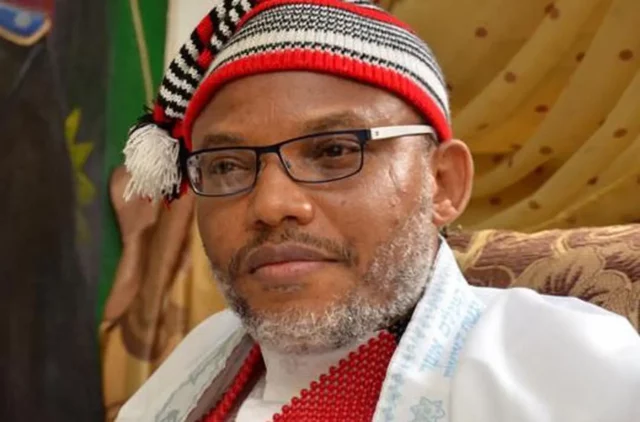
Detained leader of the Indigenous People of Biafra (IPOB), Nnamdi Kanu, has filed a notice of appeal against his conviction and sentences handed down by the Federal High Court in Abuja, describing the trial as flawed and unjust.

In the appeal dated February 4, 2026, Kanu is contesting his conviction on seven counts, including terrorism-related offences, for which he received five life sentences along with additional prison terms following the court’s judgment delivered on November 20, 2025.

The IPOB leader was convicted on charges such as engaging in acts preparatory to terrorism, making broadcasts intended to intimidate the public, and belonging to and leading a proscribed organisation.

He was also sentenced to 20 years’ imprisonment for leadership of the banned group and five years for importing a radio transmitter without a licence.

Justice James Omotosho, who presided over the trial, delivered the judgment that led to the sentences.

In his grounds of appeal, Kanu argued that the trial was marred by fundamental legal irregularities and that the court failed to address issues arising from the disruption of the original proceedings following the 2017 military operation at his residence in Afara-Ukwu.

He contended that the trial court proceeded to hear the case and deliver judgment while his preliminary objection challenging the competence of the proceedings remained unresolved.

Kanu also maintained that judgment was delivered while his bail application was still pending, a situation he said undermined the fairness of the process.

He further argued that the court relied on a law that had already been repealed, claiming he was convicted under the Terrorism Prevention (Amendment) Act, 2013, despite its replacement by the Terrorism (Prevention and Prohibition) Act, 2022 before judgment was delivered.

The appellant also alleged double jeopardy, insisting he was retried on issues that had earlier been nullified by the Court of Appeal, in violation of constitutional protections.

Additionally, he claimed he was denied a fair hearing because he was not allowed to submit a final written address before the court delivered its judgment.

Among the reliefs sought, Kanu asked the Court of Appeal to overturn the conviction and sentences and to discharge and acquit him on all counts.

He also notified the appellate court of his intention to be present at the hearing and indicated that he might conduct the appeal personally.

Kanu is currently being held at a correctional facility in Sokoto State after his request to be transferred to another facility in Niger or Nasarawa State was declined.

Google search engine

Police Arrest Man For Allegedly Exhuming Corpses, Found With Four Human Heads

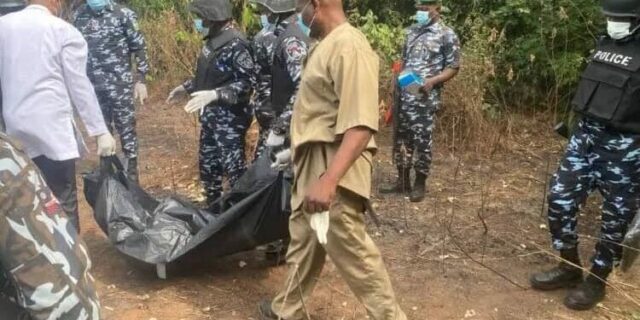
The attached picture is for illustration,

The Ogun State Police Command has arrested a suspect, Gafaru Rasaki, for allegedly exhuming human remains from a cemetery in Sagamu and being in possession of four human heads.

Police spokesperson, DSP Oluseyi Babaseyi, disclosed the development in a statement issued in Abeokuta, noting that operatives of the Shakura Division carried out the arrest on January 21, 2026.

According to him, the suspect was apprehended with the human heads during an operation, and preliminary investigation revealed that the remains were unlawfully exhumed from a cemetery.

Babaseyi described the act as a grave offence and a violation of laws protecting the dignity of the dead, adding that such actions would not be tolerated.

He confirmed that the recovered exhibits had been secured while investigations continue to determine the full circumstances surrounding the incident.

The police spokesman also stated that the suspect would be charged in court once investigations are concluded.

The command reiterated its commitment to safeguarding lives and property, warning that anyone involved in the desecration of human remains or related crimes would be prosecuted in accordance with the law.

Google search engine

Senate Did Not Reject E-transmission Of Election Results, Abaribe Clarifies

The Senate Minority Caucus has dismissed reports that the National Assembly rejected electronic transmission of election results while passing the Electoral Act (Amendment) Bill, insisting that the provision remains intact.

The clarification followed widespread criticism and media reports suggesting lawmakers voted against electronic transmission and other electoral reforms, including a proposed 10-year ban on vote-buying.

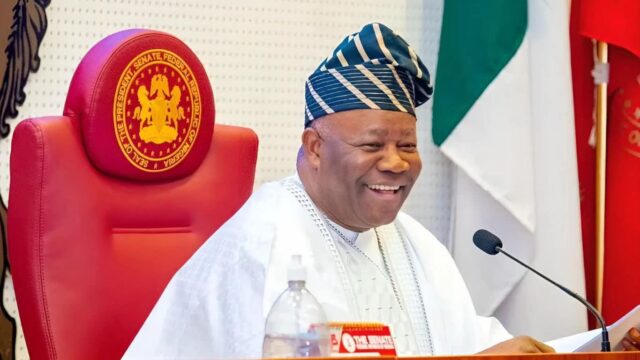
Senate President Godswill Akpabio had earlier described such reports as misleading, maintaining that the upper chamber retained the electronic transmission framework contained in the 2022 Electoral Act.

Addressing journalists, former Senate Minority Leader, Senator Enyinnaya Abaribe, said the caucus considered it necessary to correct what he called a misrepresentation of proceedings during Wednesday’s plenary.

He stressed that the Senate did not at any point reject electronic transmission of results and only reaffirmed the existing legal provision guiding the process.

According to him, the bill passed by lawmakers supports electronic transfer of results as earlier established, a position he said was also clarified by the Senate President on the floor of the chamber.

Abaribe explained that extensive legislative work preceded the decision, including joint committee engagements between the Senate and the House of Representatives, as well as consultations with the Independent National Electoral Commission and civil society organisations.

He noted that the committees held several retreats and public hearings, during which stakeholders agreed on the importance of electronic transmission as a key mechanism for improving electoral transparency.

Following the submission of the committee’s report, an ad hoc committee was constituted to review outstanding issues before the bill returned to plenary.

Its recommendations, he said, were discussed during a closed-door session and later adopted.

He added that confusion may have arisen during plenary due to movement and noise in the chamber, giving the impression that the provision had been rejected.

Abaribe further explained that the Senate is yet to adopt the votes and proceedings of the session, a procedural step required before harmonisation with the House of Representatives can begin.

According to him, a harmonisation committee will reconcile differences between both chambers’ versions of the bill and produce a unified document for presidential assent.

He emphasised that the final record must accurately reflect the Senate’s position on electronic transmission of election results.

The lawmaker also stated that the Senate retains the authority to manage its internal processes, including the decision to set up an ad hoc committee alongside the standing committee on electoral matters.

Abaribe maintained that senators across party lines support transparent elections and see electronic transmission as central to safeguarding credibility in the electoral process.

He concluded that harmonisation cannot proceed until the Senate formally adopts the votes and proceedings confirming the provision for electronic transmission, insisting that the final document must reflect the true outcome of deliberations.

Google search engine

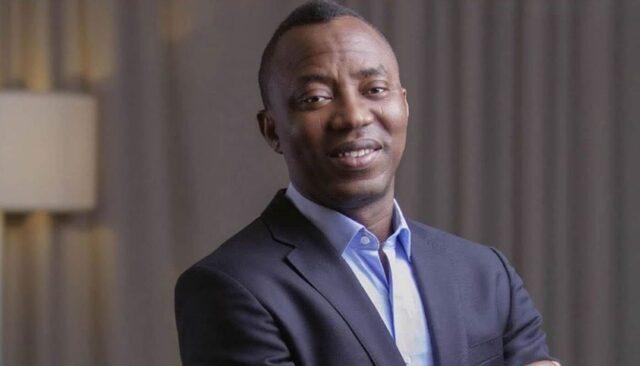
Court Rejects Sowore’s Document Claiming Tinubu Once Called Jonathan ‘Drunkard’

The Federal High Court in Abuja has refused to admit a document presented by activist and former presidential candidate of the African Action Congress (AAC), Omoyele Sowore, which claimed that President Bola Tinubu once described former President Goodluck Jonathan as a “drunkard.”

Justice Mohammed Umar rejected the exhibit after the prosecution’s first witness, a Department of State Services (DSS) operative, distanced himself from the document and denied knowledge of its contents.

The witness, Mr Cyril Nosike, told the court during cross-examination by Sowore’s lawyer, Abubakar Marshal, that he was unaware of any instance where Tinubu made the alleged remarks about Jonathan.

Based on this, counsel to the DSS, Akinlolu Kehinde (SAN), objected to the document’s admissibility, arguing that it did not meet the requirements of the Evidence Act because the witness was not its author.

The court upheld the objection and declined to accept the document as evidence. A similar fate befell another document presented by the defence, which alleged that Tinubu had described former President Olusegun Obasanjo as “expired meat.”

During proceedings, the DSS operative avoided offering personal opinions on political matters. When asked whether corruption had ended in Nigeria, he said he could not respond, stressing that he was not in court to give opinions.

He also said he was not in a position to confirm whether corruption still existed in the country.

The witness further stated that he was unaware that the DSS dismissed 115 officers in December 2025 for alleged corruption, though he recalled an internal investigation leading to dismissals.

He also denied knowledge of reports that the Economic and Financial Crimes Commission (EFCC) had prosecuted former governors or that officials of the Nigerian National Petroleum Company Limited were arrested over alleged fraud.

He maintained that his responsibilities focused strictly on national security matters within his mandate and that he was not part of processes related to disciplinary actions within the DSS.

Nosike also said he was not familiar with Nigeria’s position in global corruption rankings or Transparency International’s Corruption Perceptions Index.

When questioned about public allegations linking the President to various controversies, including claims circulating on social media, he said he had no knowledge of them.

Justice Umar adjourned the case until March 5 to allow the defence conclude its cross-examination.

Sowore is being prosecuted over a social media post in which he allegedly described President Tinubu as a “criminal.”

He faces a two-count amended charge under the Cybercrimes (Prohibition, Prevention, Etc.) (Amendment) Act, 2024.

The prosecution said the post, published on August 25, 2025, followed a statement by the President during an official visit to Brazil in which he claimed his administration had ended corruption in Nigeria.

Authorities argue that Sowore’s publication was capable of inciting public disorder and damaging the President’s reputation.
Sowore, who was first arraigned in December 2025 and re-arraigned in January, has pleaded not guilty to the charges.

Google search engine

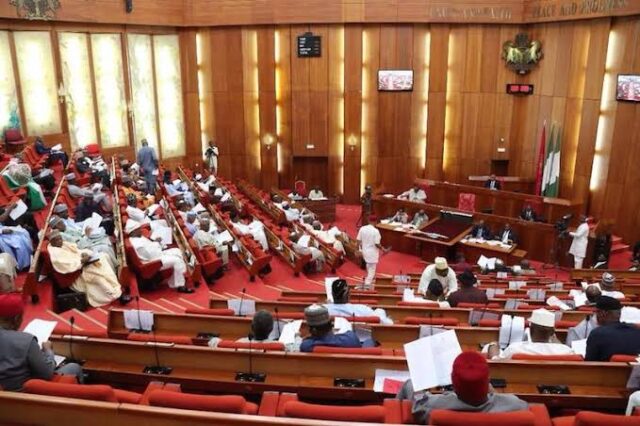
Senate Passes Electoral Bill 2026, Retains Electronic Transmission Of Results But Rejects Real-time Upload

The Senate has passed the Electoral Bill 2026 after extensive debate, retaining electronic transmission of results but rejecting a proposal that would have made real-time uploading from polling units mandatory.

At the heart of the debate was Section 60 of the bill, which deals with the transmission of results.

Lawmakers voted against a recommendation that presiding officers must upload polling unit results instantly to the INEC Result Viewing (IReV) portal.

Instead, they maintained the existing provision in the 2022 Electoral Act, which allows results to be transmitted electronically after they are counted and publicly declared at the polling unit.

The decision sparked criticism from opposition parties, particularly the Peoples Democratic Party (PDP) and the African Democratic Congress (ADC), which described the move as a setback for transparency and electoral credibility.

INEC also disclosed that it has completed work on the timetable for the 2027 general elections but cannot release it until the National Assembly concludes amendments to the Electoral Act.

The commission further announced plans for a nationwide verification of the voters’ register following the discovery of names of deceased persons and other irregularities.

Under the retained provisions, presiding officers must count votes at polling units, record results on official forms, announce them publicly and transmit them electronically to collation centres.

Copies are also to be given to party agents and security personnel where available, while offenders risk fines of up to N500,000 or at least six months’ imprisonment.

Senators who opposed real-time electronic transmission argued that poor network coverage and logistical constraints could lead to disputes and undermine confidence in the electoral process.

Senate spokesperson Adeyemi Adaramodu maintained that electronic transmission remains part of the law and that results will continue to be available through both digital and physical means.

Beyond the controversy over transmission, the Senate approved key changes to the electoral timetable.

The notice period for elections was reduced from 360 days to 180 days, while the deadline for submission of candidates’ lists was shortened from 120 days to 90 days.

The nomination window was also cut from 180 days to 90 days.

To curb electoral offences, the Senate increased the fine for unlawful possession of voter cards from N500,000 to N5 million but rejected a proposal for a 10-year ban on vote-buying, opting instead for stricter financial penalties.

The smart card reader was formally removed from the legal framework and replaced with the Bimodal Voter Accreditation System (BVAS), which remains the primary tool for voter verification.

Lawmakers also rejected a proposal to allow electronically generated voter identification, insisting on the continued use of Permanent Voter Cards (PVCs) for accreditation.

Senate President Godswill Akpabio clarified that electronic transmission had not been removed from the law, stressing that retaining the provision ensures results will still be transmitted electronically as prescribed by INEC.

INEC Chairman, Prof. Joash Amupitan, said the delay in releasing the 2027 timetable was due to ongoing legislative amendments.

He assured Nigerians that the schedule would be unveiled in line with constitutional and legal requirements.

The commission also raised concerns about the integrity of the voters’ register, citing the presence of deceased individuals and discrepancies discovered after reviewing data from the Anambra off-cycle governorship election.

According to INEC, the planned verification exercise will remove dead voters, correct data errors and strengthen the credibility of the register ahead of the 2027 polls.

Reacting to the Senate’s decision, the PDP described the rejection of mandatory real-time transmission as disappointing and contrary to public expectations, insisting that direct electronic upload of polling unit results would enhance transparency and protect the electoral process.

Google search engine

Bayelsa Police Question Four NSCDC Officers Over Death Of Resident In Custody

The Bayelsa State Police Command has commenced the interrogation of four personnel of the Nigeria Security and Civil Defence Corps in connection with the death of Patrick Peresoudei, following widespread public outrage and calls for justice.

Peresoudei died on January 30 after what his family and rights activists described as injuries sustained during an unlawful detention.

The incident has since triggered intense scrutiny of the actions of security operatives involved in his arrest.

The deceased, a traditional worshipper, was reportedly arrested after a social media exchange in which he challenged one Bodmas Kemepadei to “test an AK-47” on him, a comment that was interpreted as a threat to life.

Kempadei allegedly effected the arrest of Peresoudei and his 22-year-old relative, Peresoudei Destiny, with the assistance of NSCDC operatives.

Both were initially taken to the Amassoma Police Division and accused of criminal defamation, cyberstalking and threat to life.

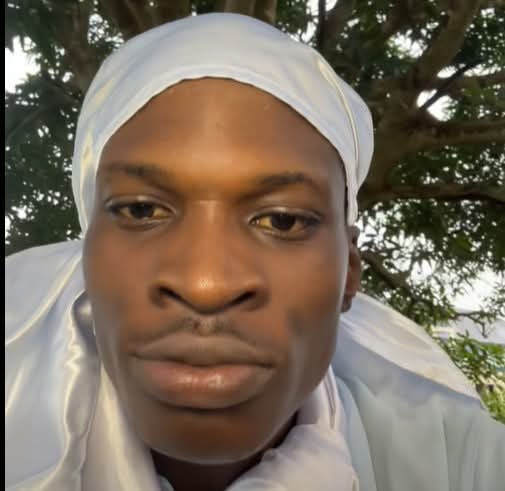
Public attention to the case intensified after social media influencer Martins Otse, popularly known as VeryDarkMan, released a video amplifying the family’s demand for justice.

He claimed, citing family sources, that Peresoudei was severely beaten while in custody, leaving him in critical condition before he eventually died at a hospital.

In a statement issued on Tuesday via X, the Bayelsa State Police Public Relations Officer, DSP Musa Mohammed, confirmed that the four NSCDC personnel being questioned allegedly accompanied Kemepadei to Amassoma Community, where Peresoudei was arrested.

According to the statement, the victim was subsequently taken to Kemepadei’s residence in Yenagoa, where he was reportedly tortured before his death.

The statement added that the State Criminal Investigation Department is also interrogating members of the investigating team attached to Operation Restore Peace, also known as Operation Puff Adder.

The police assured the public that the investigation would be comprehensive, impartial and transparent, stressing that all individuals found culpable would be prosecuted in line with the law.

Meanwhile, efforts are ongoing to locate and arrest the prime suspect, Bodmas Kemepadei, who is currently on the run.

The Commissioner of Police in Bayelsa State, CP Iyamah Daniel, appealed to residents to remain calm and cooperate with investigators, urging anyone with useful information to assist the police as the probe continues.

Google search engine

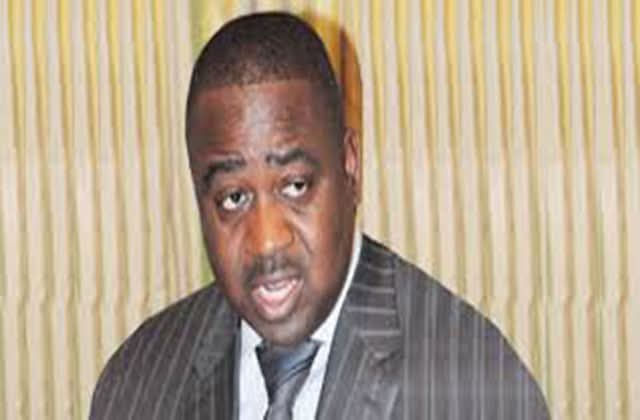
Former Governor Suswam Dumps PDP

Former Benue State Governor and ex-Senator, Gabriel Suswam, has officially resigned from the Peoples Democratic Party (PDP), pointing to persistent internal conflicts and a lack of cohesion within the opposition party.

The resignation, communicated in a letter dated February 4, 2026, was addressed to the Chairman of the PDP in Mbagber Council Ward, Logo Local Government Area, and shared publicly on Facebook by Suswam’s Chief of Staff, Moses Ukeyima.

In his letter, Suswam explained that his decision was prompted by the party’s failure to resolve longstanding internal disputes affecting its leadership, structure, discipline, and ideological direction.

He wrote:

“I write to formally resign my membership of the Peoples Democratic Party (PDP), effective from the date of this letter. This decision has not been taken lightly. For decades, the PDP provided me a platform to serve the Nigerian people—as a Member of the House of Representatives, Governor of Benue State, and Senator of the Federal Republic of Nigeria—for which I remain sincerely grateful.

“However, the party that once symbolised cohesion, internal democracy, and progressive opposition has, regrettably, become plagued by persistent and unresolved internal conflicts. These disputes, spanning leadership, structure, discipline, and ideology, have been allowed to fester without any credible pathway to resolution.”

Suswam noted that repeated attempts at reconciliation had failed, leaving him unable to align his personal convictions with the party’s current state.

He added:

“I believe that political parties must serve as platforms for ideas, discipline, and constructive engagement—not arenas of endless internal warfare. Regrettably, the current state of affairs within the PDP no longer aligns with these ideals.”

He expressed hope that the PDP would eventually overcome its internal crises and find stability, while affirming his decision to step aside from the party.

As of the time of reporting, the PDP leadership had yet to issue a response to Suswam’s resignation.

Google search engine

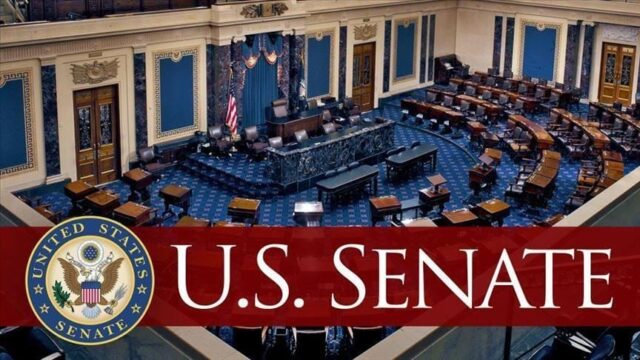
US Congressional Panels To Meet Today To Address Genocide Claims In Nigeria

Panels of the United States Congress are holding a new session on Wednesday to examine allegations of genocide and growing threats to religious freedom in Nigeria, with witnesses warning that the country risks sliding into widespread Christian–Muslim violence.

The concerns were outlined in written testimonies released ahead of the joint hearing by the House Foreign Affairs Committee, which is being convened by the Subcommittee on Africa and the Subcommittee on the Western Hemisphere.

The session is titled “Defending Religious Freedom Around the World.”

According to the testimonies, recurring killings, mass displacement and persistent insecurity in Nigeria are early indicators of a broader religious conflict with implications beyond the country’s borders.

Among those scheduled to testify are former US Ambassador-at-Large for International Religious Freedom, Sam Brownback; Principal Adviser for Global Religious Freedom at the US State Department, Mark Walker; Grace Drexel, daughter of detained Chinese pastor Ezra Jin; and former chair of the US Commission on International Religious Freedom, Dr Stephen Schneck.

In his prepared remarks, Brownback described Nigeria as a major global flashpoint, warning that militant Islamist groups are expanding their influence across parts of Africa and the Middle East.

“Radical, militant Islam continues its purification efforts throughout the MENA region and beyond. Syria and Nigeria are key focus areas in their quest for dominance, excluding all other faiths,” Brownback said.

He characterised Nigeria as “the deadliest place on the planet to be a Christian,” arguing that patterns of violence across the country suggest the brewing of a larger religious crisis.

“Early warning signs of a Muslim-on-Christian war are emerging across Africa, and Nigeria sits at the centre of that danger,” he said.

Brownback also raised concerns about the role of foreign actors in Nigeria’s security environment, cautioning that support from countries such as China, Russia, Turkey and Saudi Arabia could aggravate instability if not carefully monitored.

In his testimony, Schneck warned that freedom of religion or belief is facing a historic global crisis driven by authoritarianism, religious nationalism and weak state institutions.

“Nigeria, Syria and Sudan are examples of countries where poor governance and widespread insecurity have created dangerous conditions for communities of faith,” Schneck stated.

He noted that such environments allow insurgent groups and criminal networks to exploit religious identity, leading to killings, displacement and prolonged instability.

Schneck criticised the US government’s implementation of the International Religious Freedom Act, arguing that Washington has failed to translate strong rhetoric into consistent and effective action.

“We have been long on rhetoric and short on substance, consistency and effectiveness,” he said.

He also expressed concern over delays in the release of the US State Department’s International Religious Freedom reports and the absence of updated designations of Countries of Particular Concern and related watch lists.

According to Schneck, Nigeria currently remains the only country designated as a Country of Particular Concern, following a redesignation by President Donald Trump, while no countries are listed under the Special Watch List or as Entities of Particular Concern.

He warned against limiting religious freedom advocacy to the persecution of Christians alone, stressing that international human rights law protects people of all faiths and beliefs.

“Selective advocacy undermines both effectiveness and legitimacy,” Schneck said.

Last year, President Trump redesignated Nigeria as a Country of Particular Concern over alleged religious freedom violations, a move that was followed by US airstrikes on terrorist hideouts in Sokoto on Christmas Day.

The Federal Government has rejected claims of systemic persecution of Christians, insisting that insecurity affects Nigerians across all religious groups.

In November 2025, US Secretary of War Pete Hegseth hosted Nigeria’s National Security Adviser, Nuhu Ribadu, at the Pentagon for talks on counterterrorism cooperation.

Ribadu later confirmed that a US congressional delegation visited Abuja in December as part of ongoing security consultations between both countries.

According to Nigerian officials, discussions focused on counterterrorism, regional stability and strengthening the strategic security partnership between Nigeria and the United States.

Google search engine

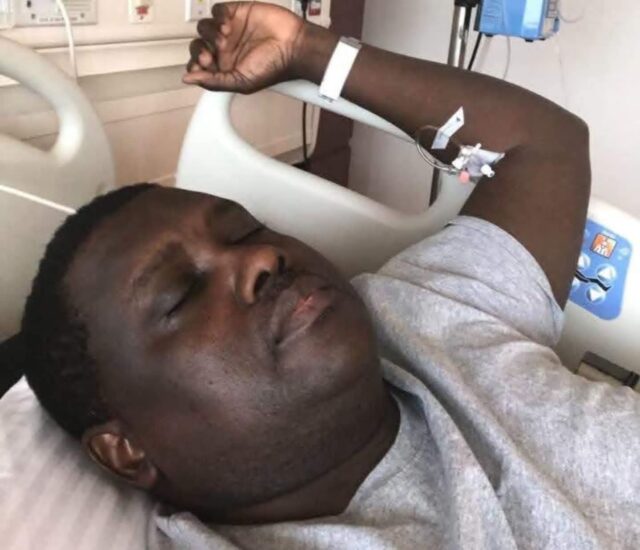
Ex-Pension Thief Abdulrasheed Maina Collapses In Abuja, Hospitalised


Former Chairman of the defunct Pension Reform Task Force, Abdulrasheed Maina, has been hospitalised in Abuja after he reportedly collapsed on Tuesday while trying to access his office.

The incident was disclosed in a statement issued on Wednesday by his media assistant, Emmanuel Ekwe, who said the collapse was caused by complications arising from an untreated knee injury.

According to Ekwe, the injury caused Maina to lose his balance, leading to a fall in which he hit his head on a staircase.

“Dr Abdulrasheed Maina slumped on the evening of Tuesday, February 3, 2026, while attempting to access his office premises. The incident followed complications from an untreated knee injury, which caused him to lose balance and fall, resulting in his head hitting the staircase,” the statement said.

He added that medical personnel immediately administered first aid before rushing Maina to a private hospital in Abuja for urgent treatment.
Ekwe noted that Maina is currently under close medical observation, with doctors monitoring his condition.

“Following a preliminary medical assessment, one of the attending doctors advised that arrangements for an air ambulance medical evacuation be considered should his condition fail to stabilise within a short period,” he said.

The family, according to the statement, has appealed for privacy and prayers as treatment continues, adding that further updates would be communicated as necessary.

Maina is a central figure in Nigeria’s pension reform controversy, having headed the Presidential Task Force on Pension Reforms before being prosecuted over allegations of large-scale pension fraud.

In November 2021, a Federal High Court in Abuja convicted him of money laundering involving N2.1bn in pension funds and sentenced him to eight years’ imprisonment.

The Court of Appeal upheld the conviction and sentence in May 2023.

Despite the ruling, Maina was released from the Kuje Correctional Centre in February 2025 after benefiting from statutory remission for good conduct, with authorities explaining that his sentence was calculated from his initial arrest in October 2019.

Since his release, he has largely stayed out of public view, though developments surrounding him continue to attract public attention due to the magnitude of the pension scandal.

Google search engine

MOST COMMENTED

- Advertisement -
Google search engine