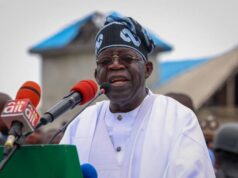
President Bola Ahmed Tinubu has signed a pivotal Executive Order designed to overhaul Nigeria’s oil and gas industry by significantly reducing operational costs, stimulating investment, and boosting government earnings from upstream petroleum operations.
The new directive, titled the Upstream Petroleum Operations Cost Efficiency Incentives Order (2025), was made public on Thursday through a statement by Senan Murray, Media Contact in the Office of the Special Adviser to the President on Energy.
The Executive Order introduces performance-based tax incentives, which will reward oil and gas firms for achieving verifiable cost savings in line with annual benchmarks set by the Nigerian Upstream Petroleum Regulatory Commission (NUPRC).
These benchmarks will vary based on terrain, onshore, shallow water, and deep offshore, and will be published yearly.
Detailed implementation guidelines are also expected to follow.
“Nigeria must attract investment inflows, not out of charity, but because investors are convinced of real and enduring value,” the President said.
“This Order is a signal to the world: we are building an oil and gas sector that is efficient, competitive, and works for all Nigerians. It is about securing our future, creating jobs, and making every barrel count.”
A key highlight of the Order is a 50% return to investors from any additional government revenue generated as a result of cost savings, while tax credits are capped at 20% of a company’s annual tax liability.
This structure aims to balance investor incentives with the government’s revenue interests.
“This is not a pursuit of cost reduction for its own sake. It is a deliberate strategy to position Nigeria’s upstream sector as globally competitive and fiscally resilient,” said Mrs. Olu Verheijen, Special Adviser to the President on Energy.
“With this reform, we are rewarding efficiency, strengthening investor confidence, and ultimately delivering greater value to the Nigerian people.”
President Tinubu has also directed the Special Adviser on Energy to spearhead an inter-agency coordination effort for the policy’s rollout.
This team will work across institutional lines to ensure the objectives of the directive are effectively implemented at all levels.
The 2025 Executive Order builds on the President’s earlier oil and gas reform steps initiated in 2024.
Those measures focused on improving fiscal terms, streamlining project timelines, and aligning local content policies with international best practices.
This latest move is part of the broader Renewed Hope Agenda, a vision centered on combining investor-friendly strategies with sustainable national development.