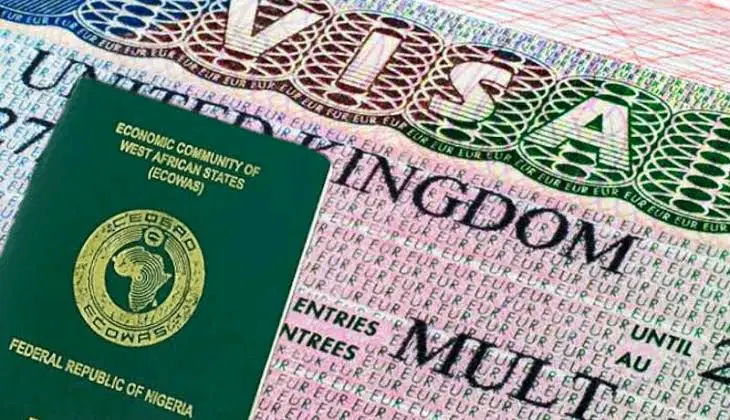

The Federal Government of Nigeria has vowed to introduce reciprocal measures following the United States’ implementation of stricter visa rules, including mandatory disclosure of social media activity for Nigerian applicants.
On Monday, the U.S Mission in Nigeria announced via its official X (formerly Twitter) handle that all Nigerian visa applicants must now provide details of their social media accounts, email addresses, usernames, phone numbers and any other digital identifiers used within the last five years.
Failure to comply with the new requirement could result in visa denial and future ineligibility for U.S entry.
“Applicants are required to list all social media usernames or handles used in the last five years on the DS-160 form. Omitting this information could lead to visa denial,” the U.S Mission stated.
The updated policy expands on existing rules, particularly for student visa applicants, who are already required to remove privacy settings and allow U.S authorities to review their online profiles as part of security vetting.
The requirement stems from broader U.S. immigration tightening policies, first introduced under President Donald Trump and now being aggressively enforced under Secretary of State Marco Rubio, including the revocation of 6,000 student visas over alleged legal and security violations.
In a related development, the U.S. Citizenship and Immigration Services (USCIS) has introduced stricter criteria for citizenship applicants under its revised “Good Moral Character” guidelines.
Applicants are now assessed on a wider range of personal behaviors beyond criminal records.
Immigration officers will consider how individuals live, contribute to their community, and whether they adhere to U.S social and legal norms. Indicators include holding a legal job, paying taxes, volunteering, and educational efforts.
In response, the Nigerian Ministry of Foreign Affairs said it is aware of the U.S. policy shift and will take reciprocal action.
“Visa policies are based on reciprocity. If the U.S. mandates our citizens to provide social media history, we will apply the same standards to Americans seeking Nigerian visas,” said Kimiebi Ebienfa, spokesperson for the Ministry.
He confirmed that the government had prior notice of the changes and will convene an inter-agency meeting involving the Ministry of Interior, National Intelligence Agency (NIA), and other stakeholders to decide on an appropriate and coordinated response.
“A holistic strategy will be developed to ensure our response is well-informed and aligned with national interests,” Ebienfa added.
This is the latest in a string of visa-related measures by the U.S. government affecting Nigerians.
Previous actions include; reducing most non-immigrant Nigerian visas to single-entry with a three-month validity, warning of permanent visa bans for individuals who overstay or violate visa terms and heightened scrutiny for student visa applicants, including privacy removal from social media platforms
The U.S government maintains that these measures are part of its ongoing efforts to secure national borders, protect the integrity of its immigration system and promote compliance with visa regulations.