Home Blog Page 1128

Why Coup ‘Fever’ Is Spreading Across Africa

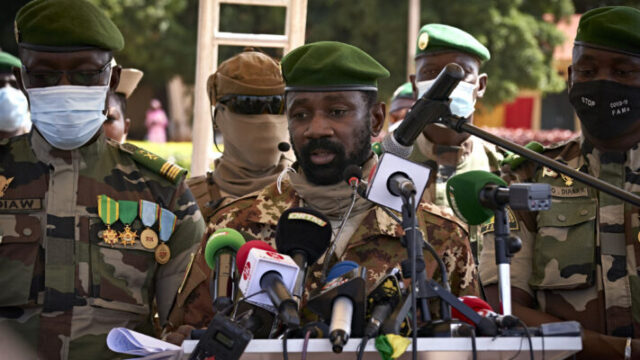
A spate of eight coups in the last three years, including the recent ouster of Gabon’s president by soldiers, has highlighted why military takeovers are returning in African countries.

Early Wednesday, military officers seized power after an announcement that President Ali Bongo had secured a third term in an election, ending his family’s 56-year hold on power.

Advertorial

The African Union Peace and Security Council met Thursday. It announced the immediate suspension of Gabon from “all activities of the AU, its organs and institutions” until the country restores constitutional order.

In Mali, Burkina Faso, Guinea, Niger and Chad, coup leaders are still in control despite widespread condemnation and sanctions.

Experts say sanctions on some countries have hit ordinary citizens and have only hardened resistance to outside interference and bolstered popular support for the various juntas.

Reasons for coups:

Security analysts said these power grabs threaten a reversal of Africa’s democratisation process in the past two decades and a return to the era of coups as the norm.

“In the early postcolonial decades when coups were rampant, Africa’s coup leaders virtually always offered the same reasons for toppling governments: corruption, mismanagement, poverty,” Remi Adekoya, a political analyst and associate lecturer at York University, said in a note.

“While well-worn, these justifications still resonate with many Africans today because they continue accurately depicting their countries’ reality. Furthermore, in many countries, people feel these problems are worsening,” he added.

A survey by Afrobarometer, a pan-African, nonpartisan survey research network, showed perceptions of increased corruption levels are most widespread in African countries.

The report noted that most citizens say their government is doing too little to fight corruption.

“And in a bad sign for activists working to engage citizens on this issue, most Africans say they risk retaliation should they report corruption cases to the authorities,” Afrobarometer said.

Adekoya said these conditions create fertile conditions for coups and for increasingly desperate young Africans who have lost patience with their corrupt leaders to welcome coupists promising radical change.

On Friday, videos on social media showed some elated Gabonese kissing and hugging soldiers following the military takeover of leadership in the oil-rich central African country.

“The timing of the Gabon coup, following the announcement of the implausible electoral results, and the speed with which the junta is moving suggests this was planned,” Joseph Siegle, director of research at the Africa Center for Strategic Studies, said. “While there are many legitimate grievances about the vote and Bongo’s rule, that has little to do with the coup attempt in Gabon. Raising those grievances is just a smokescreen.”

How many coups have there been in Africa?

Out of the 486 attempted or successful military coups carried globally since 1950, Africa accounts for the most significant number, with 214, of which at least 106 have been successful, according to a survey compiled by American researchers Jonathan Powell and Clayton Thyne.

The survey also showed at least 45 of the 54 nations across the African continent have experienced at least a single coup attempt since 1950.

Recent successful coups in Africa;

Niger: On July 26, 2023, the military overthrew President Mohamed Bazoum.

Burkina Faso: In January 2022, Burkina Faso’s army removed President Roch Kabore, blaming him for failing to contain violence by Islamist militants. In September of that year, there was a second coup by army Captain Ibrahim Traoré, who forcibly deposed Paul Henri-Damiba.

Guinea: In September 2021, special forces commander Colonel Mamady Doumbouya overthrew President Alpha Conde. A year earlier, Conde had changed the constitution to circumvent limits that would have prevented him from standing for a third term, triggering widespread rioting.

Chad: In April 2021, Chad’s army took power after President Idriss Deby was killed on the battlefield while visiting troops fighting rebels in the north.

Mali: In August 2020, a group of Malian colonels removed President Ibrahim Boubacar Keita. The coup followed anti-government protests over deteriorating security, contested legislative elections and allegations of corruption. Nine months later, a countercoup happened, with Assimi Goita, named vice president after the first one, leading the second and becoming head of state.

Sudan: In October 2021, General Abdel Fattah al-Burhan led a military takeover in Khartoum, dissolving a ruling council in which the army and civilians had shared power and throwing the country’s democratic transition into turmoil.

Google search engine

Flood Alert: Lagos Govt Warns Residents Of Agboyi, Ajegunle, Others

Lagos State government has urged people resident in the Ogun River downstream to prepare for massive flooding.

This follows an updated 2023 Water Releases Forecast for Flood Control by the Ogun-Oshun River Basin Authority, effective September, and the high rainfall being experienced as predicted.

Advertorial

A statement by the Permanent Secretary, (Office of Drainage Services and Water Resources), Ministry of the Environment and Water Resources, Lekan Shodeinde, identified the affected areas as Alagbole, Meiran, Maidan, Kara, Isheri-Olowora, Agiliti, Owode-Onirin, Owode-Elede, Agboyi I, Agboyi II, Ajegunle, Itowolo, Majidun, Ibeshe, Baiyeku, Maidan and Lekki-Ajah axis.

According to him, the state is concerned about the safety of lives and property. He, therefore, urged residents of the mentioned areas to move upland.

Shodeinde added that the alert was necessary because there is much water to be expected in September, in addition to the heavy downpours usually associated with the months of September and December every year along the Ogun River Basin and other related predictions and warning from Nigeria Metrological Services (NIMET), Nigeria Hydrological Services (NIHSA), National Emergency Management Agency (NEMA)and other related Agencies.

According to the updated 2023 Water Releases Forecast, signed by Managing Director of the Ogun-Oshun River Basin Authority, Olufemi Odumosu, the comparative total amount of rainfall recorded from January to August 2023 (1,128.6mm) is higher than that of January to August in the year 2021 (713.4mm) and 2022 (848.1mm).

Shodeinde added; “Comparatively, 968.6mm was recorded as amount of rainfall for 2021, 1,140 mm for 2022, while in the first eight months of 2023, a quantum of 1,128.6mm has already been recorded, which means when the remaining four months is factored in, a very high intensity of rainfall would be recorded for the whole year.

“When some of the other figures released by the Ogun- Oshun River Basin Authority is further scrutinised for volume of water spilled, it shows 1,102mcm was spilled in 2021 and 1,475.6 mcm in 2022, while for the first eight months of this year, 1,393,1mcm has already been spilled by the River Basin Authority.

“This means that more water will be released when factored with the remaining four months in 2023.”
The Permanent Secretary noted that the water levels of all tributaries, including the Oyan Dam, are rising and is one of the contributory factors to the possibility of the likely flooding at downstream flow of Ogun River. He stressed that the same applies to all the channels and tributaries that discharges into the lagoon, which may experience tidal lock and flow back because of the high water level that prevent discharges, leading to flash flooding.

“Since Oyan River is one of the major tributaries to Ogun River, it is expected that other tributaries will also contribute much to the likely flood downstream flow of Ogun River In mitigating the flood this year, the Ogun-Oshun River Basin Development Authority.

“As at the end of end of August, the Ogun-Oshun River Basin has increased its Daily Releases to 21.4 million cubic meters (mcm) Volume of Water to create more space in order to regulate the expected inflow of water from the Catchment Upstream in September. Water releases might rise to average of 22.0 – 24.0mcm per day, this amount of water that will be released shall depend on rate at which water flows into the reservoir and the height measured in the reservoir.”

On the release of water from the Lagdo Dam in Cameroun to the Benue River, Shodeinde assured residents that only 11 states – Adamawa, Taraba, Benue, Nasarawa, Kogi, Anambra, Edo, Delta, Bayelsa, Rivers and Cross River – will be affected by the releases.

He said: “There is obviously no connection between the Lagdo Dam releases and operations of Oyan Dam and the water releases Forecast for Flood Control in Lagos and Ogun State.”

Google search engine

Drama As Villagers Abduct Bandits’ Wives In Zamfara

For once, residents of a small community in Zamfara State have had one back at the bandits who have been oppressing them for years.

After enduring endless taxation, beating, kidnapping and other forms of harassment from the gunmen who have turned the once peaceful state into a terror axis,residents of Birnin Magaji, recently decided to bare their own fangs at the terrorists.

The gunmen had recently carried out a fresh raid in the area kidnapping some residents for ransom.

Advertorial

But while the terrorists were busy counting the hours and days for the ransom to come, youths in the village intercepted wives of the bandits including a pregnant woman who were on transit, according to online publication, PR Nigeria.

Apparently shocked by the audacity of the villagers, the bandits opted to enter into negotiation to resolve the matter.

The publication quoted a youth leader in the area as saying that during the latest raid conducted by the bandits, they invaded some farms and threatened the farmers before they took them away.

Google search engine

Garba Shehu Defends Buhari, Accuse Ex Attorney-General, Adoke Of Anti-Corruption Pretense

Malam Garba Shehu, spokesman of ex-President Muhammadu Buhari, has accused ex-Attorney-General and Minister of Justice, Mohammed Adoke, of anti-corruption pretense.

In an interview with Adesua Giwa-Osagie, Adoke had commented on the corruption allegations pressed against him and former Senate President, Abubakar Bukola Saraki.

Advertorial

“I have been a victim of corruption allegations by the immediate past government. The most incompetent government we’ve ever seen in this country; ran by the most incompetent President that this country has ever had and will never have again. And ran by a set of political morons,” he had said.

Reacting to some of his allegations, Shehu said the cases cited by Adoke as a reference point of corruption were cases that originated from a government in which he himself was the man responsible for the administration of justice.

He said Adoke’s record in office made him the wrong character for “this famous skit.”

The statement read: “Former Attorney-General and Minister of Justice Mohammed Adokie has been enjoying a spotlight, masquerading as an anti-corruption character in a skit for which he is ill-suited. He neither has the track record nor the moral standing to accuse anyone of corruption, not least the former President Muhammadu Buhari.

“The fact that this character is a free man, walking away from the industrial-corruption their administration foisted on the 200 million-plus Nigerians is an Eighth Wonder. So vast was its scale, it is today a subject of international scrutiny. That should be a script for a Nollywood/Kannywood blockbuster all by itself.

“Most outrageously, the cases cited by Adokie as a reference point of corruption were cases that originated from an administration in which he himself was the man responsible for the administration of justice.

“The contract and incidental judgment in the Process & Industrial Developments (P&ID) were inherited by the Buhari administration. To his credit, President Buhari succeeded in staying its execution even when the previous administration that was responsible for the creation of the liability watched helplessly and exposed Nigeria to over $10bn dollars liability.

“Paris club saga that Adokie cited as an example of corrupt practices of the Buhari administration is not in any way different in origin and circumstances with the case of P&ID. It was rooted in administrations that predated that of President Muhammadu Buhari. Adokie was a product of the administration that planted the evil foundation and the judgments that resulted therefrom.

“The logical conclusion any reasonable person can make on P&ID, Paris Club and Ajaokuta is that President Buhari came on a rescue mission and effectively saved Nigeria from corrupt undertones that were planted to expose its economy to imminent collapse.

“The success of the Buhari administration in the direction of the fight against corruption is unprecedented. New legislations were introduced, major recoveries were made at home, stolen monies were repatriated from abroad, and they were judiciously deployed in infrastructure development. High profile convictions were recorded in unprecedented numbers, with enhanced percentages over and above the records in existence.

“It is in international recognition of these efforts that the African Union chose the former President as its African Continental Anti-Corruption Champion. Additional recognitions by the United Nations Office on Drugs and Corruption, UNODC among others were also lauded on the former president and his administration.

“Adoke also made some wild allegations in the aviation sector. The efforts of the Buhari administration in the aviation are known: They were visible in terms of capital infrastructure development, safety, and policy; they changed the face of the aviation sector into an attractive one for investment, resulting in new airlines coming on board. No major commercial airlines incident was recorded throughout this period.

“All Nigerians by right can say whatever they want of the Buhari administration. No one is offended by their actions, right or wrong. But when you come out with innuendos of corruption written all over your face and say that you want to moralise and pontificate, Nigerians in different walks of life will have problems with that.”

Google search engine

Promotion Of Teachers Would Be Based On Performance, Not Automatic – Ondo SUBEB

Ondo State Universal Basic Education Board has declared that the promotion of the public primary school teachers would be based on their performance and not automatic from next year.

The board also warned the teachers against truancy at work, saying any teachers who absconded without formal permission would be made to face music.

Advertorial

The Executive Chairman of the state SUBEB, Mr Victor Olabimtan stated this during an interactive session with the education secretaries from the 18 Local government areas of the state at the board’s headquarters in Akure, on Friday.

According to the chairman, the directive became necessary in order to enhance the better performance of pupils of public schools in common entrance examinations into public secondary schools in the state.

He said the state government was not happy with the level of performance of the primary school pupils in the state, in the examinations, hence the decision to place the promotion of teachers on performance.

Olabimtan declared, “From next year, no teacher will be promoted to the next grade levels especially from level 13 and above without empirical evidence that the wards under them performed very well in their examinations.”

He noted that the state government had made huge investments in the basic education sector through the construction and renovation of over 900 schools and the distribution of free instructional material to pupils, and consequently, the government expects better delivery from teachers and good performance from pupils in all examinations.

While admonishing the education secretaries and head teachers to live up to expectations, the SUBEB boss said the government won’t hesitate to deal with anybody, no matter how highly placed, trying to sabotage the established high-performance standard in education the state is known for.

“All promotions, especially from grade 13 and above will be subjected to performance evaluation by the Board and the Ministry of Education Science and Technology.

“As from the beginning of the new academic session the board is going to invigorate its monitoring and supervisory mechanism by paying unscheduled visits to all the schools in the state to ensure teachers are in classes doing what they were employed to do,” he stated.

The chairman warned teachers who are in the habit of absconding from duties or engaging in selling and buying during school hours to desist from such acts, saying anybody caught in the act will face the music.

“There is credible information that some teachers come to school at will while others do not come at all but employ someone else to do their jobs while engaging in other activities at the detriment of students under their care.

“Some even travelled abroad without appropriate approval. This not acceptable and anybody caught will face the penalties,” he warned.

Google search engine

Nigerians Lack Confidence In The Justice System – NBA Laments

The Nigerian Bar Association, NBA, has called for an urgent reform of the justice system in the country, saying it was worried that public confidence in the judiciary remained at very low levels.

The legal body, in a communique it issued to mark the end of its 63rd Annual General Conference, AGC, further demanded an upward review of the remuneration of judges across the federation.

Advertorial

It recommended that issues involving the remuneration of judicial officers should not only be separated from the public sector, but also removed from the purview of the Revenue Mobilisation Allocation and Fiscal Commission, RMAFC.

“Conference also recommended an independent salary scale for judicial officers. Conference recommends that urgent attention be paid to the plight of magistrates and other lower court judges,” the NBA stated in the communique that was read to newsmen yesterday by its National President, Mr. Yakubu Maikyau, SAN.

NBA, which is the umbrella body of legal practitioners in the country, said it was noted during the conference, “that every aspect of the infrastructure of our justice system requires fundamental rethinking including our approaches to policing, adjudication, bail, sentencing and imprisonment.”

It said: “There was also a call for adherence to judicial decisions, adoption, and integration of technological advancements for the judiciary, and fostering improved relationships between the different branches of government.

“Achieving the desired justice system will be a process, not an event. Nevertheless, change must be accelerated to keep up with the expectations of Nigerians, particularly those of the poorest and most vulnerable communities. Such change must be properly planned and carefully managed.

“The importance of a strong, independent judiciary was emphasized.”

On economy, the NBA said it observed that Nigeria’s economic potential has been constrained by many structural issues, including inadequate infrastructure, tariff and non-tariff barriers to trade, fundamental obstacles to investment, uncertain government policies and reluctance of previous governments to take the necessary bold steps required to achieve sustained economic growth.

The legal body said it was disappointed over Nigeria’s paradoxical situation of having natural resources that are not adequately utilised for industrial development.

“Despite substantial gas reserves the nation is still unable to explore gas to achieve adequate electricity generation.

“Conference recognized Nigeria’s potential in terms of mineral wealth and human resources, emphasizing the enormous opportunities available. However, challenges like power shortages, oil theft, kidnapping, insecurity, and divisions among citizens have prompted the need for robust, long-term economic decisions to revive the economy.

“Conference resolved that sustained broad based economic growth and poverty reduction are critical to Nigeria’s economic growth and stability.

“Specifically Conference called on the Federal & State Governments to refocus efforts on infrastructure development, improve power generation, improve agricultural productivity, and expand jobs in rural areas.

“There should also be greater attention on youth employment through education and entrepreneurship skills training.”

The NBA, while lamenting the rising spate of insecurity in the country, identified the need for greater investment in the Military.

“Conference recommended practical strategies to address security concerns. These include community involvement in policing, youth engagement through job creation, enhanced regional cooperation, media sensitization, comprehensive police reforms, religious school regulation, strengthening the judiciary, and observance of human rights.

“The adoption of state security forces, proper land management, international resource acquisition, and meticulous implementation of approved plans were also suggested,” the communique further read.

Google search engine

Tinubu To Attend G-20 Summit In India On Monday

President Bola Tinubu is expected to leave Abuja on Monday to attend the G-20 Leaders’ Summit in New Delhi, India.

President Tinubu is attending the Summit on the special invitation of Indian Prime Minister, Narendra Modi.

A statement issued by the Special Adviser to the President on Media and Publicity, Chief Ajuri Ngelale explained that on the sidelines of the Summit, the President will participate in and deliver keynote addresses at both the Nigeria-India Presidential Roundtable and the Nigeria-India Business Conference.

Advertorial

The CEO Roundtable will be attended by leading industrialists in the Indian private sector, Nigerian industrialists, as well as senior government officials from both countries.

According to the statement, “The President aims to leverage this platform to attract global capital and promote increased foreign direct investments in key labour-intensive sectors of Nigeria’s economy for job creation and revenue expansion.

“Moreover, he will use this opportunity to highlight Nigeria’s attractiveness as an investment destination, specifically outlining his cross-sectoral reform plan as encapsulated by the Renewed Hope Agenda.

“Given the President’s renowned experience in attracting investment to Lagos State, leading industrialists have sought separate private engagements with him at the summit.

“The President’s itinerary will also feature bilateral meetings with a cross-section of world leaders from four different continents, representing both G-20 and non–G20 countries. These engagements are geared towards strengthening bilateral economic, trade, and investment partnerships for mutual benefit.”

The statement further said, ” At the G20 Summit, the Nigerian leader is expected to share Nigeria’s perspective on the theme, “One Earth-One Family-One Future,” which speaks to the global unity required to address the challenges facing humanity and the planet.

“With its collective contribution of up to 80% of global GDP, 75% of international trade, and housing 60% of the world’s population, the G-20 constitutes a significant economic power bloc of socio-economic opportunity and geo-political stability.

“While Nigeria’s membership of the G-20 is desirable, the government has embarked on wide-ranging consultations with a view to ascertaining the benefits and risks of membership.

“This is consistent with the desire of the President to democratize foreign policy and articulate policy formulation and implementation through a Whole-of-Society and a Whole-of-Government approach that achieves the nation’s long-term strategic objectives.

“Once consultations are concluded, the government will decide whether or not to apply to join as appropriate. The participation of President Tinubu at the G-20 Summit in India is, in part, in furtherance of this objective.”

Accompanying President Tinubu on the mission are Amb. Yusuf Tuggar, Minister of Foreign Affairs; Wale Edun, Minister of Finance and Coordinating Minister of the Economy; Dr. Bosun Tijani, Minister of Communications, Innovation, and Digital Economy; and Dr. Doris Uzoka-Anite, Minister of Industry, Trade, and Investment.

It also said that President Tinubu will return to Nigeria immediately the Summit is concluded.

Google search engine

Where Is ECOWAS Standby Force?

As the Economic Community of West African States (ECOWAS) continues to explore diplomatic channels to bring back ousted Nigerien President Mohamed Bazoum, it is yet to rule out the use of force to send the coup leaders back to the barracks.

Since the ECOWAS Chiefs of Defence Staff said they were waiting for a green light to activate their standby force, a lot of questions have been raised, particularly on how practicable military solution would be in Niger.

Advertorial

Stakeholders, who spoke to journalists on Sunday queried the existence of any ECOWAS Standby Force, the readiness of member countries, availability of boots (population of officers), strength and capacity of such force, its operational and legal framework as well as the resources (financing) of the standby force.

Although by its original design, the regional bloc was set up to promote economic integration and cooperation among member states, it has intervened in peacekeeping missions in Sierra Leone, Liberia, Guinea Bissau, among others, through the ECOWAS Monitoring Group (ECOMOG), with the most recent in The Gambia.

However, the functionality of ECOMOG or any ad-hoc military arrangement had overtime and often been anchored by the Nigerian armed forces with sub-battalion strength units contributed by other ECOWAS members.

What is ECOWAS Standby Force?

President Bola Tinubu, who spoke recently at a meeting of the regional bloc, said the standby force meant the use of force as a last resort if diplomacy failed.

In the same vein, Paul Williams, a security policy expert, said, “The ECOWAS Standby Force is a part of the larger African Standby Force (ASF) structure which comprises five regional forces (Northern, Eastern, Western/ECOWAS, Central and Southern).”

However, what that force entails remains unclear as there has not been an official communication from the regional bloc about how it would be constituted or what its modus operandi would be.

In December, 2022, ECOWAS reached an agreement after a summit to establish a regional peacekeeping force aimed at countering terrorism and reinstating democratic governance following military coups.

The standby force is to be headed by the CsDS from member countries as the military unit of ECOWAS aims to tackle terrorism and coup threats as in Niger, Mali, Guinea and Burkina Faso.

Tasks before ECOWAS

Experts and observers argue that the formation of ECOMOG in the past failed to meet the constitutional legal requirements of ECOWAS in the formation of a regional force.

While ECOWAS has been involved in several stabilisation missions in the sub-region, it is only in reaction to the recent trend of coups in the sub-region that ECOWAS leaders resolved to set up a regional force in the true sense of it.

On December 4, 2022, the president of the ECOWAS Commission, Omar Alieu Touray, was quoted as saying, “Leaders of the Economic Community of West African States have decided to act to take care of our own security in the region.

“They are determined to establish a regional force that will intervene in the event of need, whether this is in the area of security or terrorism, and restore constitutional order in member countries.”

‘It isn’t a ready-made organisation’

Explaining the concept of the ECOWAS Standby Force in an interview with Daily Trust on Sunday, a former Nigerian CDS, Gen Martin Luther Agwai (Rtd), said the force was not a ready-made organisation, adding that they were forces that would be drawn from military strength of each member country.

He said, “The standby force doesn’t mean that there’s a force that ECOWAS has as an organisation standing by. No! The standby force is a force that member countries have pledged. It is based on the pledges by member countries that when they’re required they would be assembled.”

A professor of international relations and Chief Executive Officer of the Centre for Legislative Studies in Africa, Usman Muhammad, expressed skepticism on the availability of a charter that states ready-made protocols and rules of engagement for the officers that will be donated.

He said, “If the charter says that these countries (ECOWAS member states) would come up with a formula and a force to be reckoned with through contributions and go into any state that is either about to fall or has witness this type of coup in Niger, that means it is not a standby force, it is contributory and is voluntary also.

“Some other states might look at their economic purse, strength and weakness and say they will not be able to contribute, but there will be no offence since it is not obligatory. Even when you contribute forces, even if you are strong, there have to be some rules of engagement, there has to be some other protocols before you move in.”

Dr Umar Ardo, who has taught political history at the Nigerian Defence Academy (NDA), said: ““No country or international body or organisation has any right of invading another country based on ideological differences without such invasion breaching stipulated international law.

“Besides, there is no universally acceptable definition of democracy. Every nation practices its own defined version of democracy, and so no nation or ideological bloc has the right to invade and impose its version of democratic practice on another.

“It is, therefore, preposterous for ECOWAS or the African Union (AU) or NATO or any other international ideological bloc to establish a standing military force for offensive against defensive purposes.

“In other words, international blocs can establish military forces for defensive purposes only; to protect themselves and/or their interests against external attack and interference.

“Nations don’t establish a continental or sub-continental military force to wage war against other sovereign nations on account of ideological differences. It should never be done anywhere in the world. Otherwise wherein lies the indomitable principle of non-interference in the internal affairs of sovereign states as guaranteed by both charters of the UN and the AU?

“In addition, both charters of the UN and AU stipulate that every sovereign state shall have the inalienable right to independent existence! This presupposes that every nation shall determine its affairs howsoever it sees best if such affairs constitute no threat to the existence or well-being of another nation or to that of an international community or to that of humanity and its well-being.

“Neither military rule nor monarchy nor any such non-democratic governance constitute any such threat.”

Don’t donate our forces – Fani-Kayode

Commenting on the back and forth on deploying troops to Niger Republic, a former Minister of Aviation, Femi Fani-Kayode, counselled the federal government not to “donate” Nigeria’s military personnel to any standby force considering the present spate of insecurity in the country.

Fani-Kayode, who made the plea via his X (formerly Twitter) handle, said Nigeria could not afford to commit its meagre resources to such mission, claiming that the country had altogether about 200,000 personnel across the three services in the country.

He said, “ECOWAS doesn’t even have a combat-ready force. They will depend on Nigeria. Presently, Nigeria gives more than 80 per cent of the MNJTF funds. Again, Nigeria’s military is currently engaged in internal operations in all the six geo-political zones.

“We only have about 200,000 personnel in all ranks and for the three services. With the current economic crunch, where are the resources coming from? To depend on the Western countries that have their own interests to protect?

“Our IDPs and refugees are still in camps, we have not been able to resettle them for more than ten years, so how do we handle additional mass of IDPs and refugees that would definitely result from the crisis? Nigeria would be in deep sh-t if we go for this adventure.”

Niger’s military junta

Military personnel strength in ECOWAS countries

Checks by Daily Trust on Sunday showed that an estimate by Global Firepower puts the combined active military manpower in the West African sub-region at 335,000, with Nigeria accounting for the highest number of troops at 135,000.

With the decision of Mali, Burkina Faso, Guinea and Cape Verde not to be part of any military intervention against the junta in the Republic of Niger, the military strength and the capacity of the ECOWAS troops have been further depleted to about 229,000 active troops.

Security experts and stakeholders, who spoke to Daily Trust on Sunday, expressed worry that Nigeria, being the largest economy in the sub-region, might be left to bear the cost of the military intervention in the Republic of Niger.

Speaking further, Gen. Agwai noted that while ECOWAS would have to think about the likely impact of military intervention before going ahead; it would equally be imperative to consider its readiness in terms of resources and other necessary considerations.

He said, “If there is a division, and people are not willing to go, it could then be the operation would be conducted by the willing forces. If there are those countries that are willing to go, then they can still operate under the umbrella and mandate of ECOWAS.

“So, it does not necessarily mean that the whole countries must sign into and give troops. Some may sign on and say they have no troops to give. If ECOWAS feels that in her estimation and consideration, what they have already on the ground is strong enough to do that, she could still go ahead to do it.”

On funding of the military intervention in Niger, Gen. Agwai said, “Because of the dominance of the country (Nigeria) a lot is expected and the country is likely going to shoulder the highest percentage of the cost.”

He, however, noted that “ECOWAS has other means of raising funds. There are members of ECOWAS who could say we are donating money but we are not going to donate troops to honour our pledge of troops, but we will contribute to the logistics and the resources required for the operation.

“There are other organisations like the AU, the UN, the EU and other prominent countries. If they believe in the course of ECOWAS, they can contribute to do that, but I think that war is not a tea party. I am sure before ECOWAS will ever think of launching any troops into Niger, they have to think across the whole spectrum.”

In the same vein, Prof. Muhammad warned ECOWAS leaders against allowing themselves to be used by foreign powers, stressing that, “If France needs Nigeria to intervene and go into Niger, let France start.

“We cannot be used as cannon fodder, we are more than pawns. Nigeria is Niger and Niger is Nigeria. There’s no how war would not affect the entire part of Northern Nigeria.”

Google search engine

Kano Governor Appoints 115 New Aides

Kano State governor Abba Kabir Yusuf has appointed 115 new aides to serve in his government as Special Advisers, Senior Special Assistants and Special Reporters, taking the tally of his aides to 196.

The latest appointments were announced on Friday and Saturday by Sanusi Bature, the Chief Press Secretary to the governor, who revealed that 14 of the new appointees would serve as Special Advisers while 57 would serve as Senior Special Assistants, and the remaining 44, who are all social media activists, would serve as Senior Special Reporters and Special Reporters.

Advertorial

Before the latest appointments, the governor had appointed a total of 81 persons to serve as his aides with 52 of them appointed in a swoop on August 7 as Special Advisers (10) and Senior Special Assistants and Special Assistants (42).

The governor on June 16 announced the appointment of 14 aides, including seven SSAs, three SAS and four Personal Assistants; while on July 18, 15 persons were appointed by the governor as Special Advisers.

In the latest appointment as announced by Bature, two of the most vocal social media supporters of the Kwankwasiyya Movement, Abdullahi Ibrahim (known on X as Kwankwason Tuwita) and Hassan Sani Tukur (known on X as Noble Hassan) were appointed as Senior Special Assistants for Digital Media and New Media respectively.

Similarly, Bala Abubakar, one of the security aides to the presidential candidate the New Nigeria People’s Party (NNPP), Senator Rabiu Musa Kwankwaso, was also appointed as a Senior Special Assistant on Security (Abuja) by the governor, among others.

Other portfolios assigned to latest appointees as SSA include: Political Awareness, Non-governmental Organisations (NGOs), Kwankwasiyya Media Groups, Reformatory Schools, Teacher Training and Development, Askarawan Kwankwasiyya, Tourism, Butchers and Abbatoir, Environmental Sanitation, Urban Beautification, Grazing Areas, National Assembly Matters, and Women Mobilisation.

Google search engine

“France Must Go” Protest Hits Niger As Residents Demand Withdrawal Of French Troops

Thousands rallied Saturday in the Niger capital Niamey to demand that former colonial ruler France withdraw its troops as sought by a junta that seized power in June.

The protesters gathered near a base housing French soldiers following a call by several civic organisations hostile to the French military presence in the West African country.

Advertorial

They held up banners proclaiming “French army leave our country”.

Niger’s military regime had fired a new verbal broadside at France on Friday, accusing Paris of “blatant interference” by backing the country’s ousted president, as protestors held a similar protest near a French base outside Niamey.

President Mohamed Bazoum, a French ally whose election in 2021 had stoked hopes of stability in the troubled country, was detained on July 26 by members of his guard.

Relations with France, the country’s former colonial power and ally in its fight against jihadism, went swiftly downhill after Paris stood by Bazoum.

On August 3, the regime announced the scrapping of military agreements with France, which has some 1,500 soldiers stationed in the country to help fight jihadism in the region – a move that Paris has ignored on the grounds of legitimacy.

The agreements cover different timeframes, although one of them dating from 2012 was set to expire within a month, according to military leaders.

The military rulers have also announced the immediate “expulsion” of the French ambassador Sylvain Itte and announced it was withdrawing his diplomatic immunity. They said his presence was a threat to public order.

But French President Emmanuel Macron on Monday hailed Itte’s work in Niger and said he was in the country despite being given a 48-hour deadline to leave Niger last Friday.

Google search engine

MOST COMMENTED

- Advertisement -
Google search engine