Home Blog Page 38

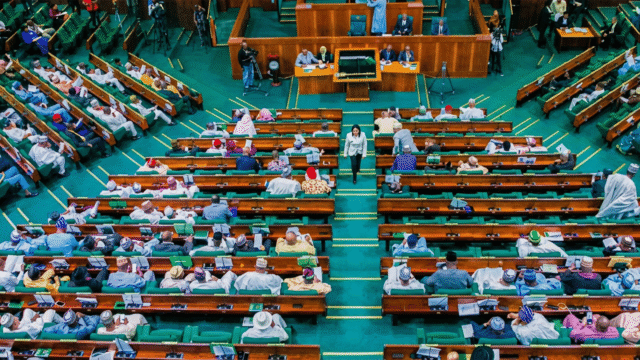
Reps Summon FCT Council Chairmen Over N100bn Audit Irregularities

The House of Representatives Public Accounts Committee has summoned the chairmen of the six area councils in the Federal Capital Territory over alleged financial infractions exceeding ₦100 billion uncovered in audit reports submitted by the Auditor-General.

The affected councils include Abaji, Abuja Municipal Area Council, Bwari, Gwagwalada, Kuje and Kwali. Findings from the audit for the year ending December 31, 2021 revealed widespread cases of unremitted tax and VAT deductions, poor asset documentation and expenditures that were not properly accounted for.

According to the report, the councils recorded outstanding liabilities totalling ₦7.65 billion, covering unremitted pension deductions, Pay-As-You-Earn, unpaid project obligations, VAT and withholding taxes owed to relevant authorities, including the Nigeria Revenue Service, FCT Inland Revenue Service, pension fund administrators and contractors.

A breakdown showed that AMAC had liabilities of ₦2.19 billion, Bwari ₦1.49 billion, Kwali ₦1.46 billion, Gwagwalada ₦1.01 billion, Kuje ₦892.2 million and Abaji ₦593.8 million.

The audit also faulted the councils for failing to maintain updated Fixed Asset Registers, noting that non-current assets worth ₦336 million in Gwagwalada alone were poorly documented.

The report further raised concerns about ₦24.87 billion spent in 2021 on personnel, overheads and capital projects.

Despite an 89 per cent increase in expenditure compared to 2020, the councils reportedly failed to properly account for 37 per cent of funds allocated to capital projects.

Additional audit findings for 2022 and part of 2023 highlighted breaches including understatement of internally generated revenue, unauthorised disposal of assets, non-disclosure of statutory income and failure to remit withholding taxes.

Chairman of the committee, Rep. Bamidele Salam, confirmed that the council chairmen and their finance directors had been invited to appear before the panel on February 11, 2026, to respond to the audit queries.

He warned that failure to honour the summons could lead to the invocation of the House’s constitutional powers, including ordering their arrest.

Salam also disclosed that the councils failed to audit and submit financial statements for 2023, 2024 and 2025, stressing that public funds must be managed with transparency and accountability, and that any official found culpable would face appropriate sanctions under the law.

Google search engine

US Condemns Kwara Attack, Backs Tinubu’s Security Deployment

The United States has condemned the deadly assault on communities in Kaiama Local Government Area of Kwara State, describing the incident as horrific and expressing support for Nigeria’s security response.

In a statement shared on Friday, the US Mission in Nigeria extended condolences to the families of victims and noted that more than 160 people were feared killed, although official casualty figures remain unclear.

Earlier, the Nigeria Police confirmed 75 deaths, while local sources and international observers suggested a significantly higher toll.

The US also welcomed President Bola Tinubu’s directive to deploy security personnel to the affected communities and provide humanitarian support to victims.

It commended ongoing efforts by federal and state authorities to protect residents and bring those responsible for the violence to justice.

The attack on Woro and Nuku communities has triggered widespread concern within Nigeria and internationally, drawing reactions from global stakeholders, including the United Nations and the Republic of Türkiye.

In response to the killings, President Tinubu ordered the deployment of an army battalion to Kaiama and approved the establishment of a new military command structure to coordinate security operations and reinforce protection for vulnerable communities.

Google search engine

Former PFN Leader Petitions US, UN Over National Assembly’s Rejection Of E-Transmission

A former Rivers State chairman of the Pentecostal Fellowship of Nigeria, Apostle Eugene Ogu, has petitioned the United States, the United Nations, and the international community over the National Assembly’s refusal to approve direct electronic transmission of election results in real time.

Ogu described the stance of the federal legislature as a serious threat to Nigeria’s democracy, urging global institutions to intervene and support efforts to safeguard transparent electoral processes.

In a petition made public in Port Harcourt on Friday, the cleric also called on the European Union and pro-democracy organisations worldwide to take a stand against what he termed anti-people tendencies within Nigeria’s political system.

He warned that actions capable of undermining credible elections could destabilise the country and insisted that only a transparent process anchored on compulsory electronic transmission of results would reflect the will of the people.

According to him, Nigerians have endured poor governance outcomes linked to corruption, weak institutions, and lack of accountability, stressing that the National Assembly must not compromise the country’s democratic future.

Ogu alleged that the Senate’s refusal to pass legislation supporting real-time electronic transmission could open the door to electoral manipulation ahead of the 2027 presidential election.

He appealed to international partners, labour unions, student bodies, professional associations, and religious organisations to mount pressure on Nigerian authorities to pass the bill into law.

The cleric also urged foreign governments to reconsider granting travel privileges to Nigerian politicians until electoral reforms that guarantee credible elections are implemented.

Ogu further cautioned Senate President Godswill Akpabio and lawmakers against trivialising the matter, warning that failure to ensure transparent elections could expose the electoral umpire and security agencies to heightened tension during future polls.

He maintained that Nigeria’s greatest democratic legacy would be the establishment of a free, fair, and credible electoral system that reflects the genuine choice of citizens.

Google search engine

PDP National Secretariat To Reopen Monday, Says Anyanwu

The faction of the Peoples Democratic Party (PDP) aligned with the Minister of the Federal Capital Territory, Nyesom Wike, has announced that the party’s national secretariat at Wadata Plaza in Abuja will be reopened on Monday.

Acting National Secretary of the party, Senator Samuel Anyanwu, made the disclosure after the Independent National Electoral Commission’s (INEC) quarterly meeting with leaders of political parties in Abuja.

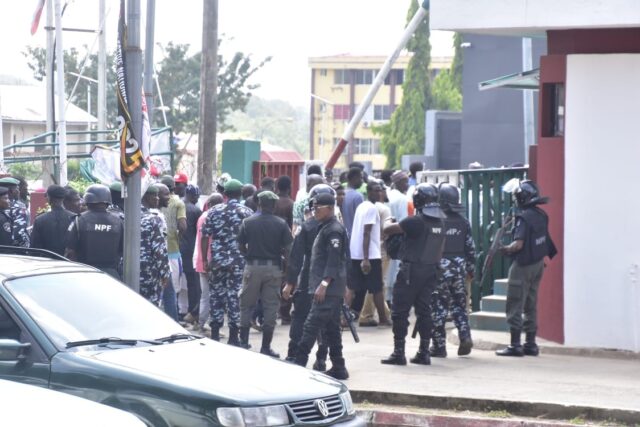
The PDP secretariat had been sealed by the Nigeria Police on November 19, 2025, following a leadership crisis that triggered clashes between supporters of the Taminu Turaki-led National Working Committee and those loyal to factional acting National Chairman, Abdulrahman Mohammed.

Anyanwu said the party had formally written to the police over the matter, adding that a court case instituted by a rival group seeking to reopen the secretariat was dismissed.

“The police sealed the office, and the other group went to court, but the case was dismissed for lack of locus. By Monday, we will take possession of the secretariat,” he said.

He maintained that the PDP remained united under the leadership of the National Caretaker Committee headed by Abdulrahman Mohammed, insisting that there was no faction within the party.

According to him, a recent Federal High Court ruling in Ibadan declared the convention held on November 15 and 16, 2025, invalid and affirmed that no other group should parade itself as the party’s National Working Committee.

Anyanwu expressed optimism that stability had returned to the PDP and assured members that the party would field candidates in all upcoming elections.

He also said the interim caretaker committee would intensify preparations for the forthcoming FCT area council elections, noting that campaigns would continue until the February 18 deadline.

On the registration of two new political parties by INEC, Anyanwu described the development as positive for Nigeria’s democracy, saying it expands political participation and competition.

Google search engine

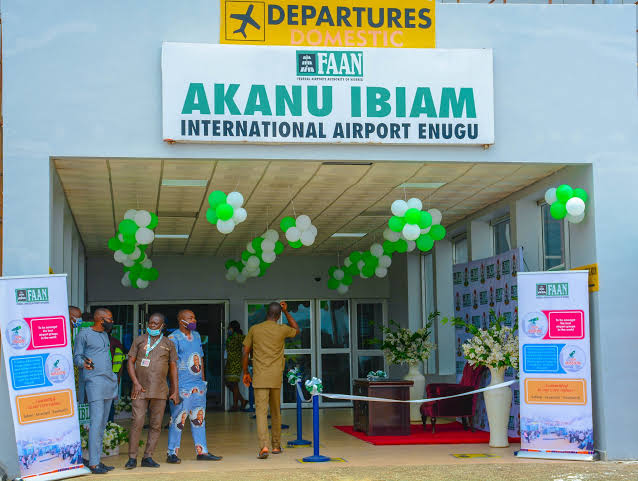
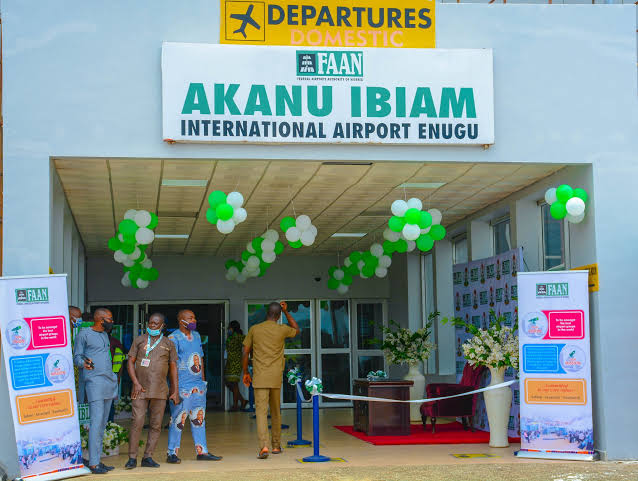
Flights Resume At Enugu Airport After Workers’ Protest Disrupts Operations

Flight activities have resumed at the Akanu Ibiam International Airport, Enugu, after aviation workers temporarily shut down operations on Friday in protest against the Federal Government’s plan to concession the facility.

The protest, led by aviation unions, followed concerns that the concession process initiated by the Minister of Aviation and Aerospace Development, Festus Keyamo, was carried out without adequate consultation with key stakeholders.

The action restricted access to the airport and disrupted several scheduled flights, leaving passengers stranded.

Earlier reports indicated that the minister signed a concession agreement in mid-January, a move that drew strong opposition from unions, including the Air Transport Services Senior Staff Association of Nigeria, the National Union of Air Transport Employees, and the Association of Nigeria Aviation Professionals.

The unions had described the process as opaque and exclusionary, warning that industrial action could follow if their concerns were ignored.

Days later, workers reportedly halted activities at the airport, grounding flights and preventing passengers and vehicles from entering the terminal.

In an update to travellers on Friday, Enugu Air confirmed that normal operations had been restored, although some flights were affected by the disruption.

The airline advised passengers to verify their schedules due to possible rescheduling.

“We would like to inform you that normalcy has been restored at the Akanu Ibiam International Airport. However, our morning flights were impacted by the protest, and passengers may experience changes to their schedules,” the airline said, apologising for the inconvenience.

Efforts to reach the spokesperson for the Federal Airports Authority of Nigeria for official comments were unsuccessful as of press time.

Google search engine

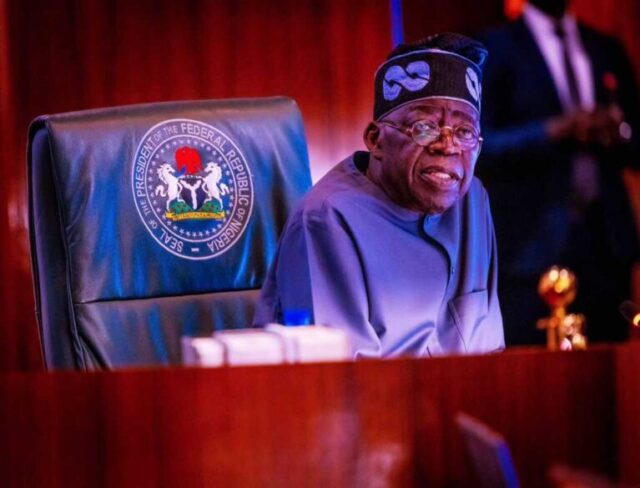
Kwara Massacre: Tinubu Holds Emergency Meeting Following Death Of 160 Residents

President Bola Ahmed Tinubu held a high-level meeting yesterday with Kwara State Governor AbdulRahman AbdulRazaq at the State House in Abuja, following the deadly assault on Woro community in Kaiama Local Government Area, which claimed at least 160 lives.

Authorities have linked the attack to suspected jihadist fighters, sparking nationwide concern over security in the North-Central region.

Sources close to the presidency said the discussions focused on immediate federal interventions, including humanitarian and security measures to protect residents and bring the perpetrators to justice.

Meanwhile, in the United States, former President Donald Trump addressed concerns over religious freedom, vowing to confront what he described as a militant campaign against religious believers in public life.

Trump stressed the protection of religious liberty as a priority for his administration but offered no specific policy details.

Following the attack, President Tinubu approved the deployment of a battalion to Kaiama and the creation of a new military command structure to coordinate Operation Savannah Shield, aimed at dislodging armed groups and safeguarding vulnerable communities.

The President condemned the killings as “cowardly and inhumane” and directed stronger collaboration between federal and state agencies to track down the attackers.

The Northern States Governors’ Forum also condemned the spate of attacks across Kwara, Katsina, and Benue, calling the killings “barbaric and senseless.”

Chairman and Gombe State Governor Inuwa Yahaya extended condolences to victims’ families and urged security agencies to intensify intelligence gathering, surveillance, and coordinated operations to bring perpetrators to justice.

“These crimes must not go unpunished,” Yahaya said, commending affected state governments for supporting victims and collaborating with federal authorities.

The Defence Headquarters (DHQ) in Abuja described the Woro massacre as a “cowardly terrorist attack” carried out by extremists angered by villagers’ refusal to accept ideological indoctrination.

According to the military, the attackers had initially sought permission to conduct preaching sessions, which the villagers rejected.

The DHQ praised residents for their resilience, urged Nigerians to remain steadfast in constitutional loyalty, and called for stronger cooperation between communities and security forces to prevent future attacks.

Governor AbdulRahman AbdulRazaq directed the State Emergency Management Agency to provide urgent relief to victims of the Woro and Nuku attacks.

Visiting affected communities with state officials, he assured residents that federal troops deployed under Operation Savannah Shield would reinforce security.

“These victims were massacred because they refused to succumb to a strange doctrine,” AbdulRazaq said, praying for the repose of the deceased and praising President Tinubu for immediate action.

Obi, Gani Adams, and Civil Society Speak Out
Former presidential candidate Peter Obi condemned the killings as a tragic reflection of Nigeria’s worsening security crisis, calling for decisive nationwide action against insecurity.

Gani Adams, Aare Ona Kakanfo of Yorubaland, demanded urgent establishment of state police, arguing that decentralized security could have prevented the tragedy.

The Yoruba Youth Socio-Cultural Association warned that insecurity is spreading to the South-West and urged intelligence-led strategies and coordinated security measures.

Amnesty International also decried the surge in killings and abductions, labeling February 3, 2026, a “Bloody Tuesday” and criticizing authorities for failing to protect citizens across Kwara, Katsina, and Benue states.

Google search engine

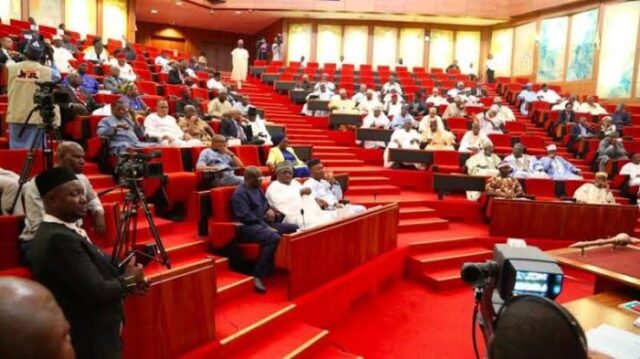
Senate’s Rejection Of Mandatory E-Transmission Sparks Outrage Ahead Of 2027

Nigerians have expressed strong disapproval following the 10th Senate’s handling of the Electoral Act (Amendment) Bill 2026, with civil society groups, election monitors, political activists, and opposition parties warning that the move could undermine transparency and credibility in the 2027 general elections.

The controversy centers on the Senate’s decision to reject mandatory real-time electronic transmission of polling unit results, a provision widely seen as crucial for ensuring transparent and trustworthy elections.

Critics argue that the rejection erodes public confidence and leaves the electoral process vulnerable to manipulation.

The African Democratic Congress (ADC) condemned the Senate, describing the decision as a deliberate attempt to weaken electoral safeguards.

“Foremost among these is the rejection of electronic transmission of election results, a move that clearly signals yet another attempt by the APC to undermine the will of the Nigerian people and manipulate future elections,” the party stated.

The debate intensified after reports circulated that the Senate had rejected Section 60(3) of the Electoral Bill 2026, which mandates the presiding officer to electronically transmit polling unit results to the Independent National Electoral Commission’s (INEC) IREV portal in real time.

Some senators later clarified that the provision had not been rejected, but public confidence was already shaken.

Senator Enyinnaya Abaribe (PDP, Abia South) insisted: “We came out to correct the wrong impression. The Senate did not, I repeat, did not reject electronic transmission of results.”

He added that the provision would be monitored closely through to presidential assent.

Concerns over the Senate’s amendments have also been raised by civil society organisations.

Kimpact Development Initiative (KDI) highlighted that the removal of mandatory e-transmission, shortening of election notice periods, and weakening of sanctions for vote buying could all weaken Nigeria’s electoral integrity ahead of 2027.

Yiaga Africa labelled the Senate’s decision “a betrayal of public trust,” warning that compressed election timelines would heighten logistical risks and undermine election credibility.

Samson Itodo, Executive Director of Yiaga Africa, said: “The Senate’s position sharply contrasts with the progressive stance taken by the House of Reps. We hope the conference committee will reject the Senate’s position and restore the progressive provisions that will make votes count in 2027.”

Former PDP Deputy National Chairman, Bode George, urged President Tinubu to withhold assent to the bill until electronic transmission is reinstated, calling the Senate’s action “an aberration that Nigerians must collectively reject.”

Other prominent voices, including Afenifere chieftain Femi Okurounmu, PDP South-West Vice Chairman Ajisafe Toyese, and the Yoruba Ronu Leadership Forum President Akin Malaolu, condemned the Senate for undermining transparency and warned that the stance could compromise the 2027 elections and threaten democratic stability.

Connected Development (CODE) also criticised the amendments, highlighting that leaving electronic transmission discretionary and compressing timelines without safeguards could perpetuate manipulation and post-election disputes.

The African Democratic Congress (ADC) accused the Senate of plotting to rig future elections, calling for Nigerians to reject the move and urging the Conference Committee to restore reforms aligned with democratic principles.

Similarly, Advocacy for Knowledge and Civic Engagement Foundation (AdvoKC) described the bill as a major setback to Nigeria’s democracy and a betrayal of public trust.

As the bill moves to the Conference Committee for harmonisation between the Senate and House versions, civil society groups are calling for transparency, proper safeguards, and measures that will strengthen public confidence in Nigeria’s electoral process.

Google search engine

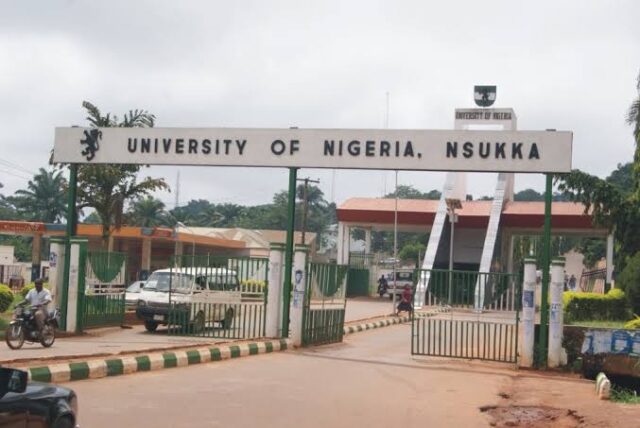
UNN Students, Parents Protest Fee Hike; Council Reduces Increment To 60% After Negotiations

The proposed 100 per cent tuition fee hike at the University of Nigeria, Nsukka (UNN) has sparked outrage among students and parents, raising concerns about potential mass dropouts amid Nigeria’s economic challenges.

After weeks of protests and negotiations, the university reduced the increase to 60 per cent, but many stakeholders still consider it excessive for a public institution.

The initial proposal would have seen students paying double their current fees, with new students particularly affected.

Reports indicate that the acceptance fee for new students would rise from N30,000 to N50,000, a steep jump that has drawn widespread criticism.

Students and parents have taken to social media and other platforms to voice their opposition.

Nwabunwanne Chigozie, a final-year student in Mass Communication, described the hike as “outrageous” and “a decision made out of shallow thoughts.”

He added, “Most of us came to University of Nigeria, not because of its name, but also how affordable its education was. I want cheap, not free education.”

“Now, without proper communication and prior notice, I’m slammed with a 104 per cent increase. As a young man who has been paying his fees, I want to personally ask the management of University of Nigeria, Nsukka if education is now meant for the rich. If so, I shall make way for their children by dropping out. If not, if education is a right not a privilege, then the hike is to me, totally unacceptable.”

Cosmos Kenechukwu, a Political Science finalist, emphasized that tuition should not be the top priority given students’ financial constraints.

“While we understand the university’s need to maintain high academic standards and infrastructure, a tuition hike at this time would be devastating for a significant portion of the student body.”

“Many of our colleagues come from humble backgrounds and are already stretched to their limits. Education costs are not just about tuition; students must still cover rising costs of textbooks, off-campus lodges and hostels, daily feeding, and basic survival expenses.”

“Increasing fees risks forcing brilliant students out of school, not for lack of intellect, but for lack of means. We urge the administration to explore alternative funding models that do not place the entire burden on students and their struggling families.”

Cynthia Ngwu from the Faculty of Pharmaceutical Sciences added, “I feel the tuition fee increment is utterly outrageous and too sudden.”

“If at all any adjustments must be made, the management should consider students’ welfare and the fact that some families struggle to pay these fees.”

“Moreover, UNN is a public university, I see no reason why tuition should be made high. Appropriate and early announcement should be made to alert students on time so that necessary adjustments can be made.”

Favour Azubuike, a self-sponsored student, warned of the impact on financially constrained families.

“Considering students who sponsor themselves in school and parents who aren’t that financially buoyant, this hike in school fees can result in a lot of students dropping out.”

Another student, who requested anonymity, argued that the increase reflects a lack of consultation.

“So about this fee hike, in my opinion this is just proof that the school runs like a dictatorship because increasing fees without prior discussion shows that we students have been sidelined.”

“Even if there’s need for more funds, it should have been increased gradually, let’s say by 10 to 20 per cent. Increasing fees by a 100+ per cent is just outrageous.”

Parents also expressed their frustration. Mr. Ikechukwu Aloysius said, “I am an artisan and I have three children who are all going to public universities because it’s considered cheaper and now that hope seems to be dashed? The school management should have a rethink and look into the issue because I may have no other option than to withdraw my wards if this increment sees the light of day.”

Mrs. Evelyn Anyim added, “My son just got admission and I have to pay his fees as well as provide him with other necessary provisions. I understand that to fund education needs money but the unnecessary increase in acceptance fee is a burden to families who already budgeted a different amount earlier, this is very unfair.”

“We should consider the economic situation of the country and understand that to make money right now is very difficult. Something needs to be done about this, it’s unfair.”

Some lecturers also weighed in. A political science lecturer who requested anonymity noted, “With my interaction with seven different parents who called me regarding school fees hike, lamented that some of their children will be withdrawn from the universities over the development.”

“They could not afford presently to finance the school fees of all of them with expenses of hostel accommodations, getting food materials, and other unaccounted expenses to their children… Though from the direct source that the VC and SUG administration are deliberating to reduce the fees, let it be effective so that parents and guardians can afford the payment of the school fees of the children.”

Another lecturer from the Arts faculty added, “I do know that lecturers are the worst hit. How can you pay tuition for 3 or 4 children considering our meagre earnings? Professors earn between 450k and 500k.”

“How can a prof pay for more than a child when it’s obviously higher than his salary? What about the junior lecturers? That’s our reality. I’m typing without glasses because I can’t even afford it for now. So you see how complicated the issue is.”

Students also shared their concerns. Rosemary, a final-year Mass Communication student, said, “The average ones who are willing to learn from the little they have won’t be able to afford the school fees anymore. Imagine paying double of what you paid as a first-year student.”

“They also have to consider parents because some parents sponsor up to three or five children. Imagine paying that whole amount on school fees only, what about the house rent, feeding and other expenses?”

Juliet Ugwuoke, a Philosophy student, added, “I was so heartbroken when I heard of the school fees increment and when I told my dad about it he also complained because the fees now are like double of what we were paying before.”

“I know some students who might drop out of school if the outrageous school fees increment continues.”

“The school fees hike will affect my feeding and my final year project. The only option now is to pay for my fees in instalments.”

Chidera, a 400-level Social Work student, said, “Increasing school fees to that much is not plausible at all.”

Chris Ozowara, Students Union Government Director of Information, urged students to remain calm, noting that the union continues dialogue with the university management to resolve the issue.

Following weeks of negotiation, UNN management and SUG representatives reached a consensus to reduce the proposed 100 per cent sundry charges for the 2025/2026 session to 60 per cent.

Acting Public Relations Officer, Inya Agha Egwu, explained that the agreement applies to both new and returning students and represents a 40 per cent reduction from the initial proposal.

The new fee can also be paid in two instalments, with no change in accommodation fees.

“The agreement was reached at a meeting between the University Management, acting on behalf of the Governing Council, and the SUG representatives, including the SUG Presidents of Nsukka and Enugu Campuses, Speakers of the Legislative Arms, and the Senate President of the SUG.”

“The resolution is the outcome of weeks of sustained negotiations that commenced in December 2025. During the discussions, student representatives explained that they adjusted their earlier position of a 30 per cent increment in recognition of prevailing fees in comparable universities and the urgent need to upgrade infrastructure in UNN.”

“The University Council, through management, had earlier shifted its stance from 100 per cent increment to 90 per cent before agreeing to the students’ plea for 60 per cent on Friday.”

“Following the council’s conclusion, both parties formally signed an agreement outlining key terms, including provision for payment of the new fees in two instalments across the two semesters to ease the financial burden on parents and guardians, and no increment in students’ accommodation fees for the 2025/2026 academic session. At the end of the deliberations, the SUG leadership expressed appreciation to the University Governing Council for its understanding and responsiveness.”

Despite the agreement, general sentiment among students remains strongly against any fee increment at the institution.

Google search engine

JUST IN: Aviation Workers Shut Down Enugu Airport Over Concession Dispute, Passengers Stranded

Flight operations at the Akanu Ibiam International Airport, Enugu, were abruptly halted on Friday as aviation workers embarked on an industrial protest against the Federal Government’s concessioning plan.

Sources said the shutdown followed a directive from the national leadership of aviation unions amid growing concerns over how the concession process could affect workers’ welfare and job security.

According to insiders, the workers were particularly angered by reports that the airport had been concessioned to a South-East governor and a prominent Anambra-based businessman without clear assurances regarding the future of existing staff.

“The concession arrangement did not take the welfare of workers into account,” a source disclosed.

“We were only told that full concessioning would take effect in about two years, but nothing was said about what happens to the workforce when the new operators assume control.”

The source added that aviation unions had made several attempts to engage both government officials and the alleged concessionaires, including key political and business figures from the South-East, but received no firm commitments on staff protection.

“As a result, the national offices of the aviation unions directed workers this morning to shut down flight operations, and that is exactly what is happening,” the source said.

The protest forced passengers out of the terminal, leaving many stranded, while all flight activities at the airport were suspended. Enugu-bound flights from Abuja and Lagos were also put on hold, worsening the disruption.

Enugu Air, in a statement on its official X handle, confirmed the development, noting that originating flights from Enugu were experiencing delays due to the ongoing protest and that affected passengers were being contacted directly.

Videos circulating on social media showed frustrated passengers gathered around the airport premises, expressing anger over the sudden shutdown and lack of timely information from authorities.

As of the time of filing this report, efforts to obtain official reactions from the Federal Airports Authority of Nigeria and aviation unions were unsuccessful.

Google search engine

Electoral Act: Opposition Parties Ask Conference Committee To Override Senate On E-Transmission Of Results


The Peoples Democratic Party (PDP), African Democratic Congress (ADC), and New Nigeria Peoples Party (NNPP) have urged the National Assembly’s conference committee to overturn the Senate’s stance and adopt compulsory real-time electronic transmission of election results.

In a joint statement issued on Thursday, the opposition parties criticised the Senate’s rejection of a proposal seeking to make electronic transmission of results from polling units mandatory, describing the move as a setback for electoral transparency and democratic accountability.

They alleged that the decision, taken by a Senate largely controlled by the ruling All Progressives Congress (APC), could create openings for manipulation ahead of the 2027 general elections and erode public confidence in the electoral process.

The parties argued that the amendment to the Electoral Act 2022, which excluded mandatory electronic transmission, undermines ongoing efforts to strengthen Nigeria’s democracy and ensure credible elections.

According to the statement signed by their spokespersons, the Senate’s action has sparked widespread concern among Nigerians and raised questions about the commitment of lawmakers to free and fair elections.

They also faulted what they described as a contradiction in the ruling party’s position, noting that the APC deploys digital technology for internal membership registration but resists its use for transmitting election results.

The opposition maintained that making electronic transmission compulsory would close loopholes often exploited during elections, enhance transparency, and boost public trust in the democratic process.

They referenced previous court rulings, including decisions of the Supreme Court, which held that the current Electoral Act does not expressly mandate electronic transmission, arguing that lawmakers should have corrected the gap through legislative reforms.

The parties warned that failure to strengthen legal safeguards could reverse progress made in recent electoral reforms and deepen mistrust in the system.

They therefore called on members of the National Assembly conference committee to adopt the House of Representatives’ position supporting mandatory real-time electronic transmission of results and to prioritise national interest over partisan considerations.

Describing the moment as critical for Nigeria’s democratic future, the opposition urged lawmakers to act decisively to protect the credibility of upcoming elections and reinforce public confidence in the electoral framework.

Google search engine

MOST COMMENTED

- Advertisement -
Google search engine