Home Blog Page 48

Soludo Reshuffles Team, Appoints Key Aides To Drive Governance Agenda
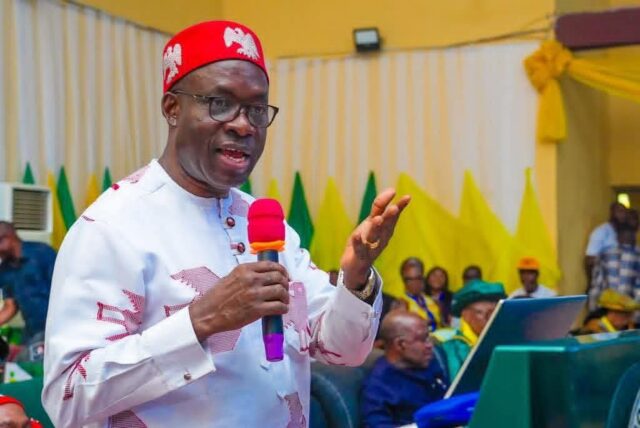
The Governor of Anambra State, Chukwuma Soludo, has approved a fresh round of strategic appointments into key positions within his administration, reinforcing his governance structure.

The appointments, which cut across principal secretaries, special advisers, and top administrative roles, were announced in a statement issued by his Chief Press Secretary, Christian Aburime.

Among those appointed are Mrs Ngozi Iwouno as Head of Service, Joachim Anetoh as Principal Secretary to the Governor, and Dr Ben Nwankwo as Chief of Staff.

Also named is Prof. Frank-Collins Okafor as State Chief of Protocol.

Other notable appointments include Tobechukwu Nweke (SAN) as Attorney-General, Christian Aburime as Chief Press Secretary, Dr Vincent Okechi as Deputy Chief of Staff, and Ms Ngozi Okoye as Deputy State Chief of Protocol.

The governor also named several special advisers to strengthen policy implementation across critical sectors.

These include Dr Godwin Nnadozie (Medicals and Pharmaceuticals), Ms Chinwe Okoli (Innovation and Business Incubation/CEO, Solution Innovation District), Prof. Ebuka Nwankwo (Special Projects and Project Monitoring), and Ken Emeakayi (Community Security).

The latest appointments follow an earlier decision by the governor to appoint Mrs Chiamaka Nnake as Secretary to the State Government, further consolidating his administrative team.

The move is seen as part of Soludo’s ongoing effort to reposition governance and accelerate development initiatives across Anambra State.

Google search engine

Relief For South-East Motorists As Umahi Orders Opening Of Enugu–Onitsha Expressway Section


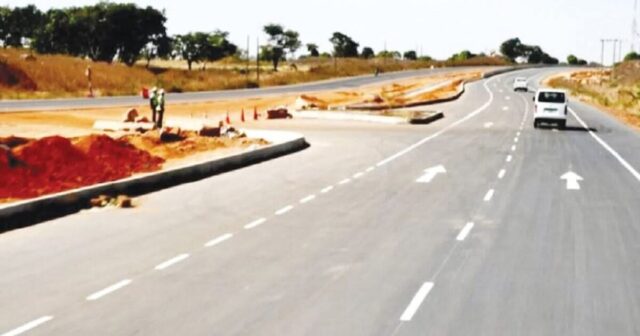
The Minister of Works, David Umahi, has directed that a completed 15-kilometre stretch of the Enugu–Onitsha Expressway be opened to traffic on or before March 31, in a move aimed at easing long-standing transportation challenges in the South-East.

Speaking during an inspection of the project, Umahi described the highway as a critical economic corridor that has for years been associated with heavy traffic congestion and frequent accidents.

He noted that the ongoing reconstruction forms part of the Federal Government’s broader infrastructure drive, adding that the road spans a total of 107 kilometres on each carriageway, amounting to 214 kilometres.

The minister reiterated his preference for concrete pavement over asphalt, stressing that it offers greater durability and long-term value.

According to him, at least half of the road will be constructed using concrete to ensure resilience.
Umahi also revealed plans to install solar-powered streetlights along the corridor, beginning with the initial 15-kilometre stretch to be opened.

He issued a firm directive to engineers to make the road accessible before the end of March, regardless of pending finishing touches such as lane markings or median barriers, describing the move as a form of “Easter relief” for road users.

The project has also received support from Peter Mbah, who facilitated the payment of compensation and relocation of utilities along the route.

While acknowledging that funding delays have slowed progress, Umahi expressed confidence that work would accelerate once contractors receive payments.

Officials from the Federal Ministry of Works confirmed that the 15-kilometre section, located around the Akama axis, is nearly complete and already being used by some motorists, with final adjustments ongoing to ensure safety and smooth traffic flow.

The development signals renewed efforts to improve connectivity and boost economic activities across the South-East region.

Google search engine

Relief For South-East Motorists As Umahi Orders Opening Of Enugu–Onitsha Expressway Section

The Minister of Works, David Umahi, has directed that a completed 15-kilometre stretch of the Enugu–Onitsha Expressway be opened to traffic on or before March 31, in a move aimed at easing long-standing transportation challenges in the South-East.

Speaking during an inspection of the project, Umahi described the highway as a critical economic corridor that has for years been associated with heavy traffic congestion and frequent accidents.

He noted that the ongoing reconstruction forms part of the Federal Government’s broader infrastructure drive, adding that the road spans a total of 107 kilometres on each carriageway, amounting to 214 kilometres.

The minister reiterated his preference for concrete pavement over asphalt, stressing that it offers greater durability and long-term value.

According to him, at least half of the road will be constructed using concrete to ensure resilience.
Umahi also revealed plans to install solar-powered streetlights along the corridor, beginning with the initial 15-kilometre stretch to be opened.

He issued a firm directive to engineers to make the road accessible before the end of March, regardless of pending finishing touches such as lane markings or median barriers, describing the move as a form of “Easter relief” for road users.

The project has also received support from Peter Mbah, who facilitated the payment of compensation and relocation of utilities along the route.

While acknowledging that funding delays have slowed progress, Umahi expressed confidence that work would accelerate once contractors receive payments.

Officials from the Federal Ministry of Works confirmed that the 15-kilometre section, located around the Akama axis, is nearly complete and already being used by some motorists, with final adjustments ongoing to ensure safety and smooth traffic flow.

The development signals renewed efforts to improve connectivity and boost economic activities across the South-East region.

Google search engine

Iran Rebukes Trump, Denies Talks As Middle East Tensions Escalate


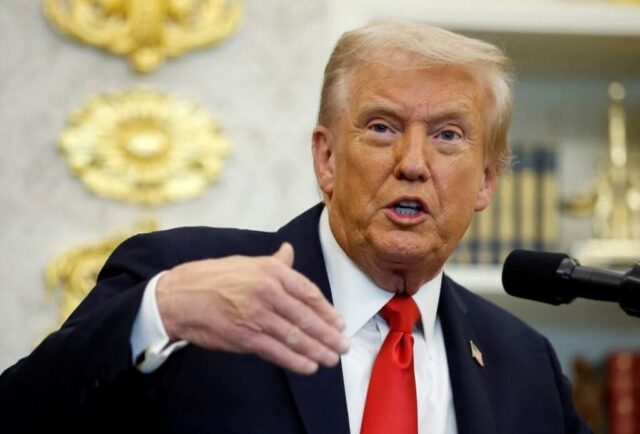
The Iranian government has firmly denied claims by former US President Donald Trump that Washington and Tehran are engaged in negotiations to end ongoing hostilities in the Middle East.

According to Iranian state-linked media, including Mehr News Agency, officials from Iranian Foreign Ministry insisted that no such discussions are taking place, describing Trump’s remarks as misleading and aimed at influencing global energy prices.

Trump had earlier claimed that both sides held “productive conversations” over the past two days, suggesting progress toward a “complete and total resolution” of the crisis.

He also stated that planned US military strikes on Iranian energy facilities had been temporarily suspended to allow room for diplomacy.

However, Tehran swiftly dismissed the assertions, maintaining that no direct engagement with Washington has occurred.

The conflicting narratives come amid heightened geopolitical tension, particularly around the strategic Strait of Hormuz, a vital global oil shipping route.

Trump had issued a stern ultimatum demanding its reopening, warning of severe military consequences.

In response, Iran signaled possible retaliatory actions, including the deployment of naval mines and targeting of regional infrastructure, raising fears of a broader conflict and potential disruption to global energy supply.

The situation has already rattled oil markets, with prices reacting sharply to the uncertainty surrounding the standoff.

Google search engine

Court Slams Ex-Accountant-General With 72-Year Jail Term Over N868m Fraud

A Federal High Court sitting in Abuja has convicted and sentenced a former acting Accountant-General of the Federation, Chukwunyere Nwabuoku, to a cumulative 72 years in prison over a N868 million fraud case.

Delivering judgment, James Omotosho held that the Economic and Financial Crimes Commission successfully proved all nine counts of money laundering against the defendant beyond reasonable doubt.

The court sentenced Nwabuoku to eight years imprisonment on each count, totalling 72 years.

However, the judge ordered that the sentences run concurrently, meaning they will be served at the same time.

Justice Omotosho described the offence as “appalling,” noting that the funds diverted were meant for security and defence during Nwabuoku’s tenure as Director of Finance and Accounts in the Ministry of Defence between 2019 and 2021.

The court also acknowledged evidence presented by the prosecution indicating that the convict refunded over N200 million during the investigation, a claim that was not challenged by the defence.

Nwabuoku was earlier granted bail in the sum of N500 million with two sureties following his arraignment in January 2025 on the amended nine-count charge filed by the anti-graft agency.

The ruling marks a significant milestone in the prosecution of high-profile financial crimes, reinforcing ongoing efforts to tackle corruption within Nigeria’s public sector.

Google search engine

2027: Obi, Kwankwaso Consider NDC Option As ADC Plan Stalls

Fresh political realignments ahead of the 2027 general elections may be underway as key opposition figures intensify consultations amid the lingering crisis within the Peoples Democratic Party.

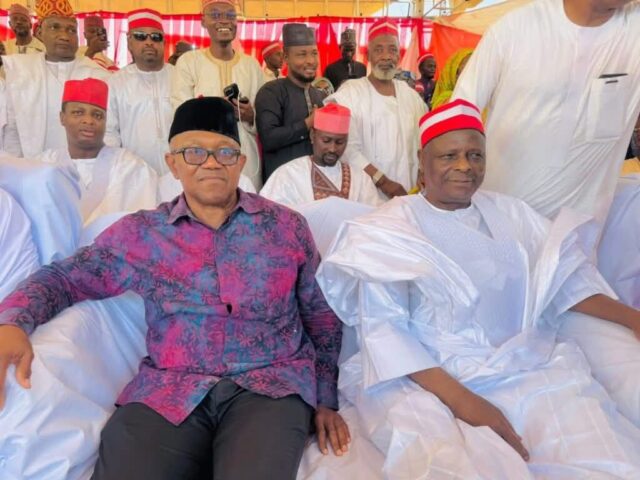
Leading the wave of talks are Seyi Makinde, Rabiu Musa Kwankwaso, Peter Obi, and Seriake Dickson, who recently met in Kano under the guise of Sallah celebrations but reportedly held high-level political discussions.

Although details of the closed-door meeting remain undisclosed, insiders suggest it may signal the early formation of a broad opposition alliance aimed at challenging the ruling establishment in 2027.

The meeting comes at a time when the PDP continues to grapple with deep internal divisions.

Seyi Makinde and Bala Mohammed, the party’s two remaining governors, appear divided on reconciliation efforts, particularly regarding overtures linked to the camp of Nyesom Wike.

Makinde has openly warned that aligning with Wike’s faction could amount to indirect support for President Bola Tinubu ahead of the next election cycle, insisting that his camp retains the backing of the grassroots.

In contrast, Bala Mohammed has taken a more conciliatory tone, suggesting that ongoing reconciliation efforts are being shaped by judicial processes rather than voluntary political compromise.

Amid the uncertainty, prominent PDP figures such as Bukola Saraki, Ahmed Makarfi, and Jerry Gana are spearheading consultations to salvage party unity ahead of its national convention.

Meanwhile, cracks within the party continue to widen.

A faction loyal to Wike has accused the Kabiru Tanimu Turaki group of attempting to derail the convention through legal action, even as party officials insist preparations remain on track.

Adding to the party’s woes, Natasha Akpoti-Uduaghan revealed that the PDP has lost 31 senators due to the prolonged crisis, shrinking its presence in the National Assembly significantly.

She appealed to defectors to return, warning that the party risks further decline without unity.

Despite the internal turmoil, opposition leaders appear to be shifting focus beyond party lines, exploring a coalition that could reshape Nigeria’s political landscape.

With rising consultations and strategic meetings, the stage may be set for a major political showdown in 2027.

Google search engine

Naira To Dollar Exchange Rate Today, March 23, 2026

The Nigerian currency, the Naira, began the week on a relatively stable note, trading at about ₦1,356.74 to the dollar at the official window on Monday, following days of mild fluctuations in mid-March.

Figures from the Nigerian Foreign Exchange Market indicated that the exchange rate has recently moved within a band of ₦1,344 to ₦1,370, with intraday highs touching ₦1,362.00, while average closing rates hovered around ₦1,355.

The currency’s performance has been supported by a more favorable economic environment, particularly Nigeria’s rising external reserves, which are estimated to be close to the $50 billion mark.

A key driver of this improvement is steady crude oil production, currently averaging about 1.46 million barrels per day, alongside relatively strong global oil prices.

Policy direction from the Central Bank of Nigeria has also contributed to the stability.

The bank has maintained a tight monetary stance, keeping interest rates elevated in a bid to curb inflation, which has eased slightly to around 15.10 percent.

Investor confidence has further strengthened after the apex bank confirmed that 30 major financial institutions met the new capital requirements ahead of the March 31 deadline, reinforcing stability in the financial system.

Overall, the Naira’s current position reflects a mix of cautious optimism and improving macroeconomic indicators, even as market watchers remain alert to global and domestic pressures.

Google search engine

Soludo Bows To Pressure, Orders Refund Of ‘Sit-At-Home’ Salary Cuts

The Anambra State Government, led by Chukwuma Soludo, has agreed to refund civil servants whose February salaries were wrongly deducted over Monday sit-at-home absences.

This was disclosed by the state chairman of the Trade Union Congress, Chris Ogbonna, who said the decision followed urgent intervention by the union after widespread complaints from affected workers.

The controversy arose after the government introduced a pro-rata salary policy in February 2026, linking workers’ pay to attendance as part of efforts to curb the Monday sit-at-home observed in the state, often associated with the Indigenous People of Biafra.

However, many civil servants reported severe and inconsistent deductions.

At the Jerome Udoji Secretariat in Awka, workers lamented that the cuts did not correspond with the number of Mondays missed, with some receiving drastically reduced pay.

Ogbonna acknowledged the discrepancies, assuring that the government has commenced steps to refund all excess deductions.

He noted that the move reflects the administration’s responsiveness to workers’ concerns.

“The government has agreed to refund those who were over-deducted. This came after our intervention, and we believe the process is already underway,” he said.

Beyond the salary issue, the TUC also appealed to the government to consider refunding contributions made by workers under the state’s pension scheme.

While Ogbonna rated the administration’s overall performance positively, the development has sparked fresh conversations about the implementation of the attendance-based salary policy.

When contacted, the state Commissioner for Information, Law Mefor, said he was yet to confirm the refund but promised to liaise with the Accountant-General for clarification.

Google search engine

Disu Moves To Rein In Police Excesses, Orders Cut In Tactical Units — Not Total Disbandment

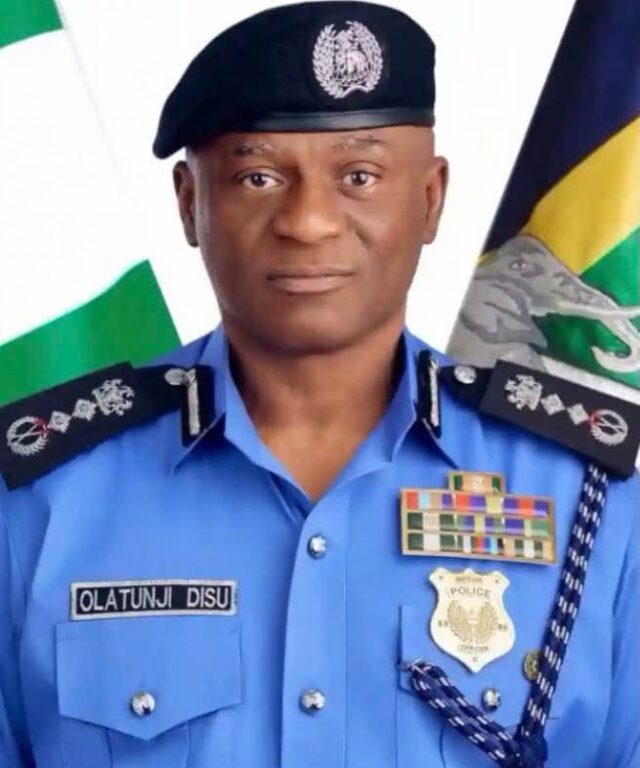
The Nigeria Police Force has clarified that the Inspector-General of Police, Olatunji Disu, did not order the scrapping of all tactical units as widely reported, but rather directed a strategic reduction of such teams nationwide.

In a statement issued by the Force Public Relations Officer, Anthony Placid, the police described reports of a total disbandment as misleading and a misinterpretation of the IGP’s directive.

According to the Force, while the IGP acknowledges public concerns over the excesses of tactical teams, he also recognises their vital role in crime prevention and enforcement operations across the country.

Drawing from his experience in various command positions, Disu expressed concern over the unchecked proliferation of these units, noting that it has weakened manpower at police divisions and contributed to misconduct due to poor supervision.

To address these challenges, the IGP has ordered that tactical teams be streamlined — with a maximum of five units at the Zonal and State Command levels, and no more than three at Area Command and Divisional levels.

The police explained that this restructuring may involve merging or disbanding some units, depending on operational needs and the discretion of command heads.

The directive, however, does not affect state-established security outfits such as the Rapid Response Squad in Lagos, the Special Response Squad in Oyo, and Operation DOO-AKPOR in Bayelsa.

The Force added that the move is aimed at redeploying officers to police stations to strengthen grassroots policing and improve public trust, while curbing the excesses associated with loosely supervised tactical teams.

Google search engine

NLC Rejects N6 Trillion Power Bailout, Demands Overhaul Of Electricity Sector

The Nigeria Labour Congress has rejected the proposed N6 trillion bailout for electricity generation companies, describing it as an ineffective response to the persistent crisis in the power sector.

In a statement issued on Sunday in Abuja, the NLC President, Joe Ajaero, said repeated financial interventions have failed to deliver meaningful improvement in electricity supply across the country.

He argued that the bailout reflects deeper structural problems in the sector and insisted that public funds should not continue to be used to sustain what he described as a fundamentally flawed system.

According to him, Nigerians continue to suffer from high electricity tariffs and persistent blackouts despite years of government spending in the sector.

Ajaero called for urgent reforms, including the merging of the Ministries of Petroleum and Power into a single Ministry of Energy, to improve coordination and efficiency.

He explained that the current separation of responsibilities contributes to inefficiencies, particularly in gas supply for thermal power generation.

The labour leader also stressed that electricity should be treated as a social service rather than a profit-driven commodity, arguing that such an approach would ensure affordability and improved access for citizens.

He urged the Federal Government to suspend the proposed bailout and instead convene a national stakeholders’ summit to develop a sustainable, people-centred roadmap for the power sector.

Google search engine

MOST COMMENTED

- Advertisement -
Google search engine