Home Blog Page 550

Mid-Term: Enugu Targets $30bn GDP By 2031 As Governor Mbah’s Agro-Industrial Vision Gains Momentum
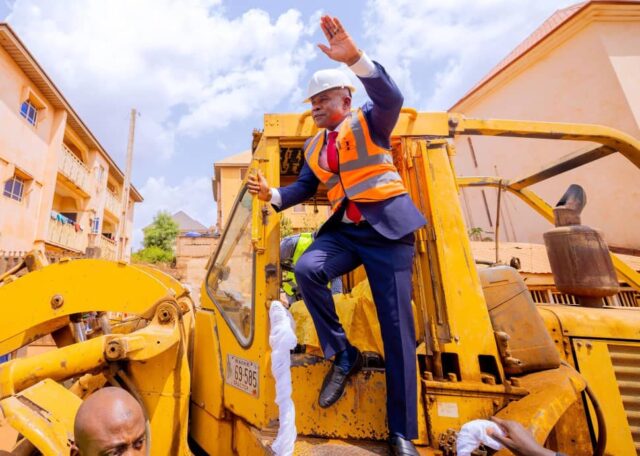
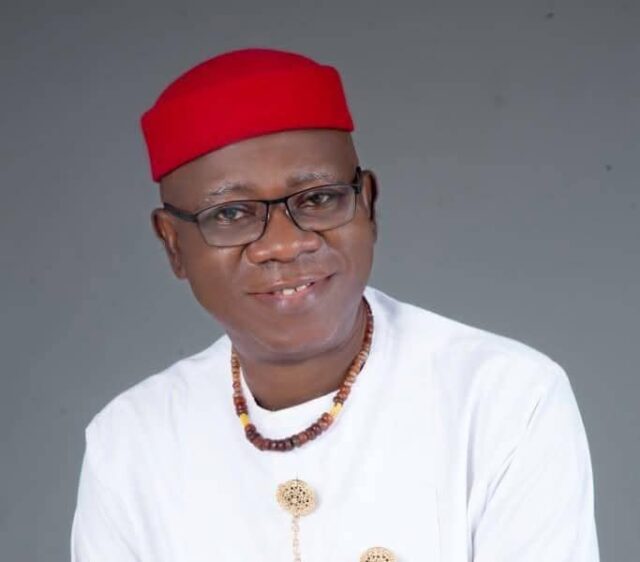
Governor Mbah

The Enugu State Commissioner for Agriculture and Agro-Industrialisation, Mr. Patrick Ubru, has praised Governor Peter Mbah for his strides in transforming the state into a leading agricultural and export hub in Africa.

Speaking in Enugu on Sunday, Ubru highlighted the achievements recorded in the agriculture sector under Mbah’s leadership over the past two years.

He said the ministry had diligently followed the governor’s strategic blueprint aimed at leveraging agriculture to boost the state’s economy.

According to him, Governor Mbah’s plan is to use agriculture “as the basic driver in moving the Gross Domestic Product (GDP) of Enugu State from $4.4 billion to $30 billion by 2031.”

He noted that even before assuming office, the governor had “totally and carefully reviewed policies and strategies” and had backed them with Executive Orders and laws to promote crop cultivation, livestock and fishery production, and agro-industrialisation.

Ubru said the ministry began its work with a target of acquiring 300,000 hectares of farmland to facilitate large-scale commercial farming.

So far, “a total of 187,934 hectares across various locations in the 17 Local Government Areas (LGAs) in the state had been acquired; and more land to be acquired from willing communities across the 17 LGAs.”

He added that the state had also launched a comprehensive farmer data registration effort.

“Continuous update and registration of farmers data on all agricultural value chains across the 17 LGAs in Enugu State. This is to ensure that Enugu State has a robust and verified data of all farmers within the state.”

“Over 67,000 farmers’ data have been captured featuring the geo coordinates, farm sizes, specialisations, value-chain etc of these farmers and their farms. With over 80 farmer co-operatives registered so far,” he added.

Ubru pointed to significant gains in cassava production, stating that Enugu is now the highest cassava-producing state in Nigeria, thanks to the state’s commitment to the Cassava Ethanol Bio-Refining Project.

“Besides other various programmes with development partners, we are excited about the private sector led, Federal, State and Local Government-enabled Private-Public-Partnership on Bio-economy focusing on Cassava-Bioethanol Value-Chain end-to-end development.”

“This project starts from seed multiplication to ‘out-grower/in-grower’ production with 100 per cent off-take; LGA processing clusters; Biotechnology Industrial Park; zero waste conversion of cassava peels to animal feed.”

“It will also produce zero post-harvest losses through 100 per cent off-take and mobile cassava processing etc and all the way to Cassava Ethanol Bio-Refining.”

He added, “Currently, 460 hectares of land have been cultivated with cassava with the construction of the industrial park ongoing at Egede/Affa communities in Udi LGA; and construction and installation of processing equipment at the Bioethanol Industrial Park at Egede.”

Ubru also announced that the Special Agro-Industrialisation Processing Zone (SAPZ) project would be launched across the state’s three senatorial districts: Enugu North, Enugu East, and Enugu West.

“The SAPZ project’s pilot phase is starting at Owo Community in Nkanu East LGA with 1,101 hectares of land.”

“The Environmental and Social Impact Assessment (ESIA) and Feasibility studies have been conducted to enable funding partners African Development Bank (AFDB) and others conclude arrangement to release of funds for the second phase of the programme.”

“The report of the ESIA and Feasibility studies have been received and forwarded to AFDB.”

“Given the information from the AfDB and SAPZ National Coordination Secretariat, Enugu State met the minimum requirement and is scheduled to receive funding for Phase II of the SAPZ programme after the AfDB Board haved approval in the middle of 2025.”

According to Ubru, the government has also proposed 260 farm estates across the 260 political wards in the state, with a projected increase in agricultural productivity by 2,000 percent.

The project aims to create 52,000 direct jobs and over 100,000 indirect ones.

“A pilot phase of this project has commenced at Akpofu community with clearing ongoing within communities in Udi, Enugu East and Igboeze North and Igbo-Etiti Local Government Areas among other council area,” he said.

On mechanisation, Ubru said the government is supporting commercial agriculture with the procurement of 1,000 tractors and farming implements. “100 tractors have been received, another 100 on the way, while remaining 800 will be assembled in Enugu.”

He added that the state is also heavily investing in cash crops like cocoa, cashew, and cotton, as well as large-scale vegetable and spice production for both local consumption and export.

“We have established fish and vegetable farm clusters at Owo after site survey have been done.”

“Architectural design-cum-bill of quantity in progress; and did success pilot of greenhouse technology farming and encouraged LGs, institutions and individuals to participate fully in greenhouse farming.”

Ubru said that in December 2023, the state launched the “Enugu Rice” brand.

“On December 8, 2023, following His Excellency’s approval ‘Enugu Rice’ Brand was launched with three LGAs supporting in off-taking paddy rice from farmers that resulted to 150 tons of milled rice supplied to the Ministry by local processors.”

“These local processing infrastructure and equipment are product of interventions by the state and the donor agencies such as IFAD-VCDP, APPEALS, FADAMA-CARE and ATASP-1 among others.”

He also noted that, with support from donor agencies, the state government had provided farmers with irrigation facilities, inputs, seedlings, and training in climate-smart agriculture and modern farming techniques.

Ubru revealed that Enugu had set up a seed gallery and seed bank, and that produce cities were underway.

He added that a recent collaboration with the Ministry of Education would introduce Smart School Farms in all 260 new Smart Schools under the state’s “catch-them-young” agricultural education initiative.

“All these and more are meant to increase productivity, increase food availability, job creation, increase produce production as well as positioning the state as agriculture off-taking point, where there is value-addition, proper packaging and export hub,” he concluded.

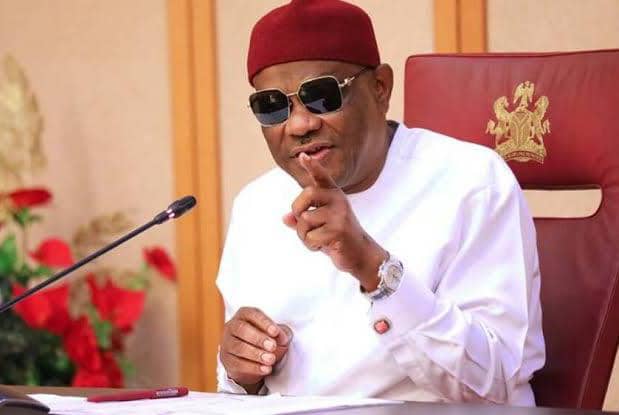
Google search engine

JUST IN: Wike Declares War Against Gov. Mbah, Makinde, Withdraws From PDP Reconciliation Deal


The Minister of the Federal Capital Territory, Nyesom Wike, has announced his withdrawal from all previously agreed reconciliation arrangements within the Peoples Democratic Party (PDP), accusing key party leaders of betrayal, dishonesty, and repeated breaches of agreed terms.

In a statement released on Sunday, Wike traced the root causes of the PDP’s internal conflicts back to the aftermath of the 2023 general elections.

He lamented the party’s continuous decline into “dishonesty and lack of trust amongst its key stakeholders.”

“Since after the 2023 General Election, the PDP has been wantonly swinging from one part of a slippery precipice to another,” Wike stated, emphasizing that numerous attempts were made to “arrest this pernicious virus of dishonesty and treachery.”

The former Rivers State governor and influential G5 group member blamed Governor Seyi Makinde of Oyo State for undermining the reconciliation efforts, accusing him of being “the architect of our problems.”

“I made it clear to the Governor of Oyo State, HE, Seyi Makinde, that he was the architect of our problems, pointing out to him that non-adherence to agreements reached was the bane of the party, and that he was the chief culprit of this anomaly,” Wike revealed.

He disclosed that during a G5 meeting in Lagos, party governors resolved to put aside their differences and move forward.

This was followed by a broader gathering in Abuja at Senator Bukola Saraki’s guest house, attended by Governors Bala Mohammed, Umaru Fintiri, Makinde, Saraki, and other top PDP officials.

According to Wike, the Abuja meeting resulted in clear resolutions such as recognizing Senator Samuel Anyanwu as National Secretary in line with a Supreme Court judgment, withdrawing all court cases related to Rivers State by the party’s National Legal Adviser, and ending disputes about the state of emergency in Rivers.

However, Wike lamented that these agreements were “quickly and brazenly violated,” even before the Saraki-led reconciliation committee could commence its work.

“To my chagrin, Seyi Makinde had connived with Peter Mba of Enugu State to orchestrate the summoning of the meeting of so-called South-East leaders to recommend that if Ude Okoye was not adopted as Secretary, they would pull out of the PDP,” he alleged.

Wike further accused party officials of sidelining Anyanwu by presenting the Deputy National Secretary as acting National Secretary and using a letter from him to call for a National Executive Committee meeting, moves he said were “in complete violation of the agreements reached.”

He cited an incident on May 24, 2025, in Jos, where a PDP zonal elective congress was aborted because INEC refused to attend.

The refusal was because the invitation letter was signed by the Deputy National Secretary, not the duly recognized National Secretary.

“This is undeniably distasteful, provocative and annoying, to say the least,” Wike declared.

Reflecting on his long tenure with the PDP since 1998, Wike expressed disappointment that those he helped elevate politically had turned against him.

“It is on record that none of these persons have done anything close to what I have done to sustain this party.”

“What is more painful is that I contributed substantially to most of these governors winning their elections, yet I have not made any personal demands on any of them and I would never do so,” he added.

Declaring a turning point, Wike announced he has lost faith in the trust and unity that once existed among party members and would no longer take part in reconciliation efforts.

“I have now firmly decided to pull out of all agreements hitherto reached. I have decided to fight on until justice is attained,” he concluded.

As at the time of this report, the PDP had not issued an official response to Wike’s latest stance.

Neither Makinde nor Mba has responded to Wike’s accusations.

Google search engine

BREAKING: Tension Flares As Jigawa Delegates Disrupt Atiku-Obi Coalition Meeting


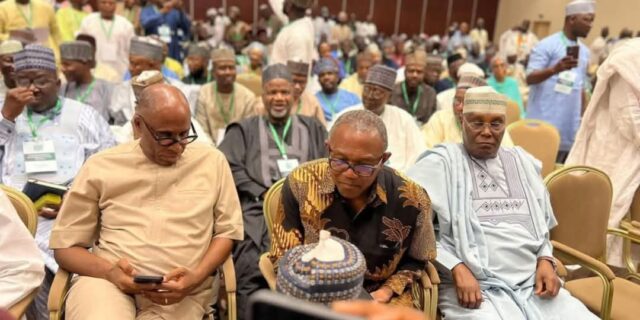
A crucial political meeting aimed at forming a united opposition front, featuring former Vice President Atiku Abubakar, Labour Party leader Peter Obi, and ex-Rivers State Governor Rotimi Amaechi, was thrown into disarray when delegates from Jigawa State caused a major disruption.

The high-stakes gathering, which brought together top political figures, ended in confusion as tensions flared among the attendees.

The video🎥

Google search engine

Tinubu’s Policies Transformational – APC Chieftain


A prominent member of the All Progressives Congress (APC), Chief Hycienth Ngwu, has commended President Bola Tinubu for implementing impactful policies and programmes that are producing tangible results nationwide.

Ngwu, who previously served as the South-East Publicity Secretary of the APC, made this known in a statement released on Sunday in Enugu.

The statement, titled “Laying Solid Foundation for a Prosperous Nation: the President Bola Tinubu’s Strides,” assessed President Tinubu’s two years in office.

He noted that from the moment President Tinubu assumed office, he signaled a departure from the status quo and set out to transform the economy in a way that would benefit not just the current generation but future ones as well.

“From Tinubu’s first day in office, he made it clear that it would not be ‘business as usual’ and he would transform the economy to sustainably cater for all citizens, and those yet unborn,” Ngwu said.

According to him, Nigeria now has a leader with the determination to back his words with action, implementing policies aimed at benefiting all Nigerians, not just a privileged few.

“Nigerians now have a President with strong will-power and who is walking his talk as well as pushing agendas meant to benefit every Nigerian and not a few,” he added.

Ngwu outlined some of what he called “game-changing policies,” which include the removal of fuel subsidy, revitalisation of refineries, floating of the naira, the Nigeria First Policy, tax reform legislation, and inclusive governance across political divides.

“By his removal of the fuel subsidy, he has been able to save trillions of naira which has been put to use for the massive developments in roads, educational, health, power infrastructures among others at both Federal, state and local government levels,” he said.

Ngwu further explained that the country is now refining its crude oil domestically, which is gradually reducing the need for importation and lowering fuel prices, thereby easing pressure on the naira in the foreign exchange market.

“Nigeria as at today is refining its crude oil to petroleum products; thus, minimising importation, gradually reducing petroleum product prices and this has been able to stabilise and ease the pressure on the naira in terms of foreign exchange,” he said.

He emphasized the economic benefits of such stability, saying, “With this stability, businesses can plan and make reasonable projections. Moreover, the exportation of the finished refined products from the country will further strengthen the value of Naira to external currencies.”

Ngwu also highlighted the floating of the naira as another vital policy step, noting its potential to rejuvenate the economy through increased exports and foreign investment.

“This will enhance the real sector’s capacity, create massive employment opportunities and sustainably grow our Gross Domestic Product (GDP),” he said.

He said the “Nigeria First” policy complements this by promoting domestic production and strengthening job security, noting, “The implementation of the ‘Nigeria First’ policy will be the catalyst that will work with the flexible naira policy for a robust increase in manufacturing capacity, employment opportunities, and job security.”

Ngwu drew parallels with global examples to support the policy’s credibility.

“Most advanced countries of today, engaged in this policy one time or the other before their economies stabilised.”

“There was a time we used to degrade made in China products, but today Chinese products are top brands selling in every country. We will achieve this feat, if we maintain the ‘Nigeria First Policy’,” he said.

He further praised the introduction of the Tax Reform Bills, aimed at streamlining tax processes and boosting compliance while addressing the problem of over-taxation.

“The Tax Administration Reform Bills are intended among other things to provide clearer procedures and responsibilities for taxpayers, enhance compliance, and reduce inefficiencies and multiple taxation. Multiple taxation remains the bane of small and medium scale enterprises in Nigeria,” Ngwu stated.

He concluded by asserting that the policies of the current administration are not accidental but strategic and focused on long-term national development.

“All these policies are deliberate and strategic. Things are getting better. The economy is stabilising for sustainable growth. Naira and inflationary pressure are moderating.

“Policy summersault has no place in this administration. What they say, they meant, and they do.

“Inclusivity in governance regardless of party affiliation has been the driving force for the administration in the past two years.

“This explains why the President is at home with almost every person, party, local and foreign institutions,” Ngwu added.

Google search engine

Collective Effort Needed To Tackle GBV – Women Group

Mrs. Onyinye Mamah

The Women Support Women for Human Empowerment and Mentorship Initiative, a non-governmental organization, has emphasized that addressing Gender-Based Violence (GBV) requires a collective commitment from all sectors of society.

Speaking to journalists in Enugu on Sunday, the NGO’s Coordinator, Mrs. Onyinye Mamah, described GBV as one of the most urgent human rights concerns facing society today.

She explained that various forms of GBV, including physical, emotional, and sexual abuse, as well as domestic violence, rape, and sexual assault, continue to impact women and girls across different communities, cutting across economic and social divides.

Mamah stressed the importance of a coordinated approach involving Civil Society Organisations (CSOs) and NGOs in the South-East to effectively combat GBV and bring about lasting change.

She also highlighted the critical role of the media in influencing public perception, raising awareness, and pushing for accountability in GBV-related matters.

“From domestic violence to sexual harassment, harmful widowhood practices, trafficking, and workplace discrimination, women face numerous challenges that are often underreported,” Mamah said.

She added, “Cultural silence and societal stigma make it difficult for survivors to seek justice. Many cases go unreported due to fear, lack of legal support, or weak institutional response.”

‘’We must continue to speak truth to power, challenge injustice, and use our platforms to drive change,” she urged.

Mamah further disclosed that the organisation is planning a road walk aimed at educating the public on GBV, encouraging victims to report incidents, and promoting prevention efforts.

“As an organisation, we will continue to do our part to educate people on GBV, how to identify cases, report them and to prevent more cases from happening,’’ she said.

Google search engine

Rescheduled UTME: JAMB Records Highest Number Of Candidates Scoring Above 300

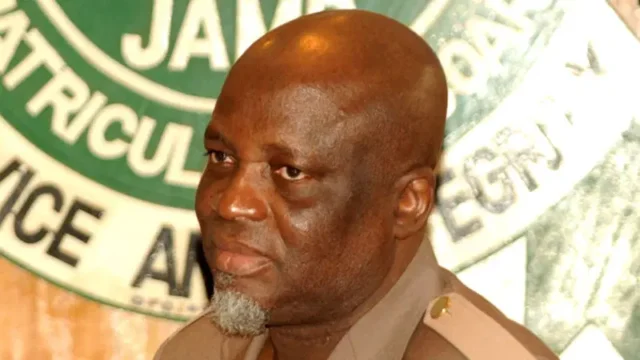
JAMB Registra, Oloyede

The Joint Admissions and Matriculation Board (JAMB) has reported that a record number of students scored above 300 in the 2025 Unified Tertiary Matriculation Examination (UTME), signaling an upward trend in candidates’ performance since the introduction of the Computer-Based Test (CBT) format.

According to data obtained by DAILY GAZETTE on Saturday, 17,025 candidates, representing 0.88 per cent of the 1,931,467 total candidates, scored 300 and above.

This marks the highest number of top scorers since CBT was introduced in 2013.

JAMB’s statistical breakdown further reveals that all 1,931,467 results were released, accounting for 100 per cent of candidates who sat the examination this year.

This is an increase from 1,842,364 results released in 2024, reflecting steady growth in UTME participation over recent years.

In comparison, just 8,401 candidates (0.46 per cent) scored 300 and above in 2024, while 5,318 candidates (0.35 per cent) achieved that mark in 2023.

Earlier years had much lower figures, with only 724 candidates (0.06 per cent) reaching the 300 mark in 2021, and none in both 2013 and 2014.

In the 250-and-above category, the number of high scorers also rose significantly in 2025.

“117,373 candidates (6.08 per cent) attained this range in 2025,” the report states, up from 77,070 (4.18 per cent) in 2024 and 56,736 (3.73 per cent) in 2023.

JAMB also reported that “565,988 candidates, accounting for 29.3 per cent, scored 200 and above, compared with 439,961 (24 per cent) in 2024 and 355,689 (23.36 per cent) in 2023.”

Nonetheless, the majority of candidates still scored below the 200 benchmark.

In 2025, 1,365,479 candidates, equivalent to 70.7 per cent, fell below the 200 mark.

This figure shows a slight improvement compared to 76 per cent in 2024 and 76.64 per cent in 2023.

A year-by-year performance comparison indicates some fluctuations.

For instance, only 168,650 candidates (13 per cent) scored 200 and above in 2021, while 568,847 candidates (34 per cent) did so in 2016.

The rising number of high scorers in recent years points to improved academic performance and growing familiarity with CBT examinations.

JAMB’s continuous refinement of its exam procedures since the 2013 CBT rollout appears to be yielding positive outcomes, with the 2025 results reflecting the success of these efforts.

In a related development, DAILY GAZETTE earlier reported that JAMB released the results of a resit examination conducted for candidates whose tests were disrupted by a technical fault during the 2025 UTME.

The initial UTME results were made public on May 9. However, on May 14, JAMB Registrar, Professor Ishaq Oloyede, disclosed that the results of 379,997 candidates from 157 centres, mostly in Lagos and the South-East, had been compromised due to a system glitch.

The registrar confirmed that those affected would be required to retake the exam.

He explained that the glitch stemmed from “faulty server updates, which hindered the proper upload of candidates’ responses during the first three days of the examination.”

Further statements from the Board are expected regarding how this year’s UTME outcomes will influence the 2025 tertiary admission process.

Google search engine

I’ve No Regrets Supporting Peter Obi In 2023 Despite Being In APC – Babachir Lawal

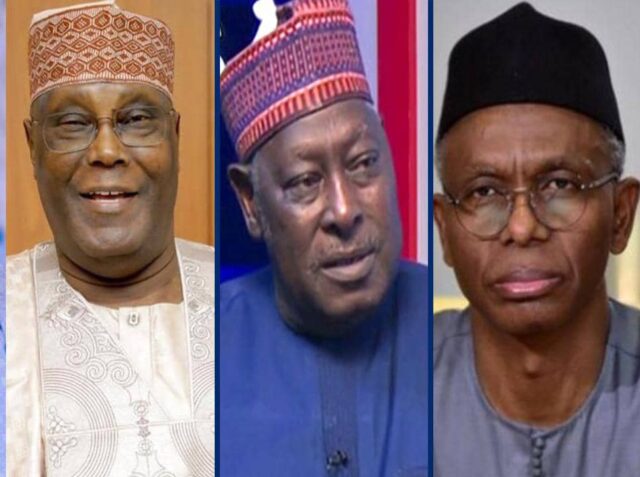
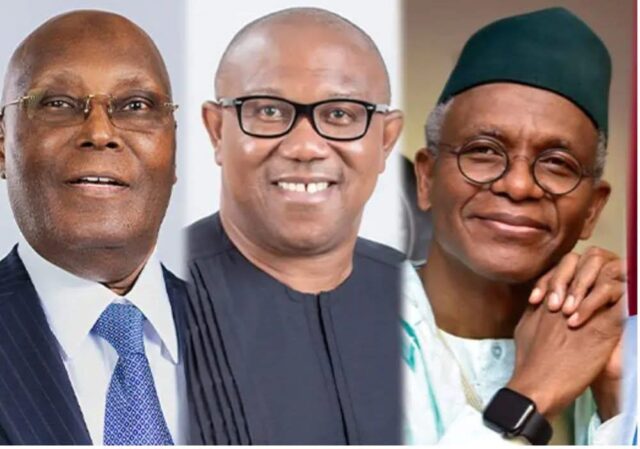
Lawal (middle), Atiku (left), El-Rufai (Right)

Former Secretary to the Government of the Federation (SGF) and prominent All Progressives Congress (APC) chieftain, Babachir Lawal, has said he has no regrets supporting Peter Obi during the 2023 presidential election, even though he remains a member of the ruling party.

In a recent interview, Lawal addressed rising questions about the strength and prospects of a growing opposition coalition led by former Vice President Atiku Abubakar ahead of the 2027 general elections.

He clarified that his decision to back Obi was rooted in principle and a reaction to the exclusionary politics he observed within his own party.

On the issue of opposition defections to the APC, Lawal acknowledged that political dynamics are often misunderstood from outside.

“If you aren’t in a room, you won’t be able to know what is happening in a room. So, from outside, you begin to conjure all manner of ideas… I can tell you that anybody is free to comment. It is a democracy; nobody can ever say you can’t vote out an elected president,” he said.

Despite being a farmer, Lawal stated that he remains actively involved in the coalition’s activities.

“I would be an idiot if I leave my most important vocation to take coffee and snacks,” he remarked, highlighting his ongoing commitment to the coalition’s objectives.

He was clear that the coalition is not built solely around Atiku’s ambitions.

Citing the involvement of other key figures such as Peter Obi and Rotimi Amaechi, he said, “I don’t see why Amaechi will waste his time and attend meetings designed to make Atiku a presidential candidate.”

According to Lawal, the coalition’s goal is to create a democratic platform for transparent leadership selection.

He explained the process: a national convention would elect a trusted leadership team, who would then oversee primaries at all levels, ward, local government, and state, and later conduct party congresses.

He emphasized that the coalition accommodates members with diverse ambitions and fosters internal democracy.

Addressing speculation about a potential Atiku-Obi alliance, he dismissed such talks as premature.

“How can he make a deal when he isn’t yet the presidential candidate? It is after the convention and somebody wins that the party can sit down and begin to say, Who do we make a vice-president?” Lawal said.

On the question of Rabiu Kwankwaso’s involvement, Lawal clarified that while he is not part of the coalition, he is also not in opposition to it.

He noted Kwankwaso might be observing the developments before making a move.

He also downplayed fears that defections to the APC could threaten the opposition’s strength.

“If I contest House of Assembly election in my local government, and I am defeated… I will quickly defect to that party, contest there and take it,” Lawal stated, pointing to the fluid nature of Nigerian politics.

Responding to reports that the coalition may adopt the African Democratic Congress (ADC) as its platform, Lawal said no final decision has been made.

“We have narrowed down to a few political parties and we will negotiate,” he said, explaining that technical committees are currently reviewing party constitutions and legal structures to identify the most suitable option.

Lawal ruled out using the Peoples Democratic Party (PDP) platform, citing unresolved internal issues.

He said the PDP’s management problems, including the failure of reconciliation efforts such as the Saraki Committee, made it an unstable choice.

He predicted that more PDP members would eventually migrate to the coalition.

Despite still being in the APC, Lawal reiterated that his support for Peter Obi in 2023 came from a place of conviction.

“Political party isn’t a religion. Even in religion, people proselytise; you change,” he said, emphasizing that appealing directly to voters, rather than blind party loyalty, is the coalition’s strategy.

Addressing accusations that the coalition represents Northern entitlement or harbors anti-Southern sentiment, Lawal pointed to the harsh realities in the North.

He said that despite a Southern president, the North continues to suffer from insecurity and underdevelopment.

“If you see how we are being decimated in the North, through Boko Haram, banditry, kidnappings, lack of infrastructure… We can’t even farm. There is hunger and fear,” he said, urging Southern critics to be more understanding.

He dismissed claims that the insecurity problem predates President Tinubu’s administration.

“That’s not an excuse. The president is elected to solve problems, not to allow them to fester. Before he is ready, we will be dead!” Lawal warned.

Finally, Lawal firmly stood by his 2023 choice: “I’ve no regrets supporting Peter Obi in 2023 despite being an APC man.”

He added that had he aligned with the current APC government, “I would have been the most miserable person on earth,” referencing the economic hardship Nigerians are currently facing.

He strongly criticized the APC’s decision to run a Muslim-Muslim ticket, saying it disregarded qualified Northern Christians.

“The Muslim-Muslim ticket symbolises the marginalisation that we are facing. At that level, I couldn’t accept it,” he concluded.

Google search engine

FULL LIST: Tinubu Appoints Ken Nnamani, Anyim, Others To Head Key Federal Agencies


President Bola Ahmed Tinubu has approved the appointment of 21 distinguished Nigerians to lead various federal agencies, aiming to bolster public sector reforms and enhance institutional efficiency.

In a statement issued on Friday, Presidential Spokesperson Bayo Onanuga confirmed the new appointments, which include high-profile political figures such as former Senate President Ken Nnamani, former Secretary to the Government of the Federation Anyim Pius Anyim, ex-Katsina State Governor Ibrahim Shehu Shema, and former Edo State Deputy Governor Philip Shaibu.

Onanuga stated that the appointments reflect President Tinubu’s commitment to “improve government reforms and rejuvenate public institutions.”

Among the notable designations:

Ibrahim Shema has been named Chairman of the Federal Capital Development Authority (FCDA).

Philip Shaibu takes over as Director-General of the Nigerian Institute of Sport.

Anyim Pius Anyim will serve as Chairman of the National Merit Awards.

Ken Nnamani has been appointed Chairman of the Nigerian Institute for Policy and Strategic Studies.

Full List of Appointees and Their Designations:

1. Ken Nnamani – Chairman, Nigerian Institute for Policy and Strategic Studies

2. Ibrahim Shehu Shema – Chairman, Federal Capital Development Authority

3. Anyim Pius Anyim – Chairman, National Merit Awards

4. Philip Shaibu – Director-General, Nigerian Institute of Sport

5. Isa Aremu – Director-General, Michael Imoudu National Institute for Labour Studies

6. Yazid Shehu Umar Danfulani – Managing Director, Nigerian Agricultural Insurance Corporation (NAIC)

7. Asabe Vilita Bashir – Director-General, National Centre for Women’s Development

8. Omobolanle Akinyemi-Obe – Director-General, National Senior Citizens Centre, Abuja

9. Abubakar Umar Jarengol – Executive Director (Operations/Technical), NAIC

10. Babaranti Ayandayo Rasheed – Executive Director (Finance and Administration), NAIC

11. Professor Almustapha Alhaji Aliyu – Managing Director, NNPC Gas Marketing Limited (NGML)

12. Shuaibu Shehu Aliyu – Executive Secretary, National Commission for Mass Literacy, Adult and Non-Formal Education

13. Kabir Abdullahi Barkiya – Chairman, Nigerian Agricultural Land Development Authority

14. Tijjani Yahaya Kaura – Director-General, Centre for Citizenship and Leadership Training

15. Abdullahi Mohammed – Executive Director (Monitoring and Implementation), Nigeria–Sao Tome Joint Development Authority

16. Mohammed Lawal Ibrahim – Executive Director (Finance/Admin), Nigeria–Sao Tome Joint Development Authority

17. Hamza Ibrahim Baba – National Program Manager, Government Enterprise and Entrepreneurship Program (GEEP)

18. Joseph Haruna Kigbu – Federal Commissioner, National Population Commission

19. Senator Jalo Zarami – Federal Commissioner, National Population Commission

20. Segun Aina – Director-General, Academic Staff College of Nigeria

21. Abubakar Adamu – Executive Secretary, Agricultural Research Council of Nigeria

The appointments come amid ongoing efforts by the Tinubu administration to reposition key institutions for better performance and accountability.

Google search engine

2027: Primate Ayodele Warns Against Atiku, Obi, El-Rufai, Makinde, Others In New Prophecy


Prominent Nigerian cleric and founder of INRI Evangelical Spiritual Church, Primate Elijah Babatunde Ayodele, has issued a stark warning to voters ahead of the 2027 general elections.

In a new prophecy shared during a recent interview, Ayodele cautioned Nigerians against voting for a group of high-profile politicians, stating that their leadership would worsen the country’s challenges.

He specifically named five key figures; former Vice President and PDP presidential candidate Atiku Abubakar, Labour Party’s Peter Obi, former Kaduna State Governor Nasir El-Rufai, Bauchi State Governor Bala Mohammed, and Oyo State Governor Seyi Makinde.

“Atiku, Obi, El-Rufai, Bala (Mohammed), Seyi Makinde will make things more difficult for Nigerians, even worse than what Nigerians are going through under Tinubu now,” the cleric warned.

According to Ayodele, electing any of these individuals in 2027 would lead to even greater national distress.

“Voting for any of these politicians in the next election will be more disastrous. Nigerians must never contemplate the choice of any of these politicians,” he declared.

Despite previously criticizing President Bola Tinubu’s administration, Primate Ayodele urged Nigerians to remain patient with the current government.

He believes Tinubu deserves a second term and predicted that it would bring better outcomes than his first.

“Ayodele has taken Nigeria to where it is now will also bring the nation out of its current situation in his second term,” he said, expressing optimism that Tinubu’s leadership will yield improvement over time.

The prophet, known for his controversial but widely followed predictions, claimed that his messages come from divine visions.

“I am saying it as it was revealed to me. I don’t have anything to do with Tinubu or his foot soldiers. Some people may view this as a contradiction to my earlier prophecy, but they cannot fault the efficacy and the fulfillment of these prophecies. Everything I foretold has turned out exactly the way I said it,” Ayodele stated.

He also issued a broader warning about political realignments and coalitions forming ahead of the 2027 elections.

He cited the growing alliance between Atiku Abubakar and Nasir El-Rufai, who have reportedly united to challenge President Tinubu.

Additionally, Primate Ayodele revisited past prophecies, including his December 2024 claim that the leader of the Indigenous People of Biafra (IPOB) would be released. Despite this, the IPOB leader remains on trial for terrorism-related charges.

That same year, Ayodele predicted that economic hardship would persist for four more years under Tinubu’s presidency, asserting that the government lacked a solution to alleviate suffering.

Yet in this latest vision, the cleric now portrays Tinubu’s second term as a path toward recovery.

Google search engine

PDP: Damagum Blames Inaction On Petitions For Party Crisis, Says Wike Should Have Been Expelled


The Acting National Chairman of the Peoples Democratic Party (PDP), Umar Iliya Damagum, has faulted the party’s disciplinary committee for failing to act on multiple petitions that, if addressed, could have curbed the disruptive influence of some members, including the Minister of the Federal Capital Territory, Nyesom Wike.

Speaking during an interview on the BBC Hausa programme Gane Mana Hanya, Damagum said the committee received over 40 petitions but only acted on oneone, a decision he believes left the party vulnerable.

“The committee was handed over 40 petitions that needed attention, but it only chose to act on that of the national secretary. If the committee had acted on those petitions, maybe we would not be here today,” he said.

He disclosed that there were strong grounds to remove Wike and others from the PDP but lamented that action was not taken.

“We advised them that the five of them should be expelled from the party, but nothing was done until the elections came and gone.”

“They succeeded in setting the party back with the things they did. Now that I am leading the party, they are putting pressure on me to expel him.”

Damagum also reflected on his personal dynamic with Wike, attributing their frosty relationship to the collapse of Wike’s ties with others in the party.

“Before I knew him, many of those people had known him and had a relationship with him. They were enjoying his magnanimity. My only sin to them is that I came at a time when their relationship had collapsed.”

He stated that Wike’s disruptive role was evident well before the 2023 elections.

“We advised them that the five of them should be expelled from the party,” he repeated, stressing that their actions harmed the PDP at a critical moment.

While some are urging him to take punitive measures, Damagum signaled a more reconciliatory approach.

“I want peace in the party. By the time you keep expelling members rather than peaceful resolution of issues, one day you will wake up and no more people in the party.”

On Wike’s sway within the party, Damagum offered a striking example: “When the FCT minister single-handedly brought the embattled Rivers State governor as the candidate of the PDP, nobody asked him how he did it. Now, there is a problem between them. How do you expect the party or me to come in?”

He went on to accuse some top figures in the PDP of failing in their duties, contributing instead to the crisis through selfish or divisive actions.

According to him, “these influential figures act as though they are untouchable, effectively holding the party hostage through their behaviour.”

Damagum, a PDP member since 1998, reaffirmed his loyalty, saying, “I have political discipline and principles. I cannot jump from one party to another. I don’t have any reasons to do that.”

He acknowledged recent defections but downplayed their significance, maintaining that the PDP would emerge stronger.

“It is going to make the party come out better and stronger than what it is now,” he said.

Looking ahead to 2027, Damagum dismissed the idea that party switching would determine electoral outcomes.

“It is not the number of defections that will make the APC win the 2027 general elections; it is the electorate, Nigerians who will cast votes to elect a president. In 2027, it is President Bola Tinubu versus Nigerians, not the APC.”

Damagum also hinted that some defectors were driven by self-interest.

“Those leaving the party have one or two things to hide, looking for safe landing from possible persecution or maybe looking for more money in their bank accounts.”

Google search engine

MOST COMMENTED

- Advertisement -
Google search engine