Home Blog Page 662

Senate, Reps Face Backlash Over Rivers’ State Of Emergency Approval


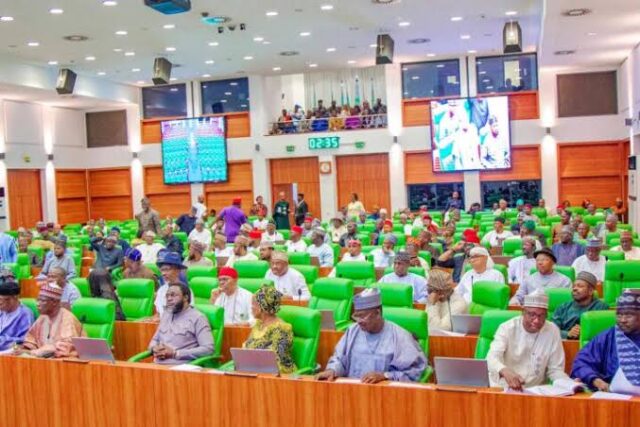
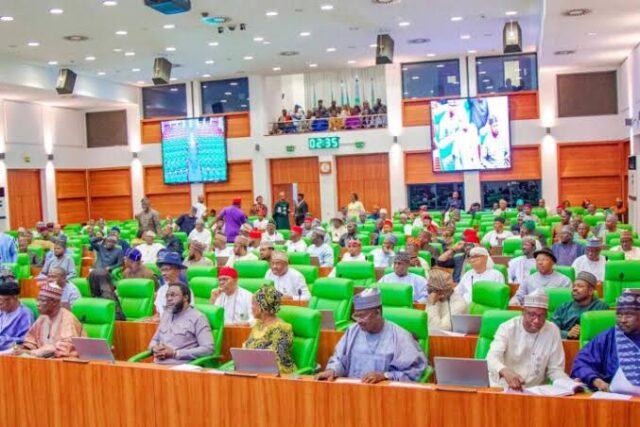
The National Assembly (NASS) has come under heavy criticism following its approval of President Bola Tinubu’s declaration of a state of emergency in Rivers State.

Nigerians across different sectors have expressed outrage over what they describe as a hasty and undemocratic endorsement of the president’s decision, which includes appointing Vice Admiral Ibok-Ete Ibas (rtd) as the state’s sole administrator.

Despite calls from opposition leaders and concerned citizens urging lawmakers to reject the emergency declaration, members of both chambers unanimously approved it through a voice vote.

The Senate, in addition, invoked Section 11(4) of the Constitution, giving itself the authority to oversee the administration of Rivers State.

In the House of Representatives, an attempt by Obi Agwuncha to call for a headcount of lawmakers present was ignored, while the motion was amended to transfer legislative authority over Rivers State from the Federal Executive Council (FEC) to the National Assembly.

Prior to the deliberation, prominent figures, including Labour Party’s 2023 presidential candidate Peter Obi and former Aviation Minister Osita Chidoka, had spoken against the state of emergency.

Obi had urged Labour Party lawmakers to oppose the decision, while Chidoka argued that security agencies should be strengthened to maintain peace rather than resorting to emergency rule.

He also suggested that the Nigerian Governors’ Forum (NGF) should play a more active role in resolving the crisis.

However, the Senate President, Godswill Akpabio, and Speaker of the House, Tajudeen Abbas, stood firm on their decision.

After a closed-door session lasting over an hour, the Senate approved the emergency declaration and set up a joint ad hoc committee to oversee the state’s administration.

The House of Representatives followed suit in a swift one-hour session, where initial opposition to the decision was quickly overruled.

President Tinubu, in a nationwide broadcast, had earlier suspended Governor Siminalayi Fubara, his deputy Prof. Ngozi Nma Odu, and members of the Rivers State House of Assembly for six months.

Lawmakers in the House debated modifications to the emergency rule, with Minority Whip Ali Isah suggesting that the emergency should be reviewed periodically instead of lasting a fixed six months. His recommendation was adopted.

In response to accusations that he failed to address security concerns in the state, Governor Fubara, through his Chief Press Secretary Nelson Chukwudi, denied any role in the recent threats by militants and dismissed claims that he neglected rebuilding the demolished House of Assembly complex.

He blamed ongoing tensions on comments made by FCT Minister Nyesom Wike, stating that Wike’s refusal to apologize for remarks against the Ijaw people fueled unrest in the state.

Criticism of the National Assembly’s handling of the situation has continued to mount.

The Peoples Democratic Party (PDP) National Publicity Secretary, Debo Ologunagba, warned that the approval could set a dangerous precedent, allowing President Tinubu to impose emergency rule in other opposition-led states.

He also condemned the use of a voice vote, arguing that Nigerians deserved to know where each lawmaker stood on the issue.

Peter Obi also criticized the voice vote on his X handle, stating: “You cannot determine a two-thirds majority by a voice vote. Decisions of such magnitude must be made with integrity, following the letter and spirit of the law.”

Former Ogun Central Senator Femi Okurounmu also questioned the decision, arguing that the voice vote undermined representative democracy.

He said, “While I do not have evidence to back the insinuation that the lawmakers were either induced or coerced to use voice votes, it is not impossible, because voice votes have also been adopted to determine important matters like this in the past. But that doesn’t make it right.”

Google search engine

Enugu Community Now In Ruins After Devastating Attack By Herdsmen


Ndiagu Amofia, a once-thriving village in Umuhu autonomous community, Eha-Amufu, Isi-Uzo Local Government Area of Enugu State, now lies in ruins after a devastating attack by suspected Fulani herdsmen.

The assault, which occurred on Friday, February 28, 2025, forced hundreds of residents to flee their ancestral homes in fear for their lives.

Reports indicate that the attackers set two houses on fire, ransacked several others, and killed a final-year university student—the only child of a widow.

The student’s uncle also sustained gunshot wounds, further plunging the community into mourning.

During a visit to Ndiagu Amofia Umuhu on Monday, a SaharaReporters crew found the village completely deserted, its farmlands abandoned and homes left in disarray.

The once-bustling agricultural community now sits eerily silent, covered in dry leaves, a ghost of its former self.

Eyewitness accounts reveal that the herdsmen are still lurking in the area.

As the team approached the affected parts of the village, gunshots rang out, followed by the unmistakable sounds of cows, suggesting that the invaders had settled in the community.

Conversations during the visit were conducted in hushed tones, with the crew’s local guide—who was also a victim—moving cautiously, hiding, and peering around to ensure safety.

“We are in a state of panic,” said Mr. Godwin Chukwudi Odoh, chairman of Ndiagu Amofia village. They burned two houses, killed a final-year university student and only child of a widow. I was targeted, but I escaped by hiding in the bush. My house was burned, and my wife and newborn baby were forced to flee.”

The attack has left survivors homeless and struggling to survive.

“As we speak, I have nothing left,” Odoh lamented. “To eat, I depend on the generosity and kindness of the people. I’m currently squatting with a relation. It’s disheartening that since the attack, no government agency has brought food or assistance to us.”

Odoh expressed confusion over the attack, stating, “I don’t know. We don’t have problems with Fulanis, and this is the first time we are witnessing this kind of attack.”

He further noted that while some government officials had visited, there had been no concrete response.

“Since the attack, some government officials have come, but I have never heard anything from them thereafter. I don’t know whether they came to verify if the attack happened or not. But you have seen the burned houses. My own house was destroyed. They actually came for me, but I saw them from afar with AK-47 rifles. I escaped through the backyard, ran inside the bush, and hid.”

Recalling the harrowing experience, Odoh recounted, “When they came, my wife, who gave birth barely three months ago, was asked about me, and she told them I wasn’t around. Two of them entered the house, ransacked it, and took away everything valuable, including money and my motorcycle.

“After looting, they told my wife to leave the house and threatened that if they returned and found her, she would be killed. A few minutes later, they came back and set the house on fire, burning all our belongings, including clothes and our yam barn. The very clothes I am wearing were given to me by sympathizers. As we speak, I have nothing left. To eat, I depend on generosity and kindness. I’m currently squatting with a relation.”

“It is even more disheartening that since the attack, no government agency has provided us with food or relief materials. We have lost everything, not by our making. What government officials were busy doing was trying to whitewash the attack,” he lamented.

Odoh stressed the urgency of government intervention, stating, “As you witnessed how we were sneaking around to see the burned houses, you heard the voices, the noise of cows, and the gunshots. This proves that Fulani herdsmen are still in Ndiagu Amofia. Our people have been driven away, and now, even retrieving basic necessities from our homes is a dangerous task.

“We need the government to step in and drive them out so that our people can return to their farms and homes. We depend on farming for survival. I am appealing to both the government and kind-hearted individuals to come to our aid.”

Other affected residents shared similar heartbreaking experiences.

Odoh listed some of the victims, saying, “Igwurube Idenyi’s house was razed down like mine—nothing was salvaged. Others whose homes were looted and vandalized include Okibe Eze, Ododo Nwa-Ogboku, Cyprian Ani, and Igwurube Ede.”

Another victim, James Igwurube, recounted his ordeal: “I went to the farm that day, and when I returned, I found that our houses had been burned. My father died from the shock of hearing about the incident. I appeal to the government for assistance.”

The displaced villagers are pleading for urgent intervention to reclaim their land and restore their livelihoods.

“We need the government to help us take back our community so that we can resume our normal lives,” Odoh emphasized.

Google search engine

I’ll Not Tolerate Any Act Of Lawlessness – Rivers Administrator

Rear Admiral Ibok-Ete Ekwe Ibas - Chief of Naval Staff PHOTO; SUNDAY AGHAEZE OFFICE OF THE PRESIDENT (PMB) JULY 13 2015


Sole Administrator of Rivers State, Ibok Ibas, has stated that his appointment by President Bola Tinubu is aimed at ensuring stability of livelihoods for citizens and residents amid the ongoing political crisis in the oil-rich state.

In a statewide broadcast in Port Harcourt on Thursday night, Ibas acknowledged the gravity of his appointment, describing it as coming at a difficult and consequential moment in history.

He highlighted how the prolonged political impasse in Rivers State had led to a paralysis of governance, the desecration of democratic institutions, security threats, and significant disruptions to the state’s economic and social fabric.

“The crisis had deepened divisions amongst the people and cast a shadow of uncertainty over the future,” he noted.

“As a son of the Niger Delta, I am one of you. I recognize the weight of this moment, the expectations of the people and the challenges that lie ahead.”

He expressed deep concern over the tension in the state, emphasizing the widespread anxiety among families, businesses, and investors regarding the uncertainty of the immediate future.

“The uneasy calm that pervades the state is palpable and I feel the weight of families, young and old, businesses that have made both little and huge investments in Rivers State uncertain what the immediate future holds.

“Mr. President’s proactive and decisive action to declare a state of emergency and my subsequent appointment is primarily to ensure stability of livelihoods for citizens and residents.

“Restore peace, security and stability for economic activities to continue to thrive and avert any disruptions to the way of life of the people of Rivers State.

“My mandate is clear: to restore law and order, stabilize the polity and to create the necessary conditions for the full restoration of democratic institutions and representation.”

Ibas stressed that achieving success in this mission would require collective effort from all stakeholders in the state.

“This is not a task for one man alone. Success will depend on the collective effort of all Rivers people, elders, political leaders, traditional rulers, trade leaders, youths, women, the media and civil society.

“I do not come as a partisan actor nor as a competitor in the struggles that have brought us to this moment. I come as a servant of the state, entrusted with the solemn duty of restoring peace and order so that Rivers State can move forward once again and reclaim its rightful place as the oil and gas capital of Nigeria and I dare say, Africa.”

Emphasizing his primary role, he assured residents that his focus was on protecting lives and livelihoods rather than being drawn into political conflicts.

“My role here is to ensure that the lives and livelihoods of our people are not held hostage by crisis and instability. Governance is not a solitary endeavour. True stability and renewal require the collective will of the people.

“I extend my hand to every son and daughter of Rivers State, regardless of political affiliation, ethnicity or creed. I urge you to remain law-abiding, peaceful and optimistic. Let us set aside our differences and work together to rebuild trust, restore stability and protect the future of our children.

“The challenges before us depend on unity not division, on cooperation not discord, on forward thinking not backward grievances. The commitment to unity, cooperation and dialogue must be the fulcrum of all engagements going forward.”

Ibas also cautioned against the destruction of national infrastructure, reminding the people of the Niger Delta of the long-term consequences of such actions.

“Destruction of national infrastructure in the name of agitation is something we in the Niger Delta have since put behind us. Through collective engagements, our people have become more aware of the collateral damage that comes with it.

“Not only does it deprive the government of enough resources to provide necessary critical infrastructure and services, the damage to the environment has left vast areas of the Niger Delta extensively devastated, affecting the health and livelihoods of our people.

“We must resist the temptation to return to those ugly days. Dialogue and honest engagement have proven time and time again as a veritable tool for resolving differences and conflicts of any kind.”

He reaffirmed his administration’s commitment to upholding civil liberties and human rights while ensuring that lawbreakers would face consequences.

“Let me be clear, under my leadership, civil liberties and fundamental human rights will be respected and protected. The rule of law will remain sacrosanct. However, those who seek to sabotage the social or economic stability of Rivers State and national infrastructure and institutions within the state or who attempt to disrupt the peace for selfish or destructive ends will find no tolerance for their actions.”

He warned against lawlessness and violence, asserting that while his administration would act fairly, it would also ensure order was maintained.

“There will be no room for lawlessness, no space for violence and no patience for actions that threaten the collective well-being of Rivers State. We will not act arbitrarily but neither will we hesitate to enforce the law where necessary.

“Let no one be in doubt, we will uphold justice and fairness but we will also ensure that civil order prevails. I have just concluded my inaugural state security meeting and taken additional briefs from heads of security agencies in the state. I have noted various reports, initiatives and concerns, some of which I have given clear directives on specific actions.

“I have specifically charged them to remain neutral, respect the rights of citizens and do all within their powers to maintain law and order, while collectively working to de-escalate tensions where they come in contact with such.”

He assured residents that in the coming days, his administration would develop a clear roadmap for governance over the next six months, ensuring government agencies function effectively and essential services continue.

“I will move with deliberate speed to articulate a pragmatic roadmap for the next six months to ensure that every government bureaucracy is properly functioning and agencies providing services to citizens and residents are doing so, and engage stakeholders as mandated by the President.”

Google search engine

36 State Assemblies Adopt Unified Rules On Lawmakers’ Suspension, Impeachment

The 36 state Houses of Assembly in Nigeria have officially adopted a harmonised set of standing orders to standardize legislative procedures across the country.

This move aims to address inconsistencies in the suspension and impeachment of lawmakers, the removal of presiding officers, and other parliamentary processes.

The new rules, ratified at a workshop in Lagos organized by the Konrad Adenauer Stiftung in collaboration with the National Institute for Legislative and Democratic Studies, will also govern budgetary procedures, appointment confirmations, elections of presiding officers, legislative reports, and the formation of special and ad hoc committees.

Chairman of the Conference of Speakers of State Legislatures of Nigeria, Adebo Ogundoyin, highlighted the significance of this development, stating that Nigeria was aligning with global best practices by adopting a uniform legislative framework.

“This monumental step forward, which began in 2021, is not just a procedural reform; it is a strategic step towards strengthening the efficiency, transparency, and uniformity of legislative operations across all states Houses of Assembly. By standardising our legislative rules, we are enhancing collaboration, improving legislative oversight, and ultimately ensuring a more responsive and accountable governance framework at the sub-national level,” Ogundoyin said.

He further noted that countries such as the United States, South Africa, and Rwanda operate similar unified legislative frameworks, and Nigeria’s adoption of harmonised standing orders would reinforce democratic governance and institutional integrity.

He expressed confidence that state assemblies would fully integrate the new rules within three months.

“We are happy to draw inspiration from our partners, the German Government and the United States of America, whose 50 states operate a centralised standing order. On the African continent, South Africa and Rwanda stand tall in this regard, and Nigeria is set to join the list of countries with harmonised legislative frameworks, further solidifying our commitment to democratic governance and institutional strengthening,” he added.

Speaking at the event, the Resident Representative of Konrad-Adenauer-Stiftung Nigeria, Marija Peran, explained that the harmonisation process is intended to foster consistency and collaboration among the state assemblies.

She cited recent legislative crises in Lagos and Rivers states as examples of why standardized rules are necessary.

“We are only two and a half months into 2025 and some states’ Houses of Assembly have already been shaken up massively. This shows us that we cannot take either stability or democratic processes for granted.

“As we further embark on this journey, it is essential to reflect on the significance of uniform standing orders within the states’ Houses of Assembly. These orders serve as the backbone of legislative procedures, ensuring consistency, transparency and efficiency in the legislative processes.”

“The objectives of harmonising these orders are clear: to create a standardised approach that fosters collaboration, reduces procedural discrepancies and enhances the overall effectiveness of the legislative bodies,” she said.

Prof. Abubakar Sulaiman, Director-General of the National Institute for Legislative and Democratic Studies, emphasized that state legislatures often face interference from the executive arm of government, making their autonomy vulnerable.

He said the harmonised standing orders would provide a structured framework to safeguard legislative independence.

“By doing so, we can build a resilient legislative system where state assemblies operate effectively, free from external disruptions,” he said.

Reflecting on past legislative crises, he added: “We must reflect deeply on the lessons from Rivers, Lagos states and other similar incidents in the past. A harmonised framework for legislative rules across the states will help promote consistency in parliamentary practice, strengthen legislative independence, and create safeguards against undue executive and judicial interventions.”

The journey toward harmonising legislative rules started in 2016, culminating in the official adoption and ratification of the standing orders at the Lagos conference.

The new framework is expected to enhance stability, transparency, and efficiency within state assemblies nationwide.

Google search engine

Natasha: Constituents Reject ‘Sham’ Recall Process As Kogi REC Dismisses Rumour


Concerned constituents in Kogi Central have raised alarm over an alleged scheme to manipulate voters into initiating a recall process against their elected senator, Natasha Akpoti-Uduaghan, under the guise of an empowerment programme.

A video of the purported recall process surfaced online, showing constituents queuing with their voter’s cards to endorse the move.

However, the Resident Electoral Commissioner (REC) for Kogi State, Hale Longpet, has denied any knowledge of such a process.

Meanwhile, the Federal High Court in Abuja has vacated an earlier order that had restricted the Senate from carrying out its constitutional functions in the matter concerning Akpoti-Uduaghan.

A coalition of women groups, Womanifesto, has also condemned what it describes as harassment and intimidation against the senator, affirming its support for her.

The recall exercise, reportedly held in Okehi Local Council, drew a sizable crowd. According to local sources, the event transcended party lines, driven by increasing dissatisfaction with Akpoti-Uduaghan’s handling of key issues like poverty, infrastructure, and education.

However, in a statement released by concerned constituents, former Governor Yahaya Bello and his allies were accused of orchestrating the recall in collaboration with Senate President Godswill Akpabio.

The group described the move as political retaliation against Akpoti-Uduaghan, who defeated Bello’s preferred candidate in the last senatorial election and has since been vocal about accountability.

“This so-called empowerment programme is a smokescreen. Many unsuspecting participants did not realise they were being tricked into signing a recall petition. This is political mischief aimed at silencing Natasha,” the statement read.

The group urged Kogi Central residents to remain vigilant and resist what they called an orchestrated attack on democracy.

They also called on the Federal Government to intervene and prevent actions that could destabilize the state.

Reaffirming their loyalty, Akpoti-Uduaghan’s supporters passed a vote of confidence in her leadership and warned against any further attempts to undermine her position.

Speaking to newsmen, Longpet dismissed the recall rumours, emphasizing that no official process had been initiated by the electoral body.

“If there is any recall exercise, I should be the one to draw the timetable. In addition to the timetable, there will be a public enlightenment campaign through my office where criteria for the recall process will be made clear to the public, particularly Kogi Central.

As I speak, I am not aware of any move to recall Sen Akpoti-Uduaghan. I have not even received any instruction from my boss, Prof Mahmoud Yakubu, to embark on such an exercise. So, I don’t know where the rumour is coming from,” he said.

The Federal High Court ruling, delivered by Justice Obiora Egwuatu, reaffirmed the Senate’s authority to discipline its members without external judicial interference.

The dispute traces back to a heated exchange between Akpoti-Uduaghan and Akpabio during plenary on February 20, 2025.

Her protest over the reallocation of her seat was deemed disorderly, leading to her six-month suspension.

The ruling was seen as a pivotal moment in reinforcing legislative independence, upholding the Senate’s right to regulate its own affairs.

The case has been adjourned to March 25 for further hearings.

Womanifesto, a coalition of women’s rights organizations, strongly condemned what it described as unjust treatment of Akpoti-Uduaghan.

The group argued that the recall attempt was part of a broader effort to discredit the senator and suppress her influence.

It also raised security concerns, citing reports that Akpoti-Uduaghan could face arrest upon her return to Nigeria.

The group further criticized the Senate’s Ethics Committee, accusing it of being influenced by Akpabio’s public statements.

In response, it demanded the formation of an independent ad hoc committee to investigate the issues surrounding Akpoti-Uduaghan.

Womanifesto also called on the Independent National Electoral Commission (INEC) to uphold the rule of law and ensure that any recall process follows constitutional guidelines.

Google search engine

Peter Obi Scheduled To Be In Enugu Friday

Sources close to the presidential candidate of the Labour Party (LP) in the 2023 general elections, Peter Obi, have told DAILY GAZETTE that the former Anambra State governor will be in Enugu tomorrow.

Although the purpose of his visit remains unclear, analysts suggest it may not be unconnected with political permutations ahead of the 2027 elections.

Obi, who has remained vocal on governance and economic issues since the last presidential election, has made several visits to different parts of the country, engaging stakeholders across various sectors.

His upcoming presence in Enugu has fueled speculation about possible consultations with political allies, business leaders, and key figures in the southeast.

A top political strategist, who spoke on condition of anonymity, noted that “Obi’s visit to Enugu at this time is significant. Enugu remains a political nerve center of the southeast, and any move by a major political player like Obi naturally raises interest. He may be here for private engagements, but it is hard to separate his activities from politics.”

However, another source said “Peter Obi’s visits often cut across politics, economy, and social engagements. He may be here for consultations, policy discussions, or even personal commitments.”

Google search engine

State Of Emergency: Voice Vote Can’t Determine Two-Thirds, Peter Obi Slams NASS


Presidential candidate of the Labour Party (LP) in the 2023 election, Peter Obi, has condemned the National Assembly for approving President Bola Ahmed Tinubu’s request to validate emergency rule in Rivers State through a voice vote.

In a series of posts on his X handle on Thursday, Obi argued that such an approach to a crucial national matter was a violation of constitutional provisions.

He had earlier urged members of the National Assembly not to support the removal of Governor Siminalayi Fubara.

“While still agonizing over the ongoing deterioration of democracy in our nation, especially with the situation in Rivers State, and trying to reach out to our National Assembly members not to support and sustain the unconstitutionality and arbitrariness, I just heard that they have added salt to injury by using a voice vote.

“The Constitution is clear that this cannot be done through a voice vote but by calling individuals to answer ‘yes’ or ‘no’. You cannot determine a two-thirds majority by a voice vote.”

Obi emphasized that while achieving a two-thirds majority was necessary, it must be done through a transparent process that upholds constitutional principles.

“While a two-thirds majority is crucial, it does not justify bypassing proper procedures and undermining the principles of transparency and accountability. The use of a voice vote in such a significant decision not only disregards constitutional requirements but also erodes public trust in the democratic process. Decisions of such magnitude must be made with integrity, following the letter and spirit of the law.

“It’s disheartening that a decision as crucial as approving an emergency proclamation — one that could alter the course of the nation — was handled with such casual disregard for constitutional standards. The 1999 Constitution of Nigeria (as amended) clearly requires that such a proclamation must be approved by at least two-thirds of all members of each House — the Senate and the House of Representatives. A simple call of ‘Aye’ or ‘Nay’ cannot accurately measure this crucial threshold.”

He argued that when a supermajority is required, proper voting methods such as division, roll call, or electronic voting must be used.

He further stressed that this was not merely a procedural issue but a fundamental question of legality and legitimacy.

“This is not just a technicality; it is a matter of law and legitimacy, as the Senate Standing Orders and House Rules were established to ensure that decisions of this magnitude are made transparently, with accountability.”

Obi described the National Assembly’s actions as a betrayal of democratic principles.

“Ignoring these procedures is not just an oversight, but a betrayal of the democratic process.

“A voice vote for such a critical matter is not just insufficient; it’s a dangerous precedent. If we can bend the rules so easily, what stops us from undermining other pillars of democracy? Today, it’s a voice vote on a state of emergency—tomorrow, it could be a voice vote on citizens’ fundamental rights.

“It is painful to think that members of the National Assembly, who swore to uphold the Constitution, could participate in a process that sidesteps the very essence of due process. We must ask ourselves: If the law no longer anchors our decisions, then what does?”

Google search engine

BREAKING: Fubara Refutes Tinubu’s Allegations, Narrates His Own Side Of The Story


Suspended Rivers State Governor, Sir Similanayi Fubara, has responded to the claims made by President Bola Tinubu during the broadcast declaring a state of emergency in the state.

President Tinubu had, in his address, announced the suspension of Fubara, his deputy, and members of the Rivers State House of Assembly for six months, appointing a sole administrator to oversee the state.

In his statement, Tinubu alleged that Fubara had undermined governance by demolishing the State House of Assembly without rebuilding it and failing to prevent security threats posed by militants.

“It is public knowledge that the Governor of Rivers State for unjustifiable reasons, demolished the House of Assembly of the state as far back as 13th December 2023 and has, up until now, fourteen (14) months after, not rebuilt same. I have made personal interventions between the contending parties for a peaceful resolution of the crisis, but my efforts have been largely ignored by the parties to the crisis.

“A government cannot be said to exist without one of the three arms that make up the government of a state under the 1999 Constitution as amended. In this case, the head of the executive arm of the government has chosen to collapse the legislature to enable him to govern without the legislature as a despot. As it is, there is no government in Rivers State… Some militants had threatened fire and brimstone against their perceived enemy of the governor who has up till now NOT disowned them.

“The latest security reports made available to me show that between yesterday and today there have been disturbing incidents of vandalization of pipelines by some militants without the governor taking any action to curtail them.”

In response, Fubara, through his Chief Press Secretary, Nelson Chukwudi, refuted these claims, insisting that he has actively worked to prevent criminal activities and has made significant progress in reconstructing the Assembly complex.

“There was also another claim that after demolishing the Hallowed Chambers of the State House of Assembly on Moscow Road in Port Harcourt, the Governor did nothing to rebuild the facility.

“Ordinarily, we would have ignored the statements as mere results of lack of adequate information to the Presidency by those tasked with the responsibility of providing same to guide decision-making, but it has become imperative to set the records straight and correct the erroneous impression such narratives are creating in the minds of the Nigerian people.

“First, it is important to clarify that Governor Fubara has nothing to do with the threats by militants and also did not in any way ‘telegraph’ the reported attacks on any oil facility in the State.”

Fubara attributed the tensions in the state to controversial comments made by Nyesom Wike, the Minister of the Federal Capital Territory (FCT), particularly regarding the Ijaw ethnic group. He noted that Wike had refused to apologize despite widespread calls for him to do so.

“It is on record that the reaction of stakeholders in the Niger Delta, especially elders, chiefs, women, Ijaw National Congress, its youth wing, IYC, as well as militants, among others, was triggered by remarks by the Minister of the Federal Capital Territory (FCT), Chief Nyesom Wike, in a live media chat, during which he dismissed Ijaws as a minority of the minorities and powerless in the Nigerian polity, saying that Ijaws are not the only ones that are militants and can blow up pipelines; that Ogonis, Ikwerres, and others are also militants and can as well blow up pipelines.”

“Most of the Ijaw groups and leaders even demanded an apology from the FCT Minister, which he rebuffed.

“Available public records show that Governor Fubara, on several occasions and at every forum, including all the project commissioning events as well as the handover of the AW139 Helicopter to the Nigerian Air Force, between March 3 and 13, 2025, made it clear that his administration was committed to the peace, security, and safety of oil facilities in the State.

“He often recalled his pivotal role as a member of the Presidential Committee on the Protection of Oil Installations in the Region, and repeatedly emphasized the need to protect oil pipelines and other facilities in the State, urging his supporters and the people of the State to avoid acts capable of destabilizing the State or sabotaging the nation’s economy.

“Since inception as the Chief Executive of Rivers State, Governor Fubara has prioritized investment in upscaling the welfare and operational equipment of all personnel and arms of the Armed Forces and security agencies in the State by building livable office and residential accommodation for officers and men and donating vehicles, gunboats, helicopters, and other critical needs of the formations to enhance efficiency and effectiveness in the performance of their duties.

“His commitment to total peace and good governance in the State has contributed significantly to increased oil production and revenues for the country since May 29, 2023, as the continuous rise in the accruable revenue from the State into the Federation Account has shown over the months.

“On the claim that the Governor acted with impunity to demolish the Hallowed Chambers of the State House of Assembly and did nothing to rebuild the Chambers 14 months after, it is on record that Governor Fubara acted based on professional advice and guidance.

“Let it be clarified that the former Governor and now FCT Minister repeatedly criticized the dilapidated and leaking Assembly Complex, and during the commissioning of the Assembly Quarters in August 2022, challenged the lawmakers to take responsibility for the poor state of the edifice, rejecting requests to rebuild it to ensure a conducive legislative environment for the lawmakers.

“It must be noted that immediately after the incident of October 29, 2023, and experts’ reports, the Government decided to heed the age-old demands of the lawmakers to rebuild the facility and promptly demolished the dilapidated structure to give way to a state-of-the-art Assembly Complex, which is now nearly 80 percent completed.

“It would be recalled that in the wake of the most peaceful and violence-free Local Government election in the State on the 5th of October, 2024, the supporters of the FCT Minister violently attacked and razed facilities in some local government council secretariats without any reprisals from Governor Fubara’s supporters.

“It is also pertinent to draw the attention of security agencies to the fact that LGAs where those attacks were unleashed are the same places that have repeatedly witnessed violence perpetrated by detractors of the Governor Fubara-led administration.

“This is why it is important for the security agencies to focus on the real purveyors of violence, critically evaluate these incidents, and diligently undertake investigations to unravel the elements behind the crimes and bring them to justice without let or hindrance.

“It is clearly untrue that somebody who has all the while preached peace and non-violence, even in the face of extreme provocations, would be ‘telegraphing attacks on oil pipelines’ and breaching the peace he has worked so hard to promote and sustain for the good of the people of the State.”

Google search engine

2027: Atiku, Obi, El-Rufai Express Readiness To Challenge Tinubu


Former Vice President Atiku Abubakar has affirmed that opposition figures across Nigeria are now prepared to challenge President Bola Ahmed Tinubu in the 2027 presidential election.

Since his defeat in the 2023 election, Atiku has been actively engaging with key opposition leaders to strategize on reclaiming power from the ruling party.

Speaking at a press conference held at the Yar’Adua Centre in Abuja on Thursday, alongside other opposition figures, Atiku described the gathering as a significant step toward consolidating opposition efforts ahead of the next election cycle.

When asked if the press conference marked the formal formation of an opposition coalition, Atiku responded, “this is the birth of the coalition of opposition ahead of 2027.”

His remarks come in the wake of President Tinubu’s declaration of a state of emergency in Rivers State on Tuesday, which saw the suspension of Governor Siminalayi Fubara, his deputy, and the members of the State House of Assembly.

The decision has drawn sharp criticism from opposition figures.

During the press briefing, Atiku accused Tinubu’s administration of favoritism, stating that governance should be based on democratic principles rather than selective political interests.

Among the prominent opposition leaders present at the event were Labour Party’s 2023 presidential candidate, Peter Obi, represented by Yunusa Tanko; former Secretary to the Government of the Federation, Babachir Lawal; former Kaduna State Governor, Nasir El-Rufai; National Secretary of the Coalition of United Political Parties, Peter Ameh; and Convener of the Alternative, Segun Showunmi, among others.

Google search engine

MACBAN Chairman Shot Dead By Gunmen


Gunmen on Wednesday night killed Muhammad Adamu, Chairman of the Miyetti Allah Cattle Breeders Association of Nigeria (MACBAN) in Barikin Ladi Local Government Area of Plateau State.

The State Chairman of MACBAN, Ibrahim Yusuf Babayo, confirmed the attack, stating that Adamu was shot at his residence in Barikin Ladi town shortly after breaking his fast.

Condemning the killing, Babayo urged security agencies to investigate the matter thoroughly and apprehend those responsible for the crime.

A youth leader in the community, Alhaji Danjuma Ibrahim, also confirmed the incident, revealing that the deceased’s body had been deposited at the Barikin Ladi General Hospital in preparation for burial on Thursday.

Danjuma recalled that this was not the first attempt on Adamu’s life, saying, “The gunmen attacked him and shot him severely in the body. There are bullet wounds on the body. After they shot him, they fled the area. Security personnel, including police and soldiers, have responded because we were together with them at the hospital when he was rushed to the hospital.”

He described the attack as unfortunate, emphasizing Adamu’s crucial role in fostering peace in Barikin Ladi.

“His demise will continue to linger in our memory because of his significance to sustaining peace in the community,” he said.

As at the time of this report, the spokesperson for the Plateau State Police Command, DSP Alabo Alfred, had not responded to our correspondent’s inquiry regarding the incident.

Google search engine

MOST COMMENTED

- Advertisement -
Google search engine