Home Blog Page 40

PDP Crisis: Turaki Faction Tackles INEC Over Recognition Of Wike Camp
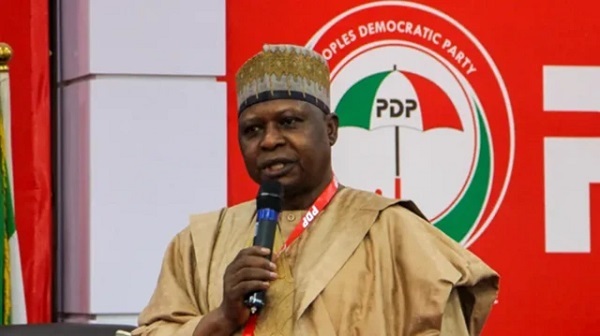
The crisis within the Peoples Democratic Party escalated on Thursday as the Kabiru Turaki-led faction of the party’s National Working Committee faulted the Independent National Electoral Commission for recognising a caretaker committee backed by the Minister of the Federal Capital Territory, Nyesom Wike.

In a statement issued by its National Publicity Secretary, Ini Ememobong, the Turaki faction described INEC’s action as unconstitutional and provocative, warning that it would challenge the move through all available legal channels.

The development followed a Federal High Court judgment delivered in Ibadan last week, which nullified the PDP National Convention held on November 15, 2025, and directed Turaki and others to stop presenting themselves as national officers of the party.

Before the ruling, PDP governors had supported the Ibadan convention that produced Turaki and members of the National Working Committee for a four-year tenure.

However, Wike and his allies, including Abdulrahman Mohammed and Senator Samuel Anyanwu, maintained that they remained the acting national leaders of the party.

Amid the dispute, the Wike-aligned bloc set up a 13-member caretaker committee on December 8 with a 60-day mandate, even as both camps sought official recognition from INEC.

Although the commission initially declined to recognise either faction, it later acknowledged the Wike-backed committee, whose representatives attended its quarterly consultative meeting with political parties in Abuja as acting party officials.

Reacting, the Turaki-led leadership said it had instructed its legal team to file an appeal and pursue all lawful options to contest both the court decision and INEC’s action.

The faction urged party members to remain calm while awaiting judicial resolution of the leadership tussle, insisting that INEC lacks the authority to determine the party’s leadership.

Ememobong said the commission ought to have exercised restraint given that several cases on the matter are pending before the Court of Appeal, adding that the final outcome of those proceedings would determine the legitimate leadership of the party.

Meanwhile, the Wike-backed camp welcomed the court ruling that barred Turaki and others from acting as members of the National Working Committee and indicated plans to organise a fresh convention to elect new officers.

The Turaki faction, however, maintained confidence in its leadership, assuring supporters that ongoing legal efforts would stabilise the party and position it as a credible alternative ahead of the 2027 general elections.

Google search engine

INEC Registers Two New Political Parties, Bringing Total To 21


The Independent National Electoral Commission (INEC) has approved the registration of two new political parties, raising the total number of registered parties in Nigeria to 21 as the country prepares for the 2027 general election.

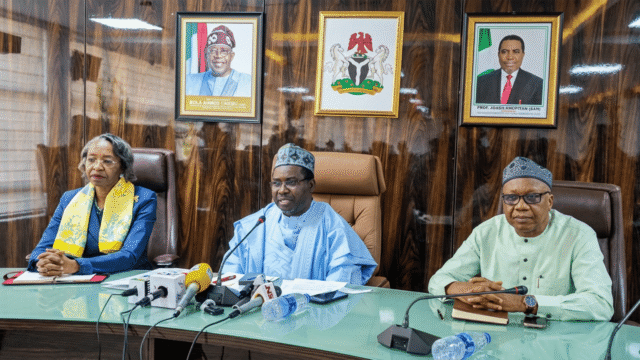
INEC Chairman, Prof. Joash Amupitan, announced the development on Thursday during the Commission’s first regular consultative meeting with political parties for 2026, held at INEC headquarters in Abuja.

The newly registered parties are the Democratic Leadership Alliance (DLA) and the Nigeria Democratic Congress (NDC).

According to Amupitan, the registration followed a rigorous assessment process in accordance with the 1999 Constitution (as amended), the Electoral Act 2022, and INEC’s Regulations and Guidelines for Political Parties.

He revealed that INEC received 171 letters of intent from groups seeking party registration. After an initial screening, 14 associations were prequalified for the next stage, and eight successfully submitted the required documentation.

These included the All Democratic Alliance (ADA), Citizens Democratic Alliance (CDA), Abundance Social Party (ASP), African Alliance Party (AAP), Democratic Leadership Alliance (DLA), Green Future Party (GFP), National Democratic Party (NDP), and Peoples Freedom Party (PFP).

“Out of the eight, only two satisfied the final assessment and verification of compliance with the Constitution and the Electoral Act,” Amupitan said.

“The Democratic Leadership Alliance (DLA) has fully met the legal requirements and is hereby registered as a political party, effective 5th February 2026.”

He added that the Nigeria Democratic Congress (NDC) was registered following a court directive.

“The Federal High Court in Lokoja, Kogi State, in Suit No. FHC/LKJ/CS/49/2025 ordered INEC to register the NDC, and the Commission has complied with this order,” he explained.

Certificates of registration for both parties will be presented in due course.

Amupitan also warned political parties to resolve internal leadership disputes, noting that persistent litigations distract INEC from its core mandate of conducting free, fair, and credible elections.

He encouraged party leaders to embrace internal democracy, dialogue, and transparency to strengthen Nigeria’s democratic process as preparations intensify for elections in 2026 and the 2027 general election.

Google search engine

INEC Registers Two New Political Parties, Bringing Total To 21

The Independent National Electoral Commission (INEC) has approved the registration of two new political parties, raising the total number of registered parties in Nigeria to 21 as the country prepares for the 2027 general election.

INEC Chairman, Prof. Joash Amupitan, announced the development on Thursday during the Commission’s first regular consultative meeting with political parties for 2026, held at INEC headquarters in Abuja.

The newly registered parties are the Democratic Leadership Alliance (DLA) and the Nigeria Democratic Congress (NDC).

According to Amupitan, the registration followed a rigorous assessment process in accordance with the 1999 Constitution (as amended), the Electoral Act 2022, and INEC’s Regulations and Guidelines for Political Parties.

He revealed that INEC received 171 letters of intent from groups seeking party registration. After an initial screening, 14 associations were prequalified for the next stage, and eight successfully submitted the required documentation.

These included the All Democratic Alliance (ADA), Citizens Democratic Alliance (CDA), Abundance Social Party (ASP), African Alliance Party (AAP), Democratic Leadership Alliance (DLA), Green Future Party (GFP), National Democratic Party (NDP), and Peoples Freedom Party (PFP).

“Out of the eight, only two satisfied the final assessment and verification of compliance with the Constitution and the Electoral Act,” Amupitan said.

“The Democratic Leadership Alliance (DLA) has fully met the legal requirements and is hereby registered as a political party, effective 5th February 2026.”

He added that the Nigeria Democratic Congress (NDC) was registered following a court directive.

“The Federal High Court in Lokoja, Kogi State, in Suit No. FHC/LKJ/CS/49/2025 ordered INEC to register the NDC, and the Commission has complied with this order,” he explained.

Certificates of registration for both parties will be presented in due course.

Amupitan also warned political parties to resolve internal leadership disputes, noting that persistent litigations distract INEC from its core mandate of conducting free, fair, and credible elections.

He encouraged party leaders to embrace internal democracy, dialogue, and transparency to strengthen Nigeria’s democratic process as preparations intensify for elections in 2026 and the 2027 general election.

Google search engine

Oshiomhole Dismisses Viral Foot-Massage Video As AI Fabrication, Alleges Smear Campaign

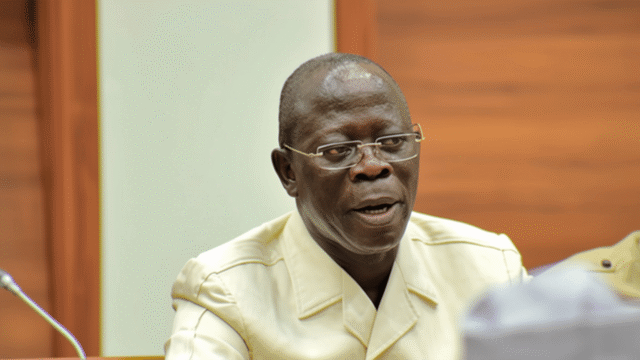
Senator Adams Oshiomhole has denied the authenticity of a viral video purportedly showing him massaging a woman’s feet aboard a private jet, insisting the clip was manipulated using artificial intelligence.

The video, which surfaced on social media earlier in the week, features a man resembling the former Edo State governor engaged in conversation with a woman whose feet rest on his lap.

It quickly gained traction online and generated widespread reactions.

Initial reports misidentified the woman as Lara Fortes, wife of the Edo North senator.

Subsequent accounts, however, named her as Leshaan Dagama, a South African lifestyle influencer and adult content creator, who was said to have first shared the clip on TikTok before deleting it.

The footage sparked criticism from many Nigerians who described the scene as inappropriate, especially in light of the country’s economic challenges.

Others referenced Oshiomhole’s recent controversial remark suggesting that some Nigerians complain that food prices are becoming “too cheap.”

Reacting to the controversy, Oshiomhole’s media aide, Oseni Momodu, dismissed the video as fake, describing it as a poorly produced AI-generated clip intended to tarnish the senator’s image.

He alleged that unnamed individuals orchestrated its circulation as a form of cyberbullying and political attack.

According to him, a closer review of the footage revealed noticeable inconsistencies, particularly between the opening seconds and the remainder of the video, suggesting deliberate manipulation.

He added that steps were being taken to trace the origin and distribution of the clip.

The media office urged the public and the press to verify content before sharing, warning against the growing misuse of artificial intelligence to spread misinformation and damage reputations.

It also called for stricter regulations on social media platforms to curb the spread of fabricated materials.

Meanwhile, Dagama responded to the backlash on her Instagram story, shifting criticism toward the senator.

“Your senator is the problem. Go be mad at him, not me,” she wrote.

Google search engine

Court Orders British Govt To Pay £420m To Families Of 1949 Iva Valley Massacre Victims In Landmark Judgment

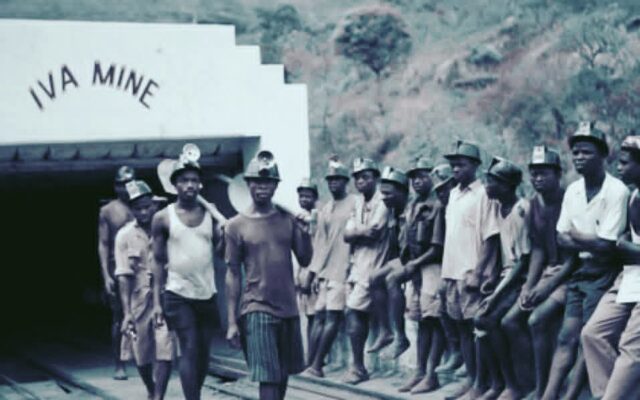
Justice A.O. Onovo of the Enugu High Court has ordered the British Government to pay £20 million each to the families of 21 coal miners killed in the 1949 Iva Valley massacre in Enugu State, totaling £420 million.

The massacre occurred on November 18, 1949, at the Iva Valley coal mines, then part of the Eastern Region under British colonial rule.

The miners had been protesting harsh working conditions, racial wage disparities, and unpaid back wages.

When their demands were ignored, they staged a peaceful “go-slow” protest, occupying the mine to prevent management from locking them out.

The protest ended tragically when the British superintendent of police opened fire, killing 21 miners and injuring 51 others.

The victims included Sunday Anyasodo, Ani Oha, Andrew J. Obiekwe Okonkwo, Augustine Chiwefalu, Onoh Ugwu, Ngwu Offor, Ndunguba Eze, Okafor Agu, Livinus Ukachunwa, Jonathan Agu Ozani, Moses Ikegbu Okoloha, Chukwu Ugwu, Thomas Chukwu, Simon Nwachukwu, Agu Alo, Ogbonnia Ani Chima, Nnaji Nwachukwu, William Nwaku, James Onoh Ekeowa, Felix Nnaji, and Ani Nwaekwo.

The suit, filed as Case No: E/909/2024, was brought by human rights activist Mazi Greg N. Onoh, seeking acknowledgment of liability, a formal apology, and full compensation.

Respondents included the British Government, the Secretary of State for Foreign, Commonwealth and Development Affairs, the Federal Government of Nigeria, and the Attorney-General of the Federation.

Some respondents were unrepresented in court.

Justice Onovo ruled that the massacre constituted an unlawful, extrajudicial violation of the miners’ right to life.

He ordered the British Government to pay the total compensation of £420 million, plus post-judgment interest of 10% per annum until fully paid.

Pre-judgment interest and exemplary damages were denied.

The court also mandated that the British Government issue unreserved written apologies to the victims’ families, to be published in Nigeria’s Daily Sun, Daily Independent, The Punch, and three major UK national newspapers, with proof of publication filed in court within 60 days.

The monetary award must be settled within 90 days of the judgment.

Justice Onovo held that the Federal Government of Nigeria and the Attorney-General had a constitutional duty to pursue redress, and their previous inaction amounted to dereliction of duty.

He also dismissed objections based on sovereign immunity, affirming that historical injustices remain justiciable under Nigerian law.

The applicant’s counsel, Prof. Yemi Akinseye-George, SAN, and P.N. Agazie, described the ruling as historic, emphasizing that it sends a strong signal that governments worldwide cannot ignore human rights abuses, torture, or the unlawful taking of lives.

They also noted that the judgment aligns with international precedents, such as the UK’s Mau Mau settlement, reinforcing the obligation to provide redress for serious historical violations.

“This landmark ruling marks a significant step in achieving accountability for colonial-era atrocities and affirms that the right to life transcends time, borders, and changes in sovereignty,” they said.

Google search engine

Terrorism Trial: Nnamdi Kanu Alleges Miscarriage Of Justice, Seeks Acquittal At Appeal Court

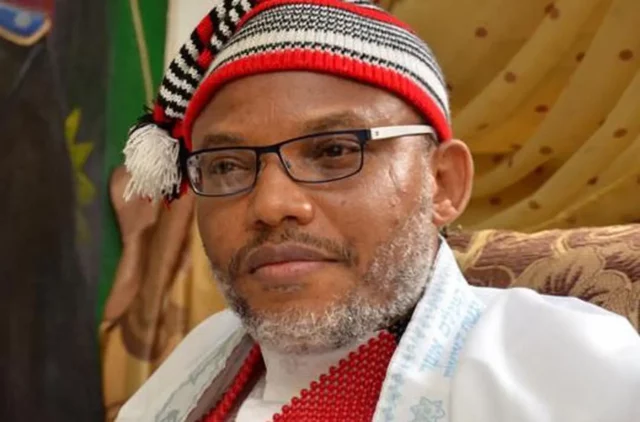
Detained leader of the Indigenous People of Biafra (IPOB), Nnamdi Kanu, has filed a notice of appeal against his conviction and sentences handed down by the Federal High Court in Abuja, describing the trial as flawed and unjust.

In the appeal dated February 4, 2026, Kanu is contesting his conviction on seven counts, including terrorism-related offences, for which he received five life sentences along with additional prison terms following the court’s judgment delivered on November 20, 2025.

The IPOB leader was convicted on charges such as engaging in acts preparatory to terrorism, making broadcasts intended to intimidate the public, and belonging to and leading a proscribed organisation.

He was also sentenced to 20 years’ imprisonment for leadership of the banned group and five years for importing a radio transmitter without a licence.

Justice James Omotosho, who presided over the trial, delivered the judgment that led to the sentences.

In his grounds of appeal, Kanu argued that the trial was marred by fundamental legal irregularities and that the court failed to address issues arising from the disruption of the original proceedings following the 2017 military operation at his residence in Afara-Ukwu.

He contended that the trial court proceeded to hear the case and deliver judgment while his preliminary objection challenging the competence of the proceedings remained unresolved.

Kanu also maintained that judgment was delivered while his bail application was still pending, a situation he said undermined the fairness of the process.

He further argued that the court relied on a law that had already been repealed, claiming he was convicted under the Terrorism Prevention (Amendment) Act, 2013, despite its replacement by the Terrorism (Prevention and Prohibition) Act, 2022 before judgment was delivered.

The appellant also alleged double jeopardy, insisting he was retried on issues that had earlier been nullified by the Court of Appeal, in violation of constitutional protections.

Additionally, he claimed he was denied a fair hearing because he was not allowed to submit a final written address before the court delivered its judgment.

Among the reliefs sought, Kanu asked the Court of Appeal to overturn the conviction and sentences and to discharge and acquit him on all counts.

He also notified the appellate court of his intention to be present at the hearing and indicated that he might conduct the appeal personally.

Kanu is currently being held at a correctional facility in Sokoto State after his request to be transferred to another facility in Niger or Nasarawa State was declined.

Google search engine

Police Arrest Man For Allegedly Exhuming Corpses, Found With Four Human Heads

The attached picture is for illustration,

The Ogun State Police Command has arrested a suspect, Gafaru Rasaki, for allegedly exhuming human remains from a cemetery in Sagamu and being in possession of four human heads.

Police spokesperson, DSP Oluseyi Babaseyi, disclosed the development in a statement issued in Abeokuta, noting that operatives of the Shakura Division carried out the arrest on January 21, 2026.

According to him, the suspect was apprehended with the human heads during an operation, and preliminary investigation revealed that the remains were unlawfully exhumed from a cemetery.

Babaseyi described the act as a grave offence and a violation of laws protecting the dignity of the dead, adding that such actions would not be tolerated.

He confirmed that the recovered exhibits had been secured while investigations continue to determine the full circumstances surrounding the incident.

The police spokesman also stated that the suspect would be charged in court once investigations are concluded.

The command reiterated its commitment to safeguarding lives and property, warning that anyone involved in the desecration of human remains or related crimes would be prosecuted in accordance with the law.

Google search engine

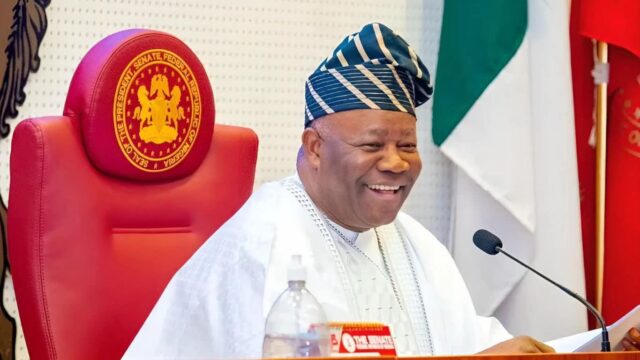
Senate Did Not Reject E-transmission Of Election Results, Abaribe Clarifies

The Senate Minority Caucus has dismissed reports that the National Assembly rejected electronic transmission of election results while passing the Electoral Act (Amendment) Bill, insisting that the provision remains intact.

The clarification followed widespread criticism and media reports suggesting lawmakers voted against electronic transmission and other electoral reforms, including a proposed 10-year ban on vote-buying.

Senate President Godswill Akpabio had earlier described such reports as misleading, maintaining that the upper chamber retained the electronic transmission framework contained in the 2022 Electoral Act.

Addressing journalists, former Senate Minority Leader, Senator Enyinnaya Abaribe, said the caucus considered it necessary to correct what he called a misrepresentation of proceedings during Wednesday’s plenary.

He stressed that the Senate did not at any point reject electronic transmission of results and only reaffirmed the existing legal provision guiding the process.

According to him, the bill passed by lawmakers supports electronic transfer of results as earlier established, a position he said was also clarified by the Senate President on the floor of the chamber.

Abaribe explained that extensive legislative work preceded the decision, including joint committee engagements between the Senate and the House of Representatives, as well as consultations with the Independent National Electoral Commission and civil society organisations.

He noted that the committees held several retreats and public hearings, during which stakeholders agreed on the importance of electronic transmission as a key mechanism for improving electoral transparency.

Following the submission of the committee’s report, an ad hoc committee was constituted to review outstanding issues before the bill returned to plenary.

Its recommendations, he said, were discussed during a closed-door session and later adopted.

He added that confusion may have arisen during plenary due to movement and noise in the chamber, giving the impression that the provision had been rejected.

Abaribe further explained that the Senate is yet to adopt the votes and proceedings of the session, a procedural step required before harmonisation with the House of Representatives can begin.

According to him, a harmonisation committee will reconcile differences between both chambers’ versions of the bill and produce a unified document for presidential assent.

He emphasised that the final record must accurately reflect the Senate’s position on electronic transmission of election results.

The lawmaker also stated that the Senate retains the authority to manage its internal processes, including the decision to set up an ad hoc committee alongside the standing committee on electoral matters.

Abaribe maintained that senators across party lines support transparent elections and see electronic transmission as central to safeguarding credibility in the electoral process.

He concluded that harmonisation cannot proceed until the Senate formally adopts the votes and proceedings confirming the provision for electronic transmission, insisting that the final document must reflect the true outcome of deliberations.

Google search engine

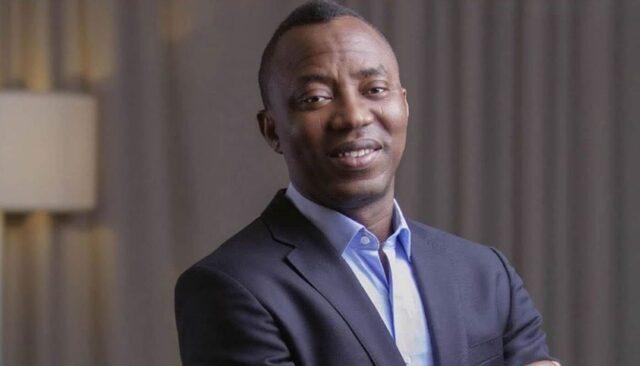
Court Rejects Sowore’s Document Claiming Tinubu Once Called Jonathan ‘Drunkard’

The Federal High Court in Abuja has refused to admit a document presented by activist and former presidential candidate of the African Action Congress (AAC), Omoyele Sowore, which claimed that President Bola Tinubu once described former President Goodluck Jonathan as a “drunkard.”

Justice Mohammed Umar rejected the exhibit after the prosecution’s first witness, a Department of State Services (DSS) operative, distanced himself from the document and denied knowledge of its contents.

The witness, Mr Cyril Nosike, told the court during cross-examination by Sowore’s lawyer, Abubakar Marshal, that he was unaware of any instance where Tinubu made the alleged remarks about Jonathan.

Based on this, counsel to the DSS, Akinlolu Kehinde (SAN), objected to the document’s admissibility, arguing that it did not meet the requirements of the Evidence Act because the witness was not its author.

The court upheld the objection and declined to accept the document as evidence. A similar fate befell another document presented by the defence, which alleged that Tinubu had described former President Olusegun Obasanjo as “expired meat.”

During proceedings, the DSS operative avoided offering personal opinions on political matters. When asked whether corruption had ended in Nigeria, he said he could not respond, stressing that he was not in court to give opinions.

He also said he was not in a position to confirm whether corruption still existed in the country.

The witness further stated that he was unaware that the DSS dismissed 115 officers in December 2025 for alleged corruption, though he recalled an internal investigation leading to dismissals.

He also denied knowledge of reports that the Economic and Financial Crimes Commission (EFCC) had prosecuted former governors or that officials of the Nigerian National Petroleum Company Limited were arrested over alleged fraud.

He maintained that his responsibilities focused strictly on national security matters within his mandate and that he was not part of processes related to disciplinary actions within the DSS.

Nosike also said he was not familiar with Nigeria’s position in global corruption rankings or Transparency International’s Corruption Perceptions Index.

When questioned about public allegations linking the President to various controversies, including claims circulating on social media, he said he had no knowledge of them.

Justice Umar adjourned the case until March 5 to allow the defence conclude its cross-examination.

Sowore is being prosecuted over a social media post in which he allegedly described President Tinubu as a “criminal.”

He faces a two-count amended charge under the Cybercrimes (Prohibition, Prevention, Etc.) (Amendment) Act, 2024.

The prosecution said the post, published on August 25, 2025, followed a statement by the President during an official visit to Brazil in which he claimed his administration had ended corruption in Nigeria.

Authorities argue that Sowore’s publication was capable of inciting public disorder and damaging the President’s reputation.
Sowore, who was first arraigned in December 2025 and re-arraigned in January, has pleaded not guilty to the charges.

Google search engine

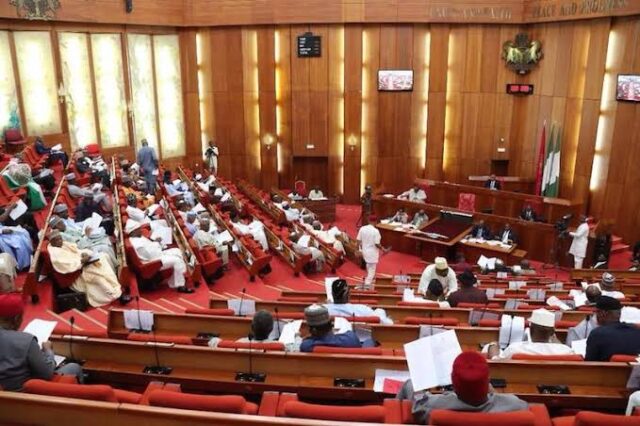
Senate Passes Electoral Bill 2026, Retains Electronic Transmission Of Results But Rejects Real-time Upload

The Senate has passed the Electoral Bill 2026 after extensive debate, retaining electronic transmission of results but rejecting a proposal that would have made real-time uploading from polling units mandatory.

At the heart of the debate was Section 60 of the bill, which deals with the transmission of results.

Lawmakers voted against a recommendation that presiding officers must upload polling unit results instantly to the INEC Result Viewing (IReV) portal.

Instead, they maintained the existing provision in the 2022 Electoral Act, which allows results to be transmitted electronically after they are counted and publicly declared at the polling unit.

The decision sparked criticism from opposition parties, particularly the Peoples Democratic Party (PDP) and the African Democratic Congress (ADC), which described the move as a setback for transparency and electoral credibility.

INEC also disclosed that it has completed work on the timetable for the 2027 general elections but cannot release it until the National Assembly concludes amendments to the Electoral Act.

The commission further announced plans for a nationwide verification of the voters’ register following the discovery of names of deceased persons and other irregularities.

Under the retained provisions, presiding officers must count votes at polling units, record results on official forms, announce them publicly and transmit them electronically to collation centres.

Copies are also to be given to party agents and security personnel where available, while offenders risk fines of up to N500,000 or at least six months’ imprisonment.

Senators who opposed real-time electronic transmission argued that poor network coverage and logistical constraints could lead to disputes and undermine confidence in the electoral process.

Senate spokesperson Adeyemi Adaramodu maintained that electronic transmission remains part of the law and that results will continue to be available through both digital and physical means.

Beyond the controversy over transmission, the Senate approved key changes to the electoral timetable.

The notice period for elections was reduced from 360 days to 180 days, while the deadline for submission of candidates’ lists was shortened from 120 days to 90 days.

The nomination window was also cut from 180 days to 90 days.

To curb electoral offences, the Senate increased the fine for unlawful possession of voter cards from N500,000 to N5 million but rejected a proposal for a 10-year ban on vote-buying, opting instead for stricter financial penalties.

The smart card reader was formally removed from the legal framework and replaced with the Bimodal Voter Accreditation System (BVAS), which remains the primary tool for voter verification.

Lawmakers also rejected a proposal to allow electronically generated voter identification, insisting on the continued use of Permanent Voter Cards (PVCs) for accreditation.

Senate President Godswill Akpabio clarified that electronic transmission had not been removed from the law, stressing that retaining the provision ensures results will still be transmitted electronically as prescribed by INEC.

INEC Chairman, Prof. Joash Amupitan, said the delay in releasing the 2027 timetable was due to ongoing legislative amendments.

He assured Nigerians that the schedule would be unveiled in line with constitutional and legal requirements.

The commission also raised concerns about the integrity of the voters’ register, citing the presence of deceased individuals and discrepancies discovered after reviewing data from the Anambra off-cycle governorship election.

According to INEC, the planned verification exercise will remove dead voters, correct data errors and strengthen the credibility of the register ahead of the 2027 polls.

Reacting to the Senate’s decision, the PDP described the rejection of mandatory real-time transmission as disappointing and contrary to public expectations, insisting that direct electronic upload of polling unit results would enhance transparency and protect the electoral process.

Google search engine

MOST COMMENTED

- Advertisement -
Google search engine